Free Saturated Fat Handout and The Case for the Dietary Guidelines Committee’s Findings
I’ve spent the past week reading comments, position papers, blogs, and posts reacting to the new food pyramid and Dietary Guidelines. Many professionals are understandably concerned about the emphasis on meat, whole dairy, and fats like tallow—and I share those concerns. I woke up at 3:00 am after reading the news about the New Pyramid and started figuring out how to tackle the challenges.
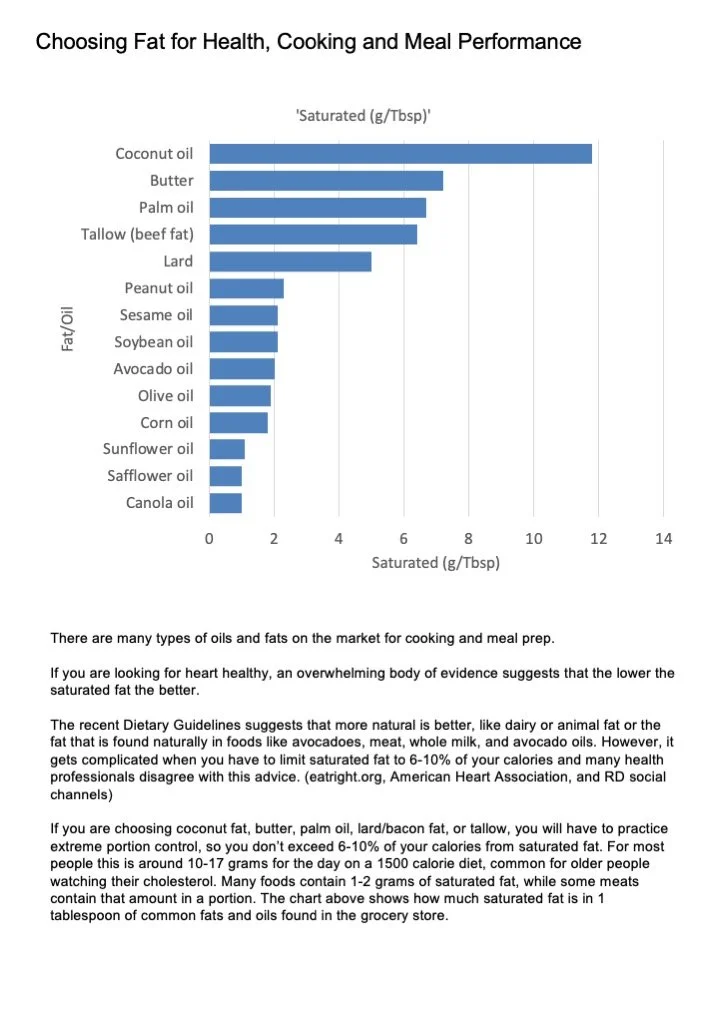
What often gets lost, however, is the math. If someone is truly following the recommendation to keep saturated fat at or below 10% of total calories, there is very little room for these foods. For most people, that’s about 200 calories or roughly 21 grams of saturated fat per day. A single tablespoon of tallow contains about 13 grams of saturated fat, and even a lean, well-planned diet can easily approach that limit without intentionally adding high-saturated-fat foods. In practice, this makes widespread use of tallow or full-fat dairy incompatible with the guideline itself.
Beyond that point, much of the conversation veers into politics and money, with claims that large meat interests will benefit. This is where frustration rises—and where educators matter most. The educator’s role could be most productive if the focus stays on the scientific advisory report and the historical context of the Dietary Guidelines.
At the big-picture level, the Guidelines have consistently served public health education. How else would most Americans know to reduce added sugars, saturated fat, and sodium? Where else would the public find a rigorous meta-analysis of nutrition research from the past five years every five years? If you did not have a healthy plate guide or pyramid, how would you know what to eat? That work is a tremendous public-health benefit. The real challenge has never been the guidance; it’s been the lack of attention and application by consumers who mostly don’t follow it.
Here is an overview of what the guidelines have accomplished since 1980:
Created a single science-based nutrition standard in the US
Synthesizes thousands of studies into guidance for the public
Shifts the conversation from deficiency to chronic disease prevention
Improves the quality of federal food programs
Drives food manufacturers to make healthier foods – trans fat has been eliminated, there are more low-sodium foods, and whole-grain foods
Standard for nutrition education worldwide
Increased public awareness of health and nutrition
Shows the big gap between knowledge and behavior
What they can’t do:
They have not eliminated chronic disease
They can’t make your dinner for you or do your gym workout
They can’t override food marketing, economics, or politics
But they can help everyone understand what matters for better choices
One of the most important takeaways from the current Guidelines is the recognition that ultra-processed foods dominate the American diet—and that when they account for nearly half of what people eat, they undermine health. There is new research that shows that an eating plan with ultra-processed foods increases the rate of all-cause mortality.
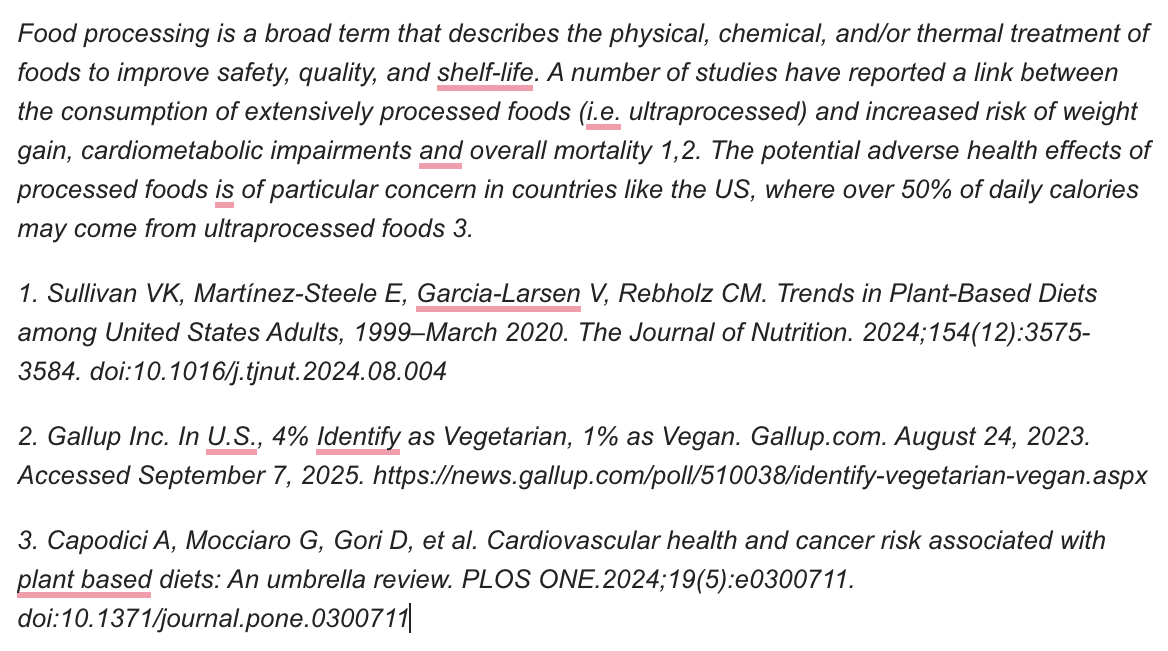
The sales of ultra-processed food have increased significantly since the last Dietary Guidelines update (from $1.2 to $1.9 trillion). The other issue is determining what an ultra-processed food is and how to navigate the NOVA system. Vinegar is lumped in with processed oils!
Consumers are struggling. Time constraints, limited cooking skills, and budget all work against them (McKinsey Company reports that most people spend their free time online). Packaged snacks are tempting, fast food is easy and cheap ($9 at drive-through for In-N-Out Burger), more than 75% of adults are overweight, and rates of diabetes continue to rise (CDC statistics). Anyone working in public health understands both the alarm and the challenges. Grocery costs have risen almost 30% since the pandemic began, and they are up another 2-3% so far this year, according to an article in the Wall Street Journal.
I want to make the case for the Dietary Guidelines by helping people understand what they have consistently offered over time. Right now, you have the public’s attention. This is the moment to use it well. Everyone is fired up! Now, people are paying attention to the DGA. And that’s where all health professionals and educators come in: to offer clarity, perspective, and practical guidance on eating more whole, minimally processed foods, while keeping added sugar, sodium, and saturated fat within guidelines for individuals with food preferences, misinformation, and budget constraints. There is nothing wrong with keeping the plate!
Our posters below show the slant we have taken from making a healthy, whole foods plate (I still love MyPlate), to showing off the abundance of whole foods, to only filling an upside-down pyramid with healthy clip art.
Here is a handout we prepared for a reader who is a dietitian in cardiac rehab - she was so worried about the saturated fat issue. It is editable in PowerPoint, so feel free to make it your own.
From our store
Free shipping on orders over $29. Purchase orders welcome. Use code LEARN15 for 15% off at NutritionEducationStore.com.