Blood Pressure Cheat Sheet
Positive habits to lower blood pressure and keep it normal over time:
DIET: Low-sodium DASH style diet that is filled with plenty of fruits, vegetables, whole grains, legumes and beans, nuts, seeds, low-fat dairy that is a good source of calcium, lean protein including seafood. This is a nutrient-rich diet prepared from whole foods without a lot of processed food or added sugar, fat, and salt. Following this diet means you should prepare most of your meals from scratch and read food labels as most of the sodium consumed comes from processed foods and meals eaten away from home. (1)
ACTIVITY: Exercise at least 150 minutes of aerobic activity per week (2) with strength and isometric activity added, too. That is just 25 minutes per day.
ALCOHOL: Drink sparingly for special occasions or not at all – the official DGA limit is one drink for women and 2 for men per day but research shows one drink or less per day to avoid blood pressure rising from alcohol consumption (3)
WEIGHT: Work on getting your body weight to a healthy category using a BMI calculator online (2)
TRACK: Monitor your blood pressure and keep a journal on your diet and lifestyle habits as well as the readings. (2)
SLEEP: Get enough sleep. Most adults need 6 to 8 hours of sleep per night. If you suspect you have sleep apnea or problems sleeping consult a physician (4)
SMOKING: Avoid smoking and vaping (2)
STRESS: Manage stress and learn relaxation and meditation methods to cope.(5)
References:
1.Svetkey LP, Sacks FM, Obarzanek E, Vollmer WM, Appel LJ, Lin PH, Karanja NM, Harsha DW, Bray GA, Aickin M, Proschan MA, Windhauser MM, Swain JF, McCarron PB, Rhodes DG, Laws RL. The DASH Diet, Sodium Intake and Blood Pressure Trial (DASH-sodium): rationale and design. DASH-Sodium Collaborative Research Group. J Am Diet Assoc. 1999 Aug;99(8 Suppl):S96-104. doi: 10.1016/s0002-8223(99)00423-x. PMID: 10450301.
2.Joint Committee Guidelines on Blood Pressure 2025 https://www.ahajournals.org/doi/10.1161/CIR.0000000000001356#tab-citations
3.Type of Alcohol and Blood Pressure: The Copenhagen General Population Study, Jensen, Gorm Boje et al.,The American Journal of Medicine, Volume 137, Issue 9, 857 - 864.e4
4.Calhoun DA, Harding SM. Sleep and hypertension. Chest. 2010 Aug;138(2):434-43. doi: 10.1378/chest.09-2954. PMID: 20682533; PMCID: PMC2913764.
5.https://www.nhlbi.nih.gov/health/high-blood-pressure/treatment#:~:text=Learning%20how%20to%20manage%20stress,hours%20of%20sleep%20per%20day.
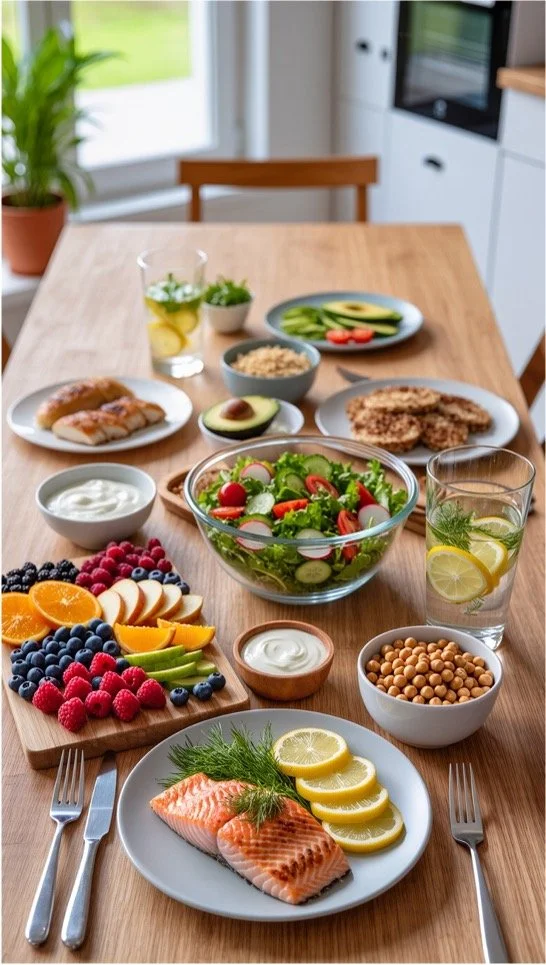
What one day of the DASH diet looks like
Nutrition Education Store
Look What's New in Our Store