It's Soup Month!
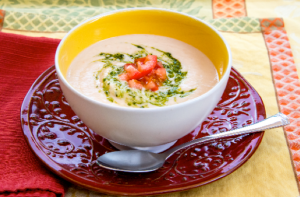 January is Soup Month, and really, what better time is there to warm up with a healthful and light yet filling soup? If you resolved to eat healthfully, then this is the soup for you. If you resolved to be more efficient in the kitchen, then this is the soup for you. If you resolved to try new things this year, then this is the soup for you. Actually, if you're reading this, then this is probably the soup for you. This soup was developed especially for our new book, Home Run Cooking, which offers fun and easy ways to cook at home. So try it today, then let us know what you think by tweeting us @foodhealth or writing on our Facebook wall.Tuscan White Bean SoupServes: 4 | Serving Size: 1 and 1/2 cups2 teaspoons minced garlic1 cup chopped onion1/2 cup chopped celery1/2 cup chopped green pepper1 cup water1 cup low-fat chicken broth2 cups cooked or canned white cannellini beans, rinsed and drained1/2 teaspoon dried rosemary1/4 teaspoon black pepper, or to taste2 ripe tomatoes, dicedGenerously spray a large nonstick skillet with olive oil cooking spray or add 1 tsp olive oil. Heat over medium-high heat. Add the garlic, onion, and celery, then sauté until golden, about 3 minutes.Add the water, chicken broth, beans, rosemary, and black pepper. Bring to a boil, reduce heat to simmer and cook until the vegetables are tender, about 8 minutes.Puree half the soup in a blender, then return puree to pan and stir well. Serve hot with diced tomatoes on top and a large tossed salad on the side. A swirl of pesto wouldn't come amiss either.
 Nutrition Information:This recipe makes 4 servings. Each 1 and 1/2 cup serving contains 175 calories, 1 g fat, 0 g saturated fat, 0 g trans fat, 0 mg cholesterol, 254 mg sodium, 32 g carbohydrate, 8 g fiber, 5 g sugar, and 11 g protein.Each serving also contains 17% DV vitamin A, 51% DV?vitamin C, 11% DV calcium, and 22% DV iron.Chef's Tips:You can also make this in a saucepan, but it might be harder to keep the vegetables from sticking to the bottom of the pan. Use a bit of extra broth when you're sautéing in order to reduce your risk of sticking.The pureed ingredients help thicken the soup, lending it better flavor and texture, so don't skip that step.There's always more in the Nutrition Education Store. If you're interested in cooking (or cooking demonstrations), then be sure to check out these great resources...

Nutrition Education Store
Look What's New in Our Store