The Low-Sodium Grocery List (Free Printable PDF)
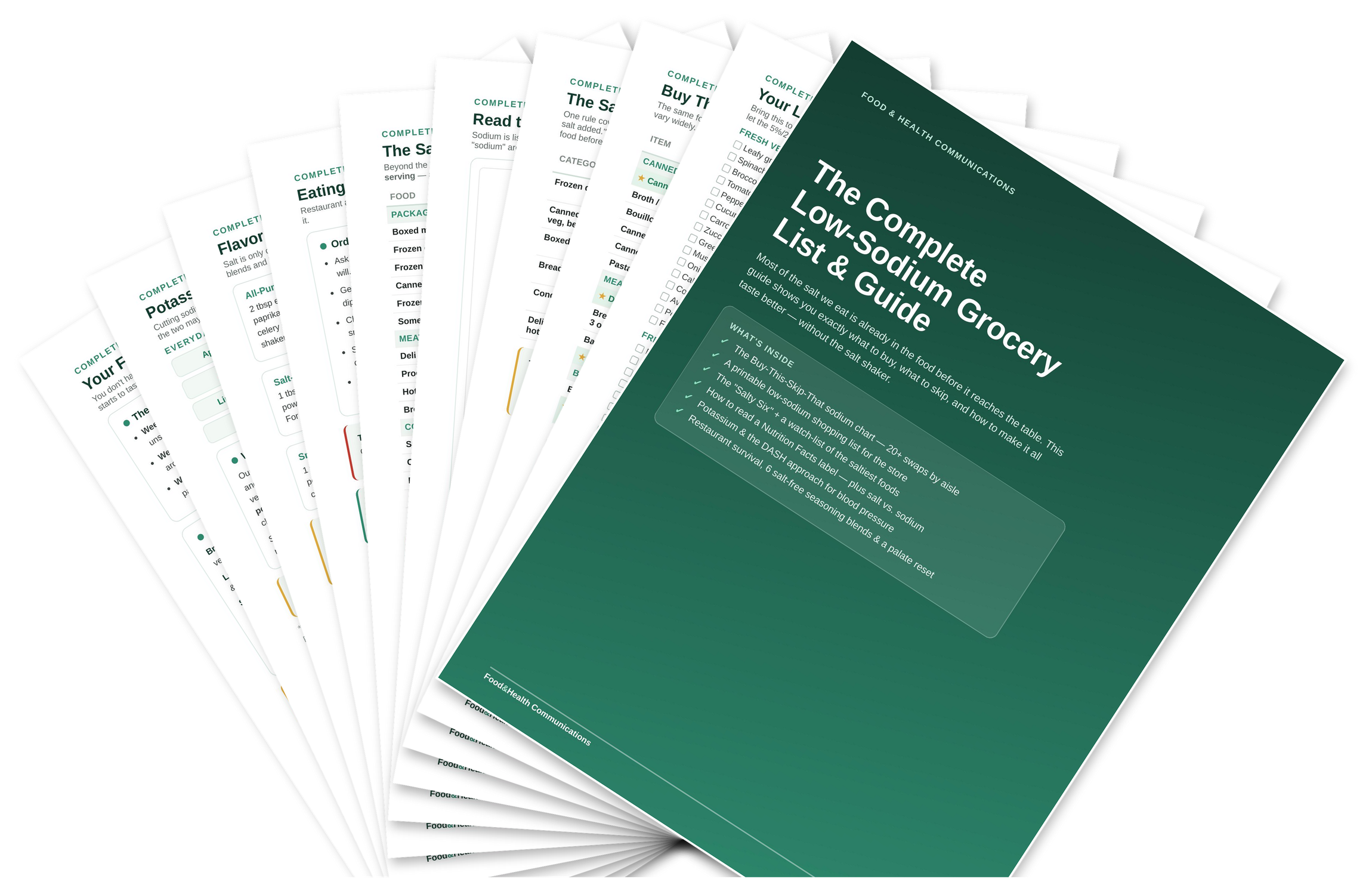
The salt is already in your food before it hits the table. Here's exactly what to buy, cook, and skip.
About 75% of the sodium most people eat is already baked into packaged food and meals eaten out — not shaken on at the table. That's why a smaller salt shaker never moves the needle. This pack starts with the thing that does: a print-and-go low-sodium shopping list you take straight to the store, backed by a Buy-This-Skip-That chart that lines up 20+ everyday foods side by side (canned soup at 800 mg versus 140, processed cheese at 400 versus 55, deli meat at 700 versus roast-your-own at 60). One simple rule ties it all together: anything prepared — canned, boxed, frozen, cured, or bottled — is high in sodium unless the label says "no salt added," while the foods you cook yourself from whole ingredients are naturally low.
From there, it makes low-sodium eating doable and good-tasting. You get a plain-English guide to reading a Nutrition Facts label (the 5%/20% rule, salt vs. sodium, and the numbers that matter), a rundown of the Salty Six and the other sneaky-salty foods to watch, a restaurant and fast-food survival guide, six salt-free seasoning blends you can mix from your spice rack tonight, the potassium and DASH connection for blood pressure, and a gentle two-week plan that resets your palate so lower-salt food tastes fuller, not flatter. It's the natural next step for anyone who grabbed the free grocery list and wants to shop, cook, and eat this way for good.
70% of the sodium we eat comes from processed foods and restaurant meals — not the salt shaker.
Which means the most powerful thing anyone can do for their blood pressure doesn't happen at the dinner table. It happens in the grocery store, in about twenty minutes, once a week.
So we made a list.
What's in it
Page 1 is the list. Every category — produce, frozen, canned, dried goods, cereal, bread, snacks, condiments, dairy, poultry and fish — in three columns with checkboxes, on one sheet of paper. This is the page that goes in a pocket and into the store.
Page 2 is the method. The 5%/20% rule: find the % Daily Value for sodium; 5% or less is low, 20% or more is high. The even simpler version: choose foods with fewer milligrams of sodium than calories. What the label words actually mean — including the fact that "reduced sodium" is a comparison, not a promise, and a 25%-less soy sauce is still a very salty product. And the Salty Six: bread, pizza, sandwiches, cold cuts, canned soup, and processed chicken. Notice what isn't on that list.
Page 3 is the follow-through. How to make food taste good without salt — acid first, then aromatics, umami, toasted spices, herbs off the heat, and browning. Plus the promise that keeps people going: a taste for salt is learned, and it can be unlearned. Most people find that food tastes right again in two to four weeks, and the food they used to love starts to taste too salty.
For educators: how to teach it
Hand out page 1 and go straight to a label. Don't lecture the sodium guidelines — bring an empty soup can, a bread bag, and a rotisserie chicken package to class and let people find the numbers themselves. Bring a no-added-salt diced tomato can, too, so they can see the difference between regular and no-added-salt versions. Start with the 5%/20% rule, because it's the only thing they need to remember, and they can use it in an aisle in three seconds. Then walk the Salty Six and watch the room react to bread being number one — that single fact does more to change shopping behavior than any target ever will, because nobody suspects bread. Close on flavor, not restriction: pass around a lemon and tell them that when a dish tastes flat, and their hand goes to the salt, they should reach for acid first. Send them home with the list, the swap tracker on page 3, and one instruction — pick two swaps this week, and give it a month before you decide it isn't working. People quit low-sodium eating because food tastes boring, not because they can't read a label. Teach the flavor and the label rule will stick.
Teaching a DASH or heart-health class? Browse our low-sodium education resources →
FAQs
How much sodium should I eat per day? Under 2,300 mg for most adults. On the DASH diet, 1,500 mg.
What foods are highest in sodium? Bread and rolls, pizza, sandwiches, cold cuts, canned soup, and processed chicken — the Salty Six. Most sodium comes from processed and restaurant food, not the salt shaker.
Does "reduced sodium" mean low sodium? No. It means 25% less than the regular version, which can still be very high. Look for "low sodium" — 140 mg or less per serving — or 5% DV or less.
Does rinsing canned beans reduce sodium? Yes. Thirty seconds in a colander removes roughly 40% of the sodium.
What can I use instead of salt? Acid first — lemon, lime, vinegar. Then aromatics, umami, toasted spices, fresh herbs added off the heat, and browning.
How long until food tastes normal again? Two to four weeks for most people.
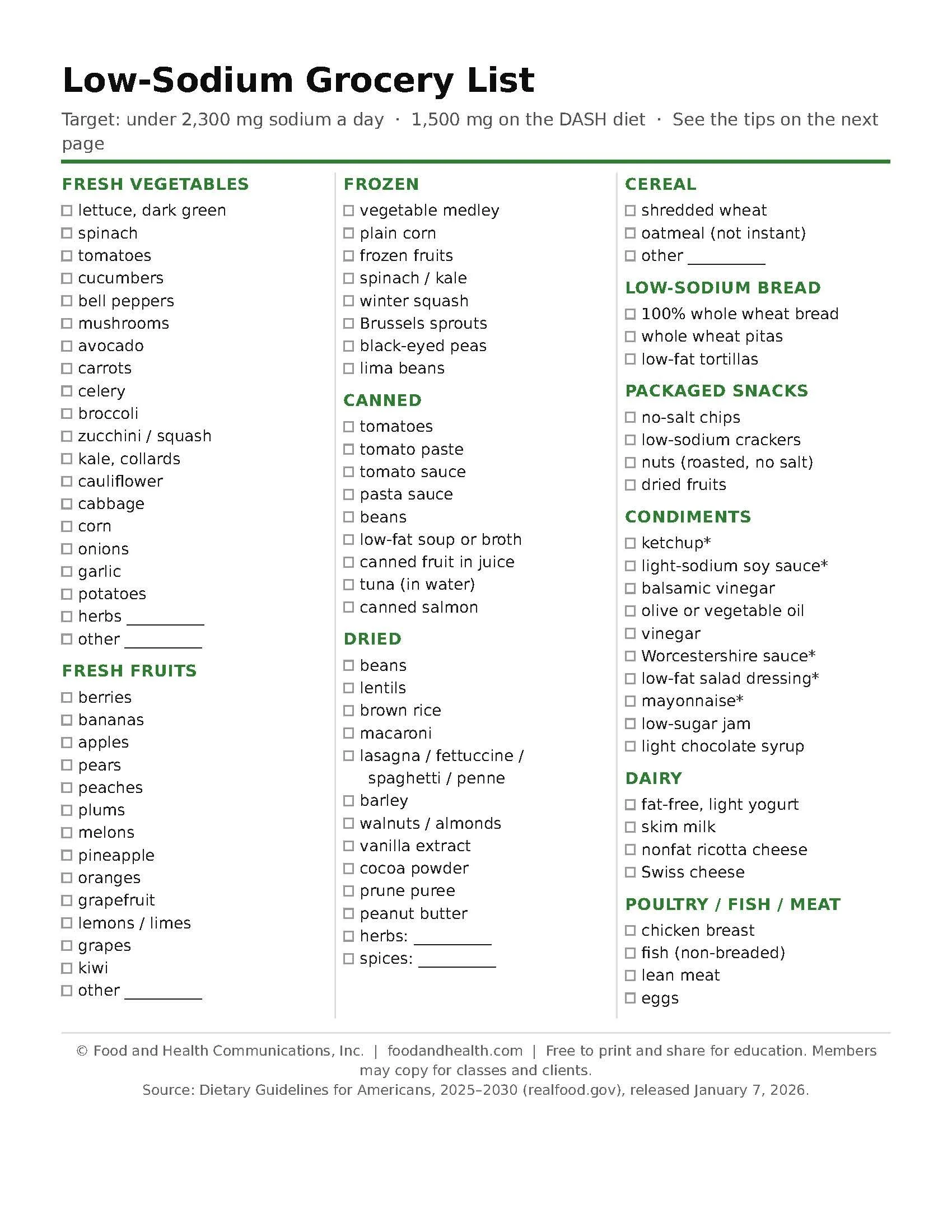
Download the low-sodium grocery shopping list
The salt is already in your food before it hits the table. Here's exactly what to buy, cook, and skip.
About 75% of the sodium most people eat is already baked into packaged food and meals eaten out — not shaken on at the table. That's why a smaller salt shaker never moves the needle. This pack starts with the thing that does: a print-and-go low-sodium shopping list you take straight to the store, backed by a Buy-This-Skip-That chart that lines up 20+ everyday foods side by side (canned soup at 800 mg versus 140, processed cheese at 400 versus 55, deli meat at 700 versus roast-your-own at 60). One simple rule ties it all together: anything prepared — canned, boxed, frozen, cured, or bottled — is high in sodium unless the label says "no salt added," while the foods you cook yourself from whole ingredients are naturally low.
From there, it makes low-sodium eating doable and good-tasting. You get a plain-English guide to reading a Nutrition Facts label (the 5%/20% rule, salt vs. sodium, and the numbers that matter), a rundown of the Salty Six and the other sneaky-salty foods to watch, a restaurant and fast-food survival guide, six salt-free seasoning blends you can mix from your spice rack tonight, the potassium and DASH connection for blood pressure, and a gentle two-week plan that resets your palate so lower-salt food tastes fuller, not flatter. It's the natural next step for anyone who grabbed the free grocery list and wants to shop, cook, and eat this way for good.
Nutrition Education Store
Look What's New in Our Store