

Free Nutrition Articles and Handouts by Food and Health Communications
You're already here for the free content — this is just a small taste of what members get. A full library of 650+ handouts, 240+ PowerPoint presentations, 900+ recipes, cooking video lessons, a monthly newsletter and white label version customizable in Canva, a health observances calendar, and eight interactive health calculators — all organized, searchable, and ready to use the moment you join.
Click any card below to explore. Members go straight in. Not a member yet? You'll be invited to join.
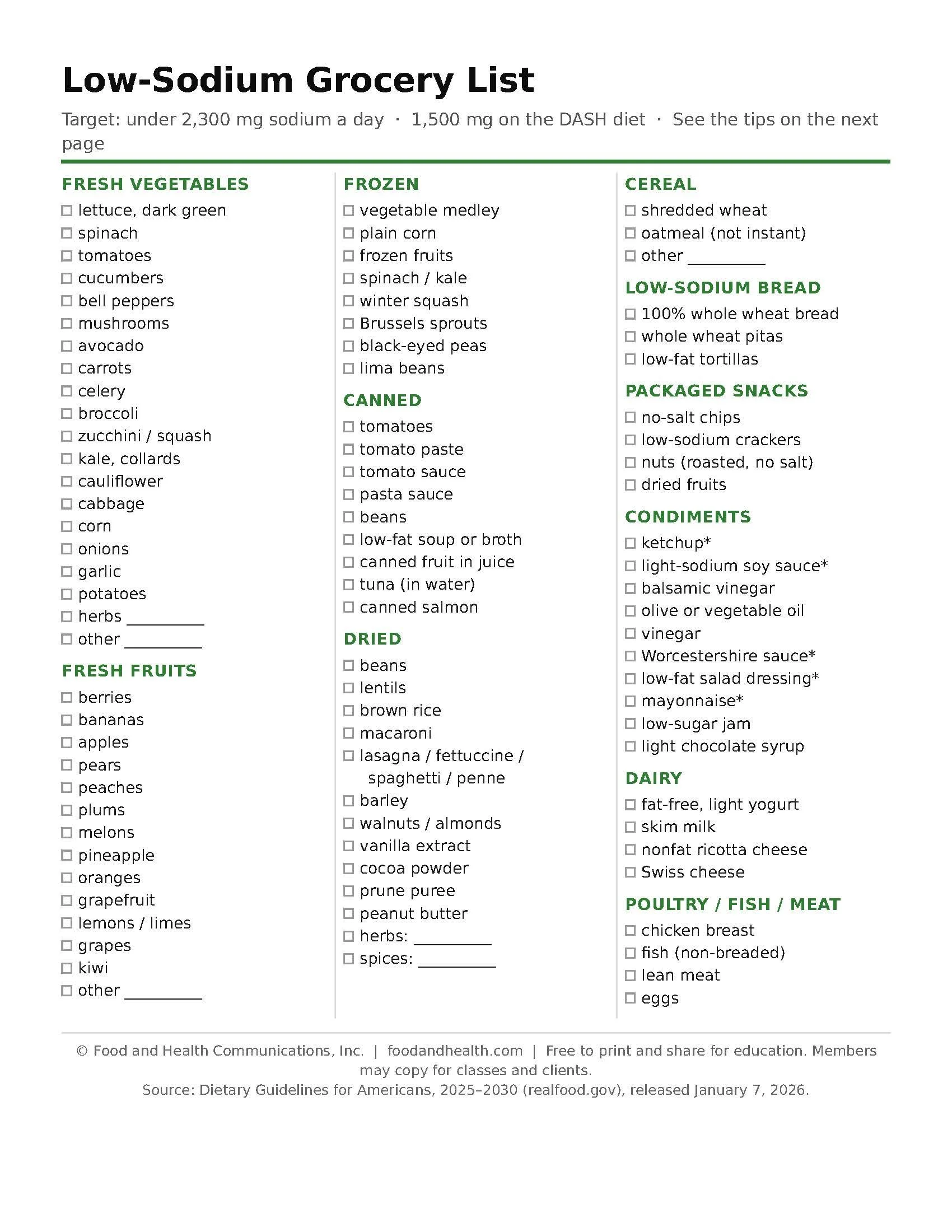
The Low-Sodium Grocery List (Free Printable PDF)
Free printable low-sodium grocery list. Aisle-by-aisle PDF with foods to buy, foods to skip, and the label rule that does most of the work. No sign-up required.
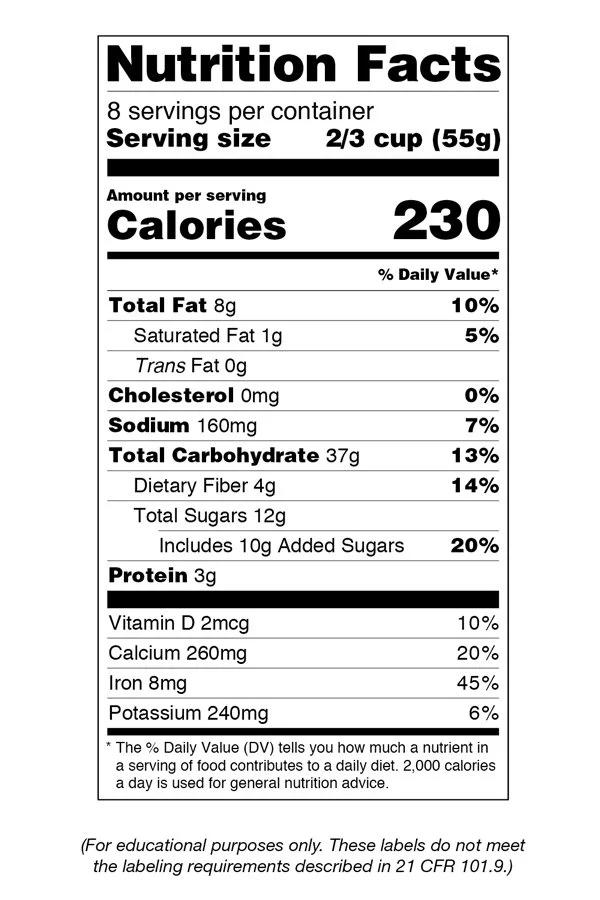
How to Make Your Own Shopping List Low-Sodium
How to Make Your Own Shopping List Low-Sodium
You don't need to throw out your grocery list and start over. You need to change about seven things on it.
That's the good news buried inside a discouraging statistic: 70% of the sodium we eat comes from processed foods and restaurant meals — not the salt shaker. Most of your list is already fine. The vegetables are fine. The fruit is fine. The chicken is fine. The sodium is concentrated in a small number of items, and once you know which ones, you can fix them in a single trip.
Sodium and the American Diet
Sodium is hiding everywhere. Shocking amounts of it are in restaurant and frozen foods, while many packaged and canned foods have tons of sodium as well. The first step towards reducing sodium intake is learning about which foods have what levels. That's where this chart comes in...
Are Plant-Based "Meats" Healthier than Meats?
It's time to find out whether plant-based meats are healthier than animal meats...
Almost 30 Years Later, the Benefits of the DASH Diet are Still Strong
Believe it or not, the DASH diet (Dietary Approaches to Stop Hypertension) is nearly 3 decades old! Initial research began in August of 1993 and studies continue to highlight the benefits of this heart-healthy style of eating.
Start Simple: A New Choose MyPlate Tool
Eating healthy doesn’t have to be difficult, expensive, or time-consuming and can lead to a longer and healthier life.
A Closer Look at Different Types of Salt
Exactly what is salt, and how do the different types of salt vary in taste, nutrient content, and use in cooking?
Lifestyle Change Cuts Need for Blood Pressure Medications
The results of the recent twin study showing the strong association between high sodium intake and elevated BP that is independent of central adiposity coupled with Dr. Hinderliter’s study of the DASH diet and exercise program described here confirm research conducted at the Pritikin Center 35+ years ago. Overall, it seems clear that most patients diagnosed with elevated BP could lower their BP sufficiently to avoid the need for BP-drugs.
Should Added Salt Become the Next Tobacco?
Is there a public health model that could guide us into policies and provide incentives for doing the right thing in dealing with salt toxicity and HTN, which is the #1 cause of death and disability in the USA today?
Take Control of Your Blood Pressure
The DASH diet lowers blood pressure by including higher amounts of potassium, magnesium and calcium, even without reducing sodium...
Is Sugar Now Public Enemy #1?
Singling out sugar as now being more responsible for raising BP and cholesterol levels than added salt and fat & cholesterol-rich animal products is clearly a gross distortion of what the best quality scientific data tells us is most likely true...
3 Top Tips to Lower Sodium
"Americans consume too much sodium. High sodium consumption raises blood pressure, and high blood pressure is a major risk factor for heart disease and stroke. Heart disease and stroke are the nation’s first and third leading causes of death"
Does Dietary Salt Promote Obesity?
More research is needed to further elucidate how added dietary salt may be contributing to overeating, weight gain, insulin resistance, and type 2 DM. However, given the overwhelming evidence linking increased salt intake with the development of hypertension and cardiovascular disease, there is no reason not to make it clear that most people would be far better off limiting their sodium intake to no more than about 1500mg/day...
That Food Might Not Be As Salty As You Think
Some health-minded people keep the saltshaker off the table, but it will probably take additional effort to get sodium intake down to recommended levels...
Focusing on Dressing: Are We Missing the Point?
Any time we switch from pale "greens" like iceberg lettuce to darker-colored leafy greens like kale, spinach and Romaine, we gain important phytochemicals and antioxidants that are present in larger quantities in darker-colored vegetables...
Sodium Savvy: Why Worry About Sodium Intake?
Take a closer look at the impact of sodium on health...
More handouts and resources from our Nutrition Education Store