How to Make Your Own Shopping List Low-Sodium
7 Simple Swaps
You don't need to throw out your grocery list and start over. You need to change about seven things on it.
That's the good news buried inside a discouraging statistic: 70% of the sodium we eat comes from processed foods and restaurant meals — not the salt shaker. Most of your list is already fine. The vegetables are fine. The fruit is fine. The chicken is fine. The sodium is concentrated in a small number of items, and once you know which ones, you can fix them in a single trip.
Here's how to walk your own list and convert it, line by line.
Teaching a heart-health or DASH class? [Browse our low-sodium education resources →]
Step 1: Circle everything that comes in a package
Take your list. Circle every item that arrives in a can, a box, a jar, a bag, or a plastic wrapper.
That's where your sodium is. Fresh produce is naturally almost sodium-free. Plain meat, fish, eggs, milk, and dried beans are low. Nobody's blood pressure is being driven by the broccoli.
Everything you circled is now the entire project. Most people circle six to ten items — and half of them turn out to be easy.
Step 2: Learn the one rule that does the rest
You are not going to memorize milligram values. You are going to read one line on the label.
The 5% / 20% rule
Find % Daily Value for sodium on the Nutrition Facts panel.
5% DV or less = LOW. Buy it.
20% DV or more = HIGH. Put it back.
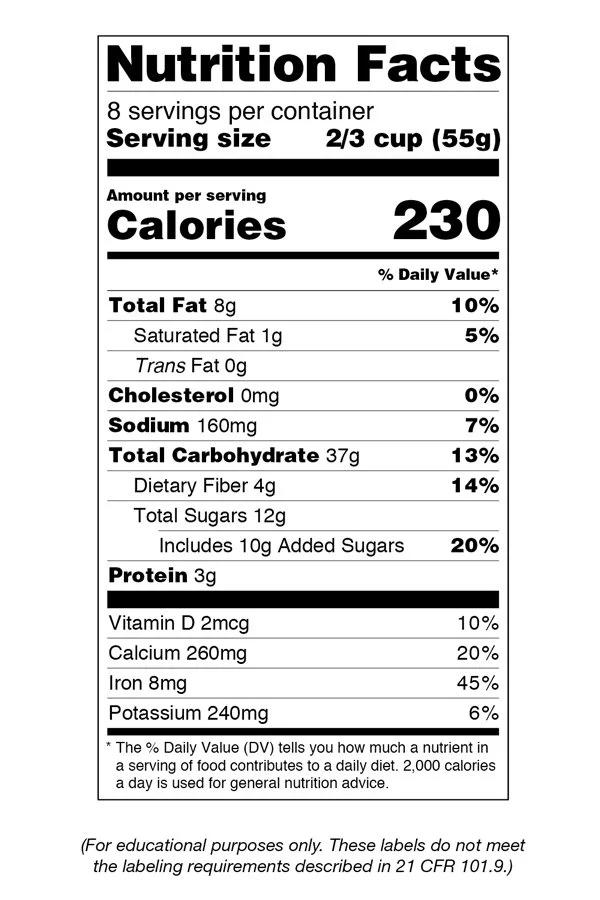
The even faster version
Choose foods with fewer milligrams of sodium than calories per serving.
A soup with 100 calories and 700 mg of sodium fails. A soup with 100 calories and 90 mg passes. This test takes 3 seconds in the aisle and works on nearly everything.
Step 3: Know which label words are lying to you
|
|
|
|---|---|
|
Sodium-free |
Under 5 mg per serving |
|
Very low sodium |
35 mg or less |
|
Low sodium |
140 mg or less |
|
Reduced sodium |
25% less than the regular version — which can still be very high |
|
No salt added |
No salt in processing; may contain natural sodium |
"Reduced sodium" is the one that fools people. It's a comparison, not a promise. Soy sauce with 25% less sodium than regular soy sauce is still one of the saltiest things in your kitchen.
Step 4: Make the seven swaps
These are the items that matter. Change these, and you've done most of the work.
1. Bread → compare brands
Bread is the number one source of sodium in the American diet. Not because it's the saltiest food, but because we eat so much of it. One slice ranges from 80 to 230 mg depending on the brand. Two slices of the wrong bread can cost you more sodium than a serving of potato chips.
The swap: stand in the bread aisle for 2 minutes, compare 3 labels, and pick the one with under 150 mg per slice. You will never have to do it again.
2. Canned beans → rinse them
No-salt-added canned beans are ideal. But if your store doesn't carry them, rinse the regular ones in a colander for 30 seconds. That removes roughly 40% of the sodium.
This is the single best trick in this article, and it costs you nothing.
3. Canned soup → broth plus your own vegetables
A cup of canned soup can contain about half a day's worth of sodium. The swap: buy low-sodium broth and add your own vegetables, beans, and leftover chicken. It takes ten minutes and tastes better.
4. Deli meat → roast your own
Salt is the preservative in cold cuts — that's what they're for. The swap: roast a chicken or turkey breast on Sunday, then slice it for sandwiches. Or use canned no-salt tuna or egg salad.
5. Chicken → read for "contains up to X% solution"
A great deal of the chicken sold in America is injected with salt water before it reaches the case. It doesn't taste salty. It just is.
The swap: read the fine print on the package. Buy the one that doesn't say it.
6. Sauces and dressings → vinegar and oil
Jarred pasta sauce, salad dressing, marinades, soy sauce, and bouillon are among the saltiest items in the store. Soy sauce alone carries 900+ mg per tablespoon.
The swap: no-salt-added canned tomatoes and your own herbs. Oil and vinegar instead of bottled dressing. Salt-free seasoning blends instead of bouillon.
7. Frozen vegetables → plain, not sauced
Plain frozen vegetables are excellent — as cheap as fresh, and often more nutritious. But frozen vegetables in butter or cheese sauce can carry up to 500 mg per cup. Buy the plain bag.
Step 5: Add the flavor back
This is the step people skip, and it's the reason most people quit.
Food without salt isn't supposed to taste like food with less salt. It's supposed to taste like food with something else.
Acid — start here. Lemon, lime, vinegar. Acid brightens food the way salt does. When a dish tastes flat and your hand goes to the salt, reach for the lemon first. This is the single best substitution there is.
Aromatics. Garlic, onion, shallot, ginger, chile.
Umami. Mushrooms, tomato paste, roasted vegetables, nutritional yeast. Umami-rich foods actually make food taste saltier than it is — a real, documented effect you can use on purpose.
Toasted spices. Bloom ground spices in a little oil for 30 seconds before you add liquid. It's the difference between dusty and delicious.
Fresh herbs, added off the heat. Heat destroys their aroma. Stir them in at the end.
Browning. Roast instead of boil. Sear. Toast. Browning creates hundreds of flavor compounds that didn't exist in the raw ingredients. It's free flavor — and it's what the salt was standing in for all along.
Add these seven things to your shopping list: lemons, limes, vinegar, garlic, fresh herbs, a salt-free seasoning blend, and a jar of tomato paste.
Step 6: Give it a month
A preference for salt is learned. It can also be unlearned.
Most people find that food tastes right again within two to four weeks of cutting back — and that food they used to love starts tasting too salty. That's not willpower. That's your taste receptors recalibrating, which is a thing they genuinely do.
The people who fail at this are almost always the ones who quit in week two, right before it starts working.
Give it a month before you decide.
Your target
Under 2,300 mg of sodium a day for most adults. On the DASH diet, 1,500 mg.
But don't count. Just make the seven swaps, buy the lemons, and give it four weeks.
Want the whole list already done for you?⬇ [Download the free printable Low-Sodium Grocery List (PDF) →]
Teaching a heart-health or DASH class? [Browse our low-sodium education resources →]
FAQ
How do I lower the sodium in my diet without giving up flavor? Use acid first — lemon, lime, or vinegar — then aromatics, umami, toasted spices, fresh herbs added off the heat, and browning. Most flat-tasting food needs acid, not salt.
What's the fastest way to cut sodium at the grocery store? Use the 5%/20% rule: 5% Daily Value or less is low, 20% or more is high. Then fix the seven big items — bread, canned beans, canned soup, deli meat, chicken, sauces, and frozen vegetables.
Which food has the most sodium in the American diet? Bread — not because it's the saltiest, but because we eat so much of it. One slice ranges from 80 to 230 mg.
Does rinsing canned beans really work? Yes. Thirty seconds in a colander removes roughly 40% of the sodium.
How long before low-sodium food tastes good again? Two to four weeks for most people. After that, previously favorite foods often taste too salty.
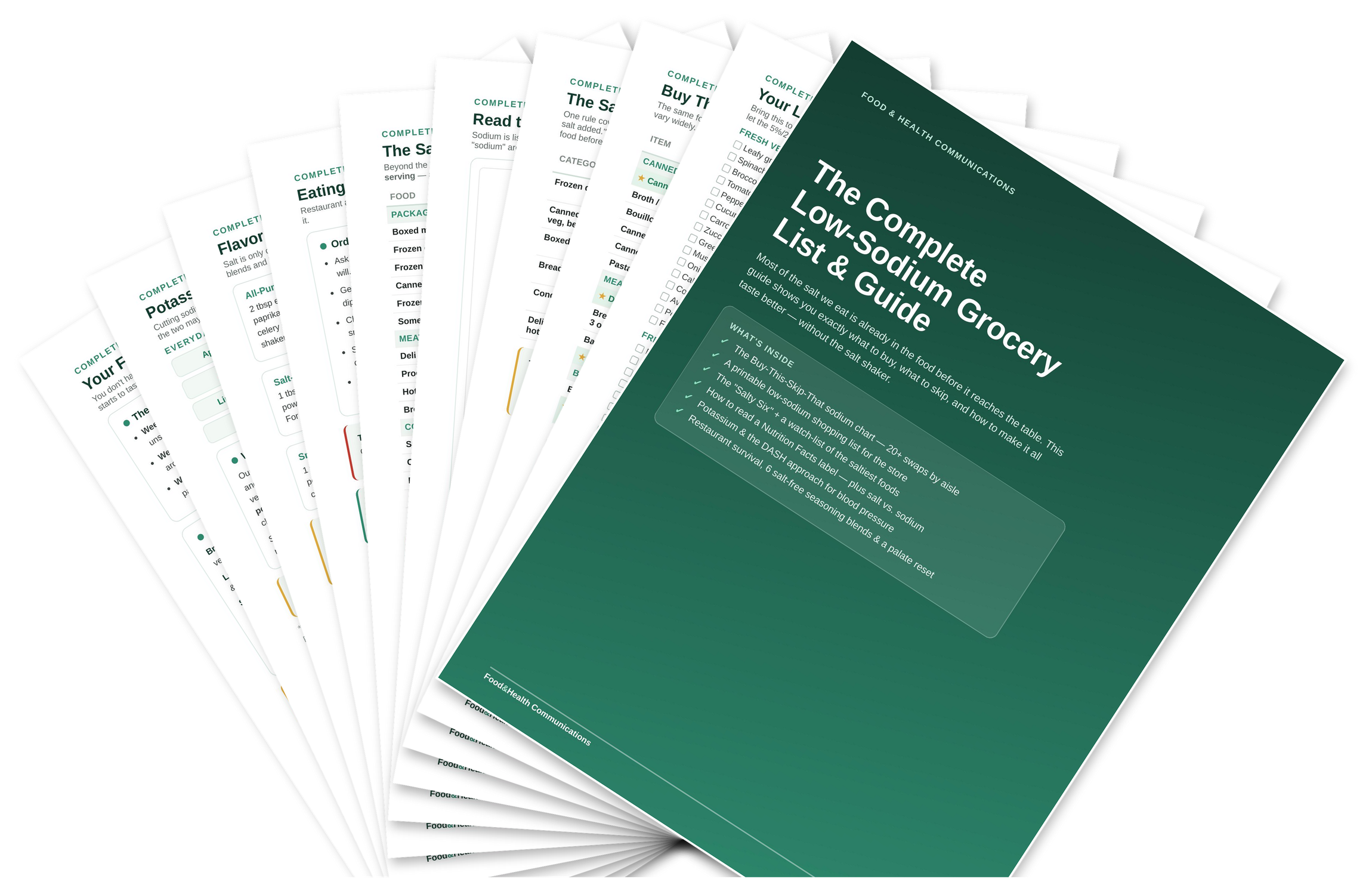
The salt is already in your food before it hits the table. Here's exactly what to buy, cook, and skip.
About 75% of the sodium most people eat is already baked into packaged food and meals eaten out — not shaken on at the table. That's why a smaller salt shaker never moves the needle. This pack starts with the thing that does: a print-and-go low-sodium shopping list you take straight to the store, backed by a Buy-This-Skip-That chart that lines up 20+ everyday foods side by side (canned soup at 800 mg versus 140, processed cheese at 400 versus 55, deli meat at 700 versus roast-your-own at 60). One simple rule ties it all together: anything prepared — canned, boxed, frozen, cured, or bottled — is high in sodium unless the label says "no salt added," while the foods you cook yourself from whole ingredients are naturally low.
From there, it makes low-sodium eating doable and good-tasting. You get a plain-English guide to reading a Nutrition Facts label (the 5%/20% rule, salt vs. sodium, and the numbers that matter), a rundown of the Salty Six and the other sneaky-salty foods to watch, a restaurant and fast-food survival guide, six salt-free seasoning blends you can mix from your spice rack tonight, the potassium and DASH connection for blood pressure, and a gentle two-week plan that resets your palate so lower-salt food tastes fuller, not flatter. It's the natural next step for anyone who grabbed the free grocery list and wants to shop, cook, and eat this way for good.
Nutrition Education Store
Look What's New in Our Store