Lower Your Sodium Basics - 90 Seconds

Here is a 90 second video that will help you understand how to lower your sodium intake.
Check out this 90-second video from our test kitchen! It highlights how processed foods, not your salt shaker, are the most significant contributors of excess sodium in the American diet. Items like boxed meals, canned goods, bottled sauces, frozen dinners, deli meats, pickles, and condiments often pack in half a day’s worth of salt or more. When your diet relies heavily on these ultra-processed foods, it's easy to exceed recommended sodium levels—without ever adding a single shake of salt.
It is likely you are consuming way too much!
Most people should aim to keep their sodium intake between 1,500 and 2,300 mg per day, depending on age, health conditions, and risk factors (CDC, FDA, NIH, AHA). However, according to the FDA, the average American consumes about 3,400 mg of sodium daily, nearly double the recommended amount. It is easy to go even higher if you always eat out or eat a lot of frozen, canned, and boxed meals.
And the most common response? “But I don’t even use a salt shaker!”
Most of the sodium you consume is hidden
That’s because over 75% of the sodium in our diets comes from processed foods and restaurant meals, not the salt we sprinkle on at table (NIH). This short video highlights how much sodium hides in everyday foods like deli meats, boxed meals, canned soups, frozen dinners, sauces, and condiments.
It’s easy to change what you eat to improve your health!
The best part? It also offers 3 simple, practical tips to reduce sodium:
Cook more meals at home using low-sodium herbs and spices.
Add more fruits and vegetables to your plate. MyPlate suggests you make half your plate fruits and vegetables. They are naturally low in sodium.
Read and compare nutrition labels.
Your audience can learn these powerful steps toward better eating and lower sodium intake in under two minutes. It will make a big impact on their health.
Here are more resources:
Resources: Download a low-sodium shopping list. Scroll down to download printable recipes (print and save as a PDF).
Reference: Read more about the risks of a diet that is too high in salt. Visit the DASH Diet site here.
Interactive: Answer the poll below about this video. Contact us with questions.

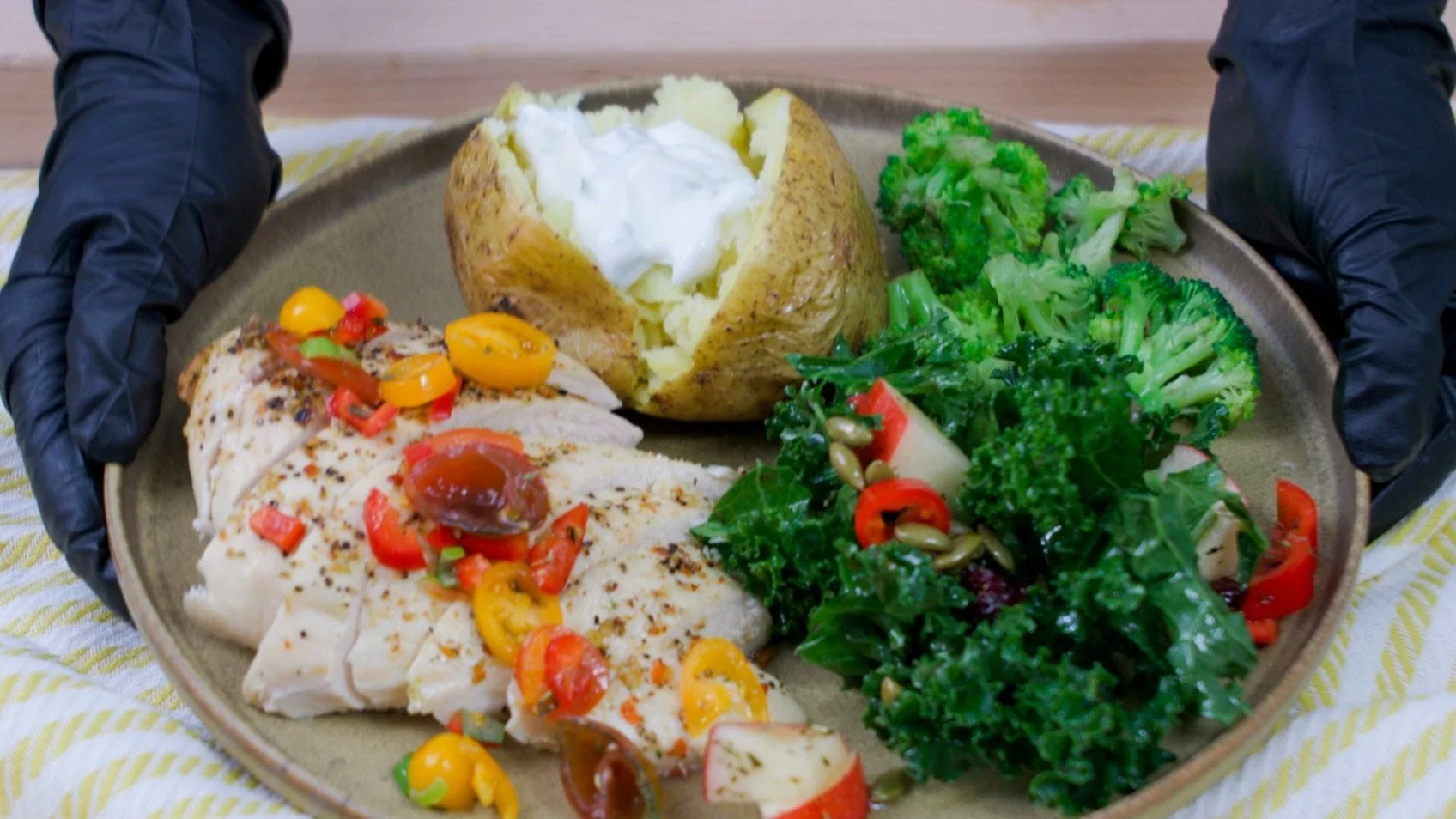


Roasted Chicken Breast
Here is our recipe for roasted chicken breast that is so juicy. You can serve it hot for a meal or chill and slice for sandwiches
Ingredients
- 4 chicken breasts, boneless, skinless
- 2 tsp olive oil
- 2 tablespoons Mrs. Dash sodium-free seasoning or use a combo of Italian Seasoning and red pepper flakes
Instructions
- Preheat the oven to 375 degrees.
- Brush the olive oil into a ceramic baking pan.
- Add the chicken breasts in a single layer.
- Top the chicken breasts with a little more olive oil and then the sodium-free seasoning.
- Bake the chicken breasts for 20 minutes until the internal temperature is 160 degrees.
- Pull the chicken breasts out from the oven and allow to cool slightly.
- Slice and serve with a baked potato and steamed veggies or a salad.
Nutrition Facts
Calories
160Fat
6 gSat. Fat
1 gCarbs
2 gFiber
1 gNet carbs
1 gSugar
0 gProtein
25 gSodium
104 mgCholesterol
72 mg
Roasted Chicken Dinner
Here is a delicious low-sodium meal made with chicken, baked potato, and kale salad.
Ingredients
- 4 chicken breasts, boneless, skinless
- 2 tsp olive oil
- 2 tablespoons Mrs. Dash sodium-free seasoning or use a combo of Italian Seasoning and red pepper flakes
- 4 Idaho baking potatoes - small to medium
- 1 cup nonfat plain yogurt
- 1/4 cup sliced green onion
- sprinkle of red pepper flakes
- 4 cups ready-to-serve kale
- juice of 1 lemon
- 2 tsp olive oil
- 1 cup chopped veggies (assorted like red peppers, carrots, and tomatoes)
- 2 tablespoons chopped almonds or pumpkin seeds
Instructions
- Preheat the oven to 375 degrees.
- Brush the olive oil into a ceramic baking pan.
- Add the chicken breasts in a single layer.
- Top the chicken breasts with a little more olive oil and then the sodium-free seasoning.
- Bake the chicken breasts for 20 minutes until the internal temperature is 160 degrees.
- Pull the chicken breasts out from the oven and allow to cool slightly.
- Slice and serve with a baked potato and steamed veggies or a salad.
- Rinse the potatoes to remove any dirt or debris.
- Pierce them with a knife.
- Microwave the potatoes for 10 minutes or until a knife can pierce them easily. Place in the oven to finish baking with the chicken.
- Remove from the oven and slice in half. Fluff the insides with a fork.
- Fill the potatoes with the yogurt and top with the sliced green onion.
- Place the kale in a large mixing bowl.
- Add the lemon and rub it into the kale. Allow to sit for a minute.
- Add the olive oil and veggies. Toss well.
- Serve the salad on a plate with the sliced chicken and baked potato.
Nutrition Facts
Calories
452Fat
11 gSat. Fat
2 gCarbs
54 gFiber
8 gNet carbs
47 gSugar
7 gProtein
36 gSodium
297 mgCholesterol
74 mg
Fruit Parfairs
These parfaits make a great breakfast, snack or dessert. They are an example of eating a whole food dish instead of ultra-processed packaged foods that are often high in sugar, salt, and added fat.
Ingredients
- 1 cup nonfat Greek yogurt
- 1/4 cup rolled oats
- 1 tsp cinnamon
- 2 tablespoons whole roasted almonds, low in salt
- 2 cups berries
Instructions
- Place the yogurt into a bowl or footed glass.
- Top the yogurt with the oats and cinnamon.
- Add the fruit.
- Top with the almonds.
- Serve immediately or refrigerate until ready to serve.
Nutrition Facts
Calories
313Fat
8 gSat. Fat
1 gCarbs
46 gFiber
9 gNet carbs
37 gSugar
17 gProtein
17 gSodium
40 mgCholesterol
5 mgNutrition Education Store
Look What's New in Our Store