The Recommended Dietary Allowance (RDA) for protein is 0.8 grams per kilogram of body weight or 0.36 grams per pound. The RDA indicates how much of a nutrient you need for essential health. So, if you weigh 150 pounds, that is only 50 grams of protein or about 2 ounces. People who are very athletic or older may want a little more. The Dietary Guidelines for Americans have shifted away from dictating percentages of macronutrients to focusing on a healthy eating plan that is high in fiber with nutrient-dense foods.
Here is an online calculator from the National Institute of Health to check your requirements based on age, activity level, sex, and weight.
One of the easiest ways to cut food spending costs is to optimize your protein choices to be more heart-healthy and closer to the recommended amount.
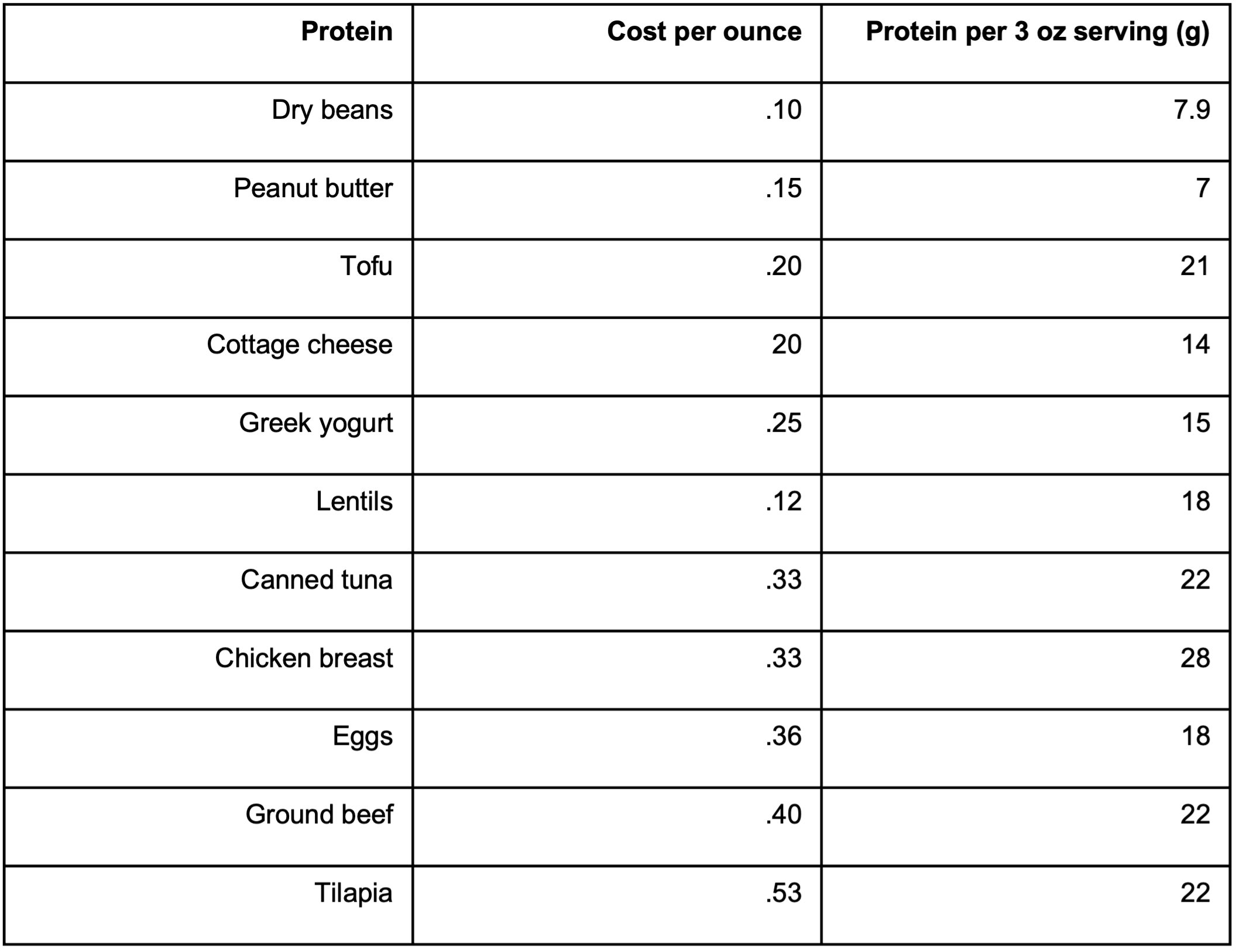
Understanding the cost of various protein sources can help you make budget-friendly choices without compromising nutrition.
Here's a breakdown of some common and affordable protein choices with their approximate costs per ounce:
The most heart-healthy protein choices are low in saturated fat and rich in essential nutrients like omega-3s, fiber, and lean protein. Here are some top options:
-
Fatty Fish (Salmon, Tuna, Mackerel, Sardines) – High in omega-3 fatty acids, which reduce inflammation and support heart health.
-
Skinless Poultry (Chicken, Turkey) – Lean protein with less saturated fat than red meat.
-
Legumes & Beans (Lentils, Chickpeas, Black Beans) – High in fiber and plant-based protein, which helps lower cholesterol.
-
Tofu & Tempeh – Plant-based protein packed with heart-protective compounds.
-
Nuts & Seeds (Almonds, Walnuts, Chia, Flaxseeds) – Healthy fats and protein that support cardiovascular health.
-
Low-Fat Dairy (Greek Yogurt, Cottage Cheese) – Provides protein and calcium with minimal saturated fat.
-
Eggs (in moderation) – Nutrient-rich with heart-healthy fats, especially when paired with a balanced diet.
By practicing portion control, you can easily make many more protein choices and your shopping list more affordable.