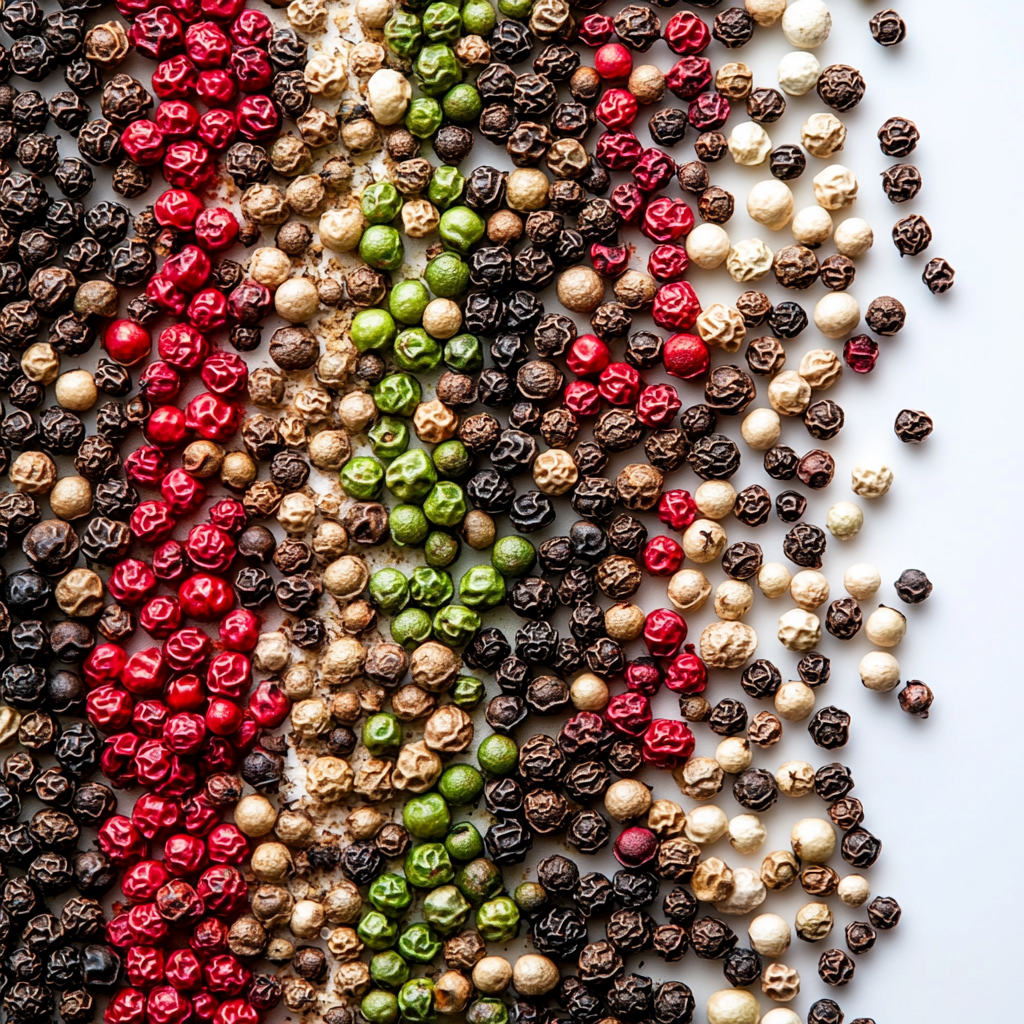
Pepper, particularly black pepper, serves multiple purposes in the kitchen, enhancing flavor and health. As a versatile spice, it adds a distinct warmth and mild heat to various dishes, from savory soups and meats to vegetables and sauces. Its sharp, pungent taste amplifies the natural flavors of other ingredients, making it a staple in seasoning blends and marinades, which can help home cooks use less salt. Beyond flavor, pepper also offers health benefits, including aiding digestion and possessing antioxidant and anti-inflammatory properties, making it a valuable addition to both culinary and wellness routines.
There are many different types of pepper available in markets and you don’t have just to pick black or white.
Here's a glossary of common culinary pepper spices:
1. Black Pepper (Piper nigrum)
-
Description: Dried, unripe berries of the pepper plant, commonly used in ground or whole form.
-
Flavor: Sharp, pungent, slightly citrusy, and mildly hot.
-
Use: Universal spice for seasoning savory dishes, soups, and marinades. You can purchase various grind textures from coarse to fine.
2. White Pepper
-
Description: Same plant as black pepper, but with the outer skin removed before drying.
-
Flavor: Milder than black pepper with a slightly earthy, fermented taste.
-
Use: Used in light-colored dishes like soups, sauces, and mashed potatoes to avoid dark specks.
3. Cayenne Pepper
-
Description: Ground dried cayenne chili peppers (Capsicum annuum). Bright red in color.
-
Flavor: Fiery, hot, and slightly fruity.
-
Use: Adds heat to dishes like soups, stews, and spice rubs.
4. Paprika
-
Description: Ground from dried sweet or hot peppers, typically from the Capsicum annuum family. Varieties include sweet, smoked, and hot.
-
Flavor: Ranges from mild and sweet to hot and smoky.
-
Use: Common in Hungarian and Spanish dishes and for seasoning meats and garnishing, but it is also used in rubs for roasted chicken to impart a beautiful color and flavor. A dash of paprika can be a pretty garnish for mashed potatoes, potato salad, and many other dishes.
5. Chili Powder
-
Description: A blend of dried ground chili peppers, often combined with cumin, garlic powder, and oregano.
-
Flavor: Mildly hot with earthy undertones, depending on the blend.
-
Use: Used in Tex-Mex, chili con carne, and as a base for seasoning blends. Experiment with many different types of chili powder, from green hatch chilis to various blends offered by spice vendors.
6. Aleppo Pepper
-
Description: Dried and coarsely ground pepper flakes from the Aleppo pepper. Often used in Middle Eastern cuisine.
-
Flavor: Moderately hot with a fruity, slightly tangy flavor.
-
Use: Sprinkled over roasted vegetables, soups, salads, or grilled meats. It is a beautiful red spice with a rich heat.
7. Korean Gochugaru
-
Description: Coarsely ground dried red chili peppers, a staple in Korean cooking.
-
Flavor: Mild to medium heat with a sweet, smoky, and slightly fruity flavor.
-
Use: Used in kimchi, stews, and marinades for Korean BBQ. And use it on veggies, salads, soups, and many rice dishes.
8. Sichuan Peppercorn
-
Description: Dried husks of the prickly ash tree, not related to traditional pepper. Known for its numbing effect.
-
Flavor: Spicy, citrusy, and numbing.
-
Use: Key ingredient in Sichuan cuisine, especially in hot pots and stir-fries.
9. Chipotle Powder
-
Description: Ground smoked and dried jalapeños.
-
Flavor: Smoky with medium heat and a deep, earthy flavor.
-
Use: Adds a smoky kick to rubs, sauces, and stews.
10. Urfa Biber
-
Description: Dried Turkish chili pepper with a dark, almost black appearance.
-
Flavor: Smoky, earthy, and slightly raisin-like with a moderate heat.
-
Use: Sprinkled on meats, vegetables, and used in Mediterranean dishes.
This list covers a wide range of pepper spices used in culinary applications globally.