Handout: Potassium: A Powerful Mineral for Better Health
Potassium is an essential mineral that helps your body function properly every day. It plays a key role in maintaining healthy blood pressure, supporting muscle contractions, regulating fluid balance, and helping nerves send signals throughout the body. Potassium also works with sodium to keep the body's fluids in balance and may help reduce the effects of excess sodium in the diet.
Most adults need about 2,600 mg of potassium per day for women and 3,400 mg per day for men, although individual needs may vary. Unfortunately, many Americans do not get enough potassium-rich foods.
Note: For the prevention and management of high blood pressure, the American Heart Association recommends a daily target of 3,500-5,000 mg.
The best way to increase potassium intake is by eating more fruits, vegetables, beans, and dairy foods. Excellent sources include bananas, potatoes, sweet potatoes, spinach, tomatoes, avocados, oranges, cantaloupe, yogurt, milk, beans, lentils, and dried fruits such as apricots and raisins. By filling your plate with a variety of colorful whole foods, you can naturally boost your potassium intake and support heart health, muscle function, and overall wellness.
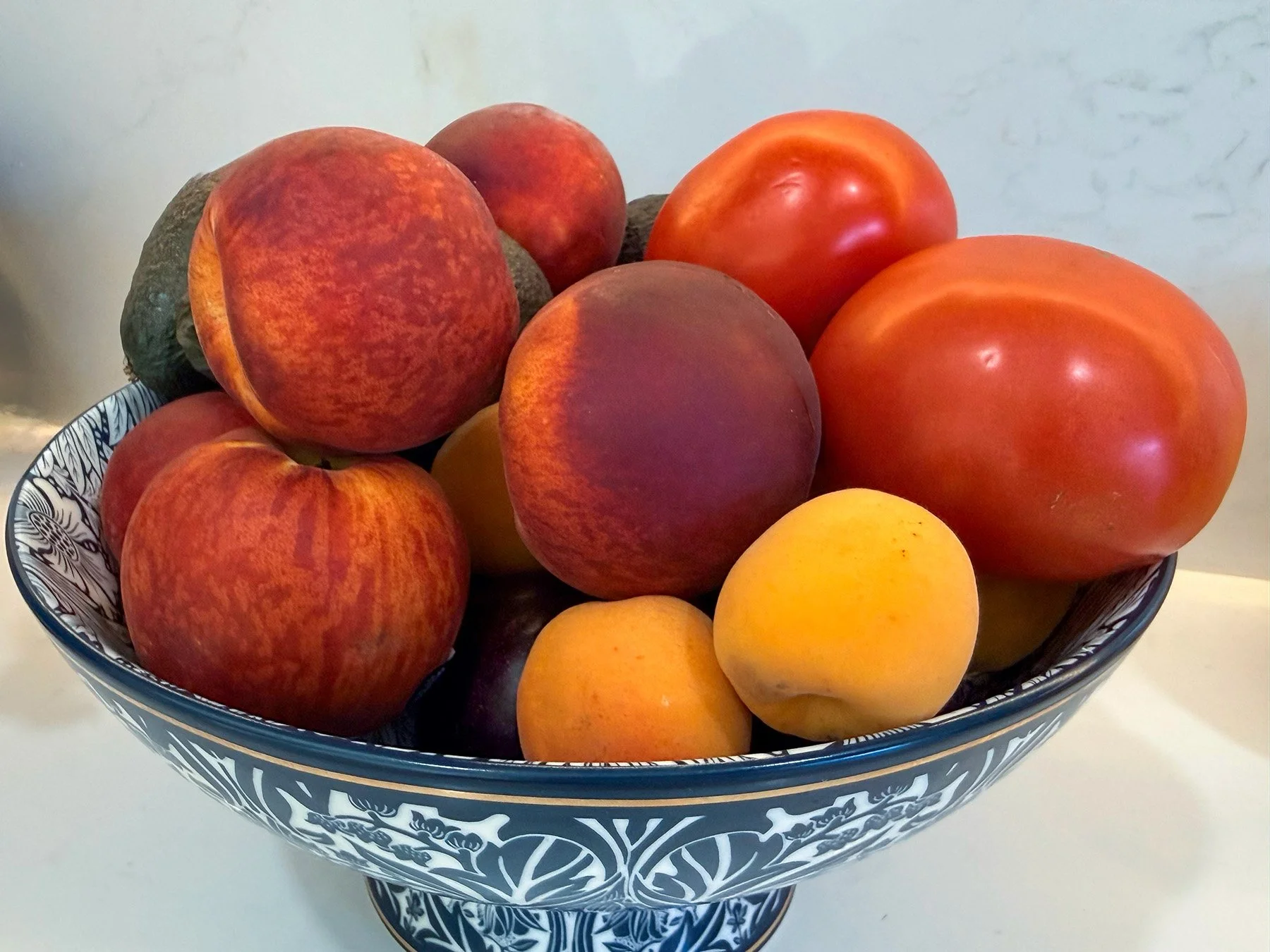
This fruit bowl contains almost 5000 mg of potassium with its peaches, apricots, plums and avocados.
Top 20 Food Sources of Potassium
| Food | Serving Size | Potassium (mg) |
|---|---|---|
| Sweet potato, baked | 1 medium | 540 |
| Potato, baked with skin | 1 medium | 930 |
| White beans, cooked | 1 cup | 1,000 |
| Lima beans, cooked | 1 cup | 970 |
| Lentils, cooked | 1 cup | 730 |
| Spinach, cooked | 1 cup | 840 |
| Swiss chard, cooked | 1 cup | 960 |
| Beet greens, cooked | 1 cup | 1,300 |
| Avocado | 1 medium | 975 |
| Banana | 1 medium | 420 |
| Cantaloupe | 1 cup | 430 |
| Orange juice | 1 cup | 500 |
| Tomato sauce | 1 cup | 900 |
| Tomato paste | ¼ cup | 670 |
| Acorn squash, cooked | 1 cup | 900 |
| Yogurt, plain low-fat | 1 cup | 570 |
| Milk | 1 cup | 370 |
| Salmon, cooked | 3 oz | 530 |
| Dried apricots | ½ cup | 750 |
| Raisins | ½ cup | 600 |
Other Excellent Sources
Coconut water
Edamame
Mushrooms
Brussels sprouts
Broccoli
Kiwi
Prunes and prune juice
Winter squash
References for Potassium
Nutrition Education Store
Look What's New in Our Store