

Free Nutrition Articles and Handouts by Food and Health Communications
You're already here for the free content — this is just a small taste of what members get. A full library of 650+ handouts, 240+ PowerPoint presentations, 900+ recipes, cooking video lessons, a monthly newsletter and white label version customizable in Canva, a health observances calendar, and eight interactive health calculators — all organized, searchable, and ready to use the moment you join.
Click any card below to explore. Members go straight in. Not a member yet? You'll be invited to join.
Sugar, Salt, Fat: Less is Best!
With unwanted weight gain comes unexpected chronic diseases...
Does Banning Trans Fat Reduce Heart Disease?
While cardiovascular disease nationwide had already seen a decline, the drop was more dramatic in counties where trans fat was outlawed...

5 Questions and Answers About Fat
Here's the next installment of the questions and answers series. What do you know about fat?
Aging Well with Healthful Fats
As you plan your daily meals and snacks, one important component of promoting physical health and a healthy, functioning brain as you age is the type and amount of fat you consume...
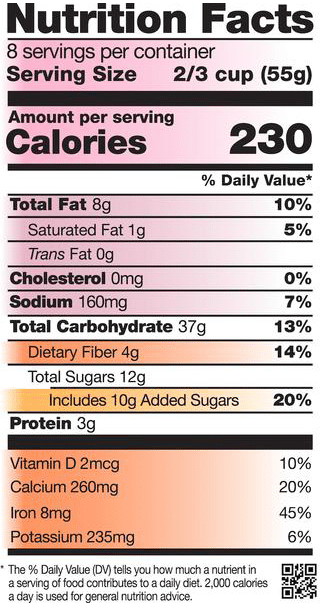
Reading a Food Label in 3 Easy Steps
Sometimes the Nutrition Facts label can be a bit overwhelming. Yes, it's full of helpful information... but it's that very fullness that can make it hard to navigate. Let's break down the keys to the Nutrition Facts label to make it easier to understand and use in day-to-day life.
Fat and Your Health
All fat is composed of different fatty acids. There are saturated, monounsaturated and polyunsaturated types. The kinds of fatty acids consumed are more important in influencing health than the total amount of fat in the diet. Animal fats tend to have a higher proportion of saturated fatty acids, and plant foods tend to have a higher proportion of monounsaturated and/or polyunsaturated fatty acids.
Fat 101
Whether you follow a low-fat diet or prefer a higher-fat Mediterranean eating style, the reality is that fat is an essential component of our food choices, necessary for good health. We’ve see-sawed between fat-free eating plans to high-fat plans that involve adding butter to coffee. Just like in so many things, the middle ground may be the right place. Let’s take a closer look at fat!
CLA Supplements Remain Unproven
The FDA appears poised to reverse its serious error of classifying TFA as GRAS, which should lead to the elimination of PHVOs in foods. Only if large placebo-controlled clinical trials can demonstrate the safety and efficacy of CLA supplements should the FDA consider exempting them from its looming ban of PHVOs...
Nutrition Facts Label: What You Need to Know
What do you know about this helpful little label? Here's the lowdown about using the Nutrition Facts panel to promote good health...
Breaking News: FDA and Trans Fats
The FDA has declared that partially-hydrogenated oils are no longer generally recognized as safe. What does that mean for you and your clients? Find out in today's post...
Which Foods Still Contain Trans Fat?
The U.S. Food and Drug Administration announced its preliminary determination that partially hydrogenated oils (PHOs), the primary dietary source of artificial trans fat in processed foods, are not “generally recognized as safe” for use in food. The FDA’s preliminary determination is based on available scientific evidence and the findings of expert scientific panels. This article offers an overview of trans fat and where we are today with consumption and sources.
More handouts and resources from our Nutrition Education Store