

Free Nutrition Articles and Handouts by Food and Health Communications
You're already here for the free content — this is just a small taste of what members get. A full library of 650+ handouts, 240+ PowerPoint presentations, 900+ recipes, cooking video lessons, a monthly newsletter and white label version customizable in Canva, a health observances calendar, and eight interactive health calculators — all organized, searchable, and ready to use the moment you join.
Click any card below to explore. Members go straight in. Not a member yet? You'll be invited to join.
What’s In Season
There are so many choices for fresh fruits and veggies in the store! Plan which ones you will use this week.
Check out our watermelon salad above made with fresh watermelon, cucumbers, onions, mint, and feta cheese.
What’s In Season
There are so many choices for fresh fruits and veggies in the store! Plan which ones you will use this week.
Check out our watermelon salad above made with fresh watermelon, cucumbers, onions, mint, and feta cheese.
One Week Plan for Micro-Prepping
Start Small
You don't need dozens of containers or a detailed meal plan. Simply make a little extra whenever you cook. Roast one more tray of vegetables, cook an extra serving of grains, or prepare additional protein.
Micro-prepping is one of the easiest ways to save time, reduce stress, and make healthy eating more achievable—because sometimes the best meal prep strategy is simply cooking once and serving twice.
One Week Plan for Micro-Prepping
Start Small
You don't need dozens of containers or a detailed meal plan. Simply make a little extra whenever you cook. Roast one more tray of vegetables, cook an extra serving of grains, or prepare additional protein.
Micro-prepping is one of the easiest ways to save time, reduce stress, and make healthy eating more achievable—because sometimes the best meal prep strategy is simply cooking once and serving twice.
What is Micro-Prepping?
Micro-Prepping: Cook Once, Serve Twice
Meal prep doesn't have to mean spending an entire Sunday chopping vegetables and filling rows of containers. A simpler approach is micro-prepping—doing a little extra each time you cook so future meals come together faster and with less effort.
The idea is simple: whenever you're making a meal, prepare extra ingredients or portions for another meal later in the week. You're already washing, chopping, cooking, and cleaning. A few additional minutes can save you much more time later.
What is Micro-Prepping?
Micro-Prepping: Cook Once, Serve Twice
Meal prep doesn't have to mean spending an entire Sunday chopping vegetables and filling rows of containers. A simpler approach is micro-prepping—doing a little extra each time you cook so future meals come together faster and with less effort.
The idea is simple: whenever you're making a meal, prepare extra ingredients or portions for another meal later in the week. You're already washing, chopping, cooking, and cleaning. A few additional minutes can save you much more time later.
6 Natural Sweeteners - Alternatives to Sugar - How Do They Stack Up?
While these alternatives can offer flavor and small amounts of nutrients, moderation is still important. The healthiest approach is to gradually reduce your preference for sweetness overall while choosing minimally processed sweeteners when possible.
6 Natural Sweeteners - Alternatives to Sugar - How Do They Stack Up?
While these alternatives can offer flavor and small amounts of nutrients, moderation is still important. The healthiest approach is to gradually reduce your preference for sweetness overall while choosing minimally processed sweeteners when possible.
6 Natural Sweeteners - Alternatives to Sugar - How Do They Stack Up?
While these alternatives can offer flavor and small amounts of nutrients, moderation is still important. The healthiest approach is to gradually reduce your preference for sweetness overall while choosing minimally processed sweeteners when possible.
More Ultra-processed Food? Higher Risk for Heart Disease and Stroke
As heart disease remains the number one killer in the US, reducing your risk is key. If you’re a self-declared “junk food junkie”, keep reading. Recent research presented at the American College of Cardiology's Annual Scientific Session (ACC.26) found that a diet of mostly ultra-processed foods (UPFs) significantly raises the risk of heart attack, stroke, and death.
More Ultra-processed Food? Higher Risk for Heart Disease and Stroke
As heart disease remains the number one killer in the US, reducing your risk is key. If you’re a self-declared “junk food junkie”, keep reading. Recent research presented at the American College of Cardiology's Annual Scientific Session (ACC.26) found that a diet of mostly ultra-processed foods (UPFs) significantly raises the risk of heart attack, stroke, and death.
Stress and Late-Night Eating is a Bad Combination for Your Gut
Being chronically stressed is bad news for your gut. But combining it with a late-night splurge is a recipe for disaster. New research finds that stressed-out, late-night eaters were more likely to experience constipation and diarrhea.
Stress and Late-Night Eating is a Bad Combination for Your Gut
Being chronically stressed is bad news for your gut. But combining it with a late-night splurge is a recipe for disaster. New research finds that stressed-out, late-night eaters were more likely to experience constipation and diarrhea.
Intake of Ultraprocessed Foods Associated with Premature Death in Global Study
If you want to get more mileage out of your life, one of the best things you can do is reduce your intake of ultra-processed foods. While most food is processed in some way, ultra-processed foods are the convenient, “heat and eat” products with little “food in the food”. These foods have steadily replaced regular foods made from fresh, minimally processed ingredients.
Intake of Ultraprocessed Foods Associated with Premature Death in Global Study
If you want to get more mileage out of your life, one of the best things you can do is reduce your intake of ultra-processed foods. While most food is processed in some way, ultra-processed foods are the convenient, “heat and eat” products with little “food in the food”. These foods have steadily replaced regular foods made from fresh, minimally processed ingredients.

Unlocking the Vault: Weight Control Without Hunger Foods
The following foods are the lowest in calorie density. Suppose you eat fruits, vegetables, high-fiber carbs, and cooked grains. In that case, you will fill up on fewer calories than if your diet consists of low-fiber, high-fat, and high-sugar foods like pizza, burgers, french fries, cinnamon rolls, candy bars, potato chips, cookies, and many other American favorites.Think salads, fruit, low-fat pasta, low-fat stir fry, baked low-fat seafood, chicken, rice, and oatmeal. It is still necessary to be aware of not stuffing yourself, but you do not need to go hungry and skip meals.
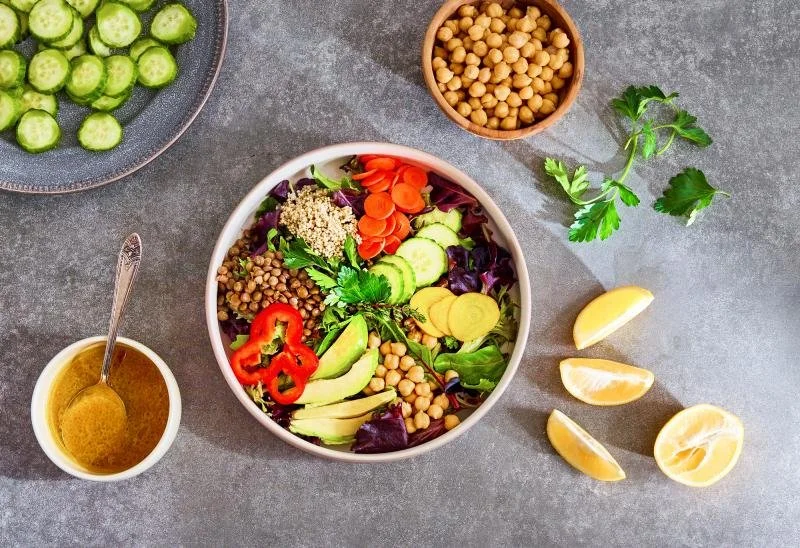
Healthy Salad Dressing In A Jar
Shake it up and pour! The advantage to making your own salad dressing in a jar is that you get something far more creative, tasty, and healthy versus the commercial dressing from the store. Experiment with a new flavor each week!

Unlocking the Vault: The Scoop on Seed Oils and Health
As a dietitian, I’m often asked questions about the latest trends on social media. One of the most prominent ones lately is that seed oils are “toxic” and should be avoided at all costs. But is this good advice, or not?
More handouts and resources from our Nutrition Education Store