5 Reasons to Eat More Pulses
Pulses are getting more respect these days. Because they are an economical source of protein, they were once thought of as poor man’s food. Today people of all income levels around the globe love them for their great taste, versatility, sustainability and health-boosting nutrition. Aim to eat several servings per week. Here’s why.
1. Prevent colon cancer. Pulses are rich in dietary fiber, providing at least 20% of the recommended daily amount. Choices such as black beans, kidney beans and lentils provide the type of fiber that the good healthy bacteria in the gut love. These intestinal bacteria feed on the fiber and provide compounds that are beneficial to the colon cells, protecting them from harm. Pulses also provide a host of phytonutrients studied for their cancer-fighting benefits – and other health benefits too.
2. Protect your heart. Diets rich in pulses are linked to lower systolic blood pressure (the top number), and consuming about one serving of pulses daily is associated with healthier cholesterol levels. Plus a study of nearly 10,000 men and women found that eating beans at least four times weekly – compared to eating beans less than once weekly – lowered the risk of heart disease by 22%. Hint: drain and rinse canned beans to wash away about 40% of the sodium.
3. Get better blood sugar control. Eating pulses is associated with improvements in both short term and long term fasting blood sugar levels. In fact, a meta-analysis of 19 studies found that eating pulses as part of a lower glycemic index diet lowered blood sugar levels as well as some diabetes medications.
4. Manage your weight. Pulses contain resistant starches, so some carbohydrates are not digested and absorbed, meaning fewer calories get absorbed too. Additionally, a meta-analysis of nine studies found that meals based on pulses led to greater feelings of fullness. And observational data suggest that pulse eaters are less likely to be obese than those who don’t consume them.
5. Protect the earth. The Food and Agriculture Organization of the United Nations named 2016 The International Year of Pulses, and it wasn’t just because of all the health benefits already listed. Pulses are good for the health of the earth too. They’re an inexpensive source of protein and other nutrients, and they’re more readily transported than other protein sources. Many scientists find pulses to be a sustainable crop that is beneficial to global climate.
By Jill Weisenberger, MS, RDN, CDE, CHWC, FAND,
Some of this information was gathered at a partially sponsored educational meeting.References:
- http://pulses.org/what-are-pulses
- http://www.aicr.org/foods-that-fight-cancer/legumes.html?_ga=2.83847126.1920137158.1499646145-1776078652.1456780505
- https://academic.oup.com/ajh/article/27/1/56/142475/Effect-of-Dietary-Pulses-on-Blood-Pressure-A
- https://www.ncbi.nlm.nih.gov/pubmed/24710915
- Bazzano LA, He J, et al. Legume consumption and risk of coronary heart disease in US men and women. Archives of Internal Medicine (2001) 161: 2573-2578.
- Diabetologia (2009) 52:1479–1495
- http://onlinelibrary.wiley.com/doi/10.1002/oby.20782/abstract?systemMessage=Pay+per+view+article+purchase%28PPV%29+on+Wiley+Online+Library+will+be+unavailable+on+Saturday+11th+March+from+05%3A00-14%3A00+GMT+%2F+12%3A00-09%3A00+EST+%2F+13%3A00-22%3A00+SGT+for+essential+maintenance.++Apologies+for+the+inconvenience.
- http://pulses.org/component/rsfiles/preview/files?path=resources/factsheets/Pulse+Nutrition+Guide.pdf
- http://www.fao.org/resources/infographics/infographics-details/en/c/454530/
Infographic Handout: 5 Reasons to Eat More Pulses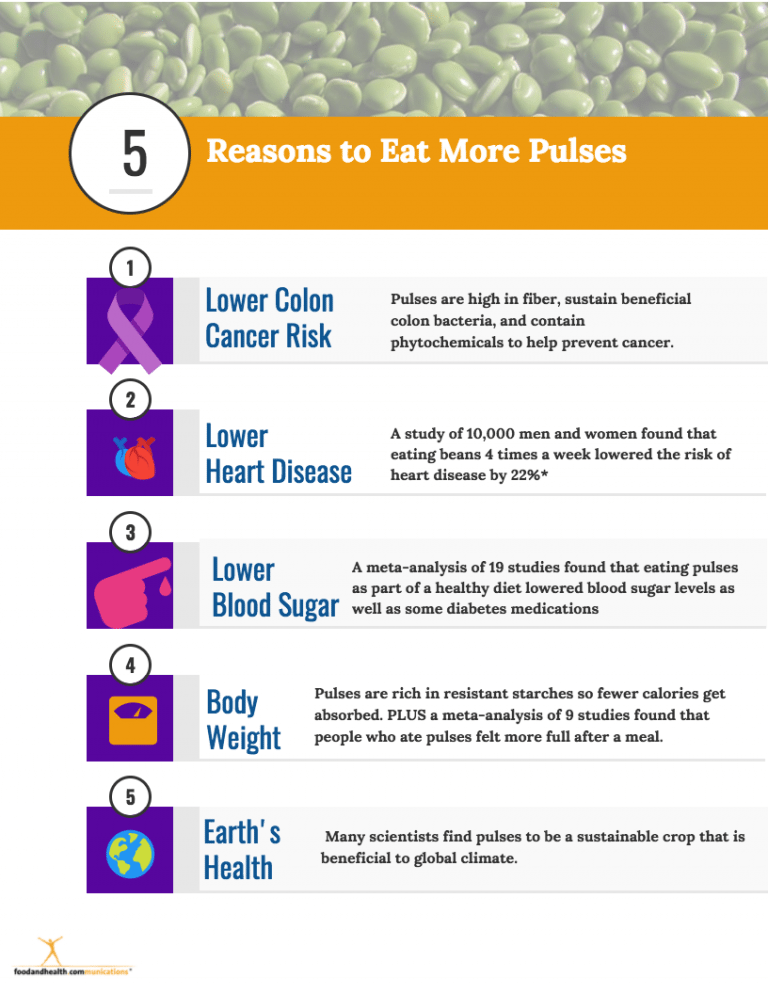 Handout for cooking guide for pulses:
 Pulses handout: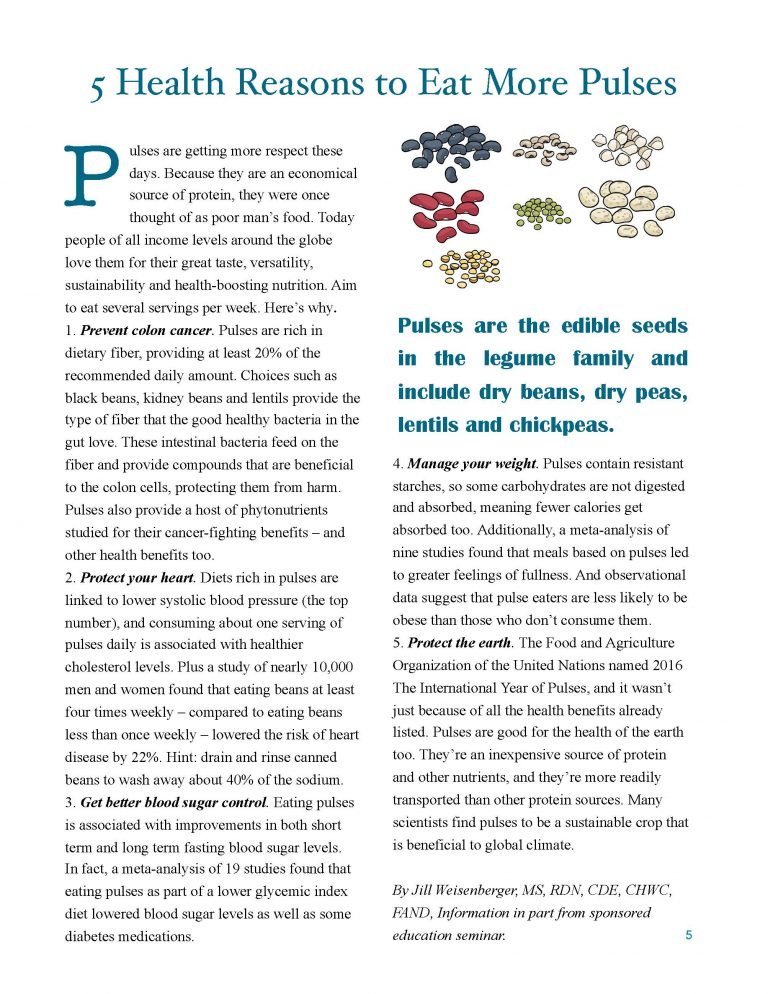
Nutrition Education Store
Look What's New in Our Store