Go for The Whole Grain
What is a whole grain?
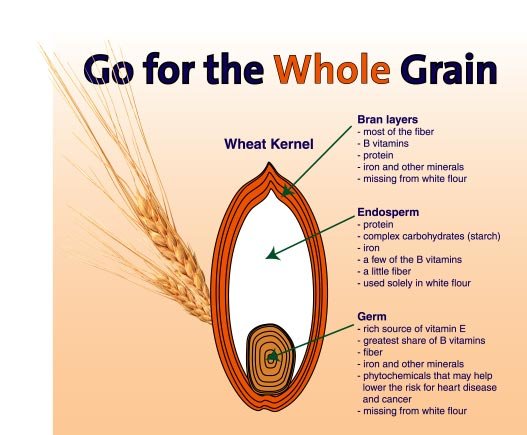
A whole grain is the entire kernel, consisting of the bran, endosperm and germ.
What are the benefits of eating whole grains?
Whole grain products are higher in nutrients, fiber and protective substances than their refined counterparts. Whole wheat flour is made from the whole grain, while white flour is the refined product that is missing the germ and endosperm.
How many servings of grains should I eat per day?
The Dietary Guidelines for Americans call for at least 6 servings of grains per day with half of those being whole grain.
What is a serving?
1 slice of bread1/2 bagel, bun or English muffin1/2 cup cooked cereal, rice or pasta1 ounce ready-to-eat cereal
How do I find whole grain foods in my grocery store?
There are several ways to tell if a product contains a significant amount of the whole grain:• Read the ingredient list. If a whole grain such as whole wheat, brown rice, oatmeal or corn is listed first, that product contains a significant amount.• Look for the whole grain claim, which states, “Diets rich in whole grain foods and other plant foods and low in total fat, saturated fat, and cholesterol may reduce the risk of heart disease and some cancers.” This whole-grain health claim can be included on a food package if the product:- Contains all portions of the grain kernel- Contains 51% whole-grain ingredient(s) or more by weight- Meets the general requirements for health claims- Is low in fat, saturated fat, and cholesterol• Look for 100%?whole wheat when buying bread and other whole wheat products. Do not confuse this with 100%?stone ground, honey wheat, whole wheat, nine grain and other titles that hint at containing whole grains.• See our list below for common whole grain products and their fiber content.
Nutrition Education Store
Look What's New in Our Store