Phytochemicals for Everyone
Low fat? High fiber? Increased variety? Each is an important nutrition message. If you had to choose just one, what would it be? Here are answers from our professional readers.Plant Based DietOne theme does include all of these. The 5 A Day Campaign, The Dietary Guidelines for Americans and numerous health organizations recommend a plant-based diet.Making our diets more plant based offers many benefits: high fiber,nutrient dense, low fat and low saturated fat.Phytochemicals are another benefit of a plant based diet and are strongly implicated in the prevention of numerous cancers, heart disease and high blood pressure.Beverly Clevidence, PhD, research nutritionist at the USDA’s Phytonutrient Laboratory in Beltsville, MD, says, “phytochemicals are not essential for life and growth like vitamins are, but they seem to promote health.”Clevidence also notes, “Phytochemicals are components of fruits and vegetables that have potential for promoting health but for which there is no RDA.”Nutrition Tool For All ThemesPhytochemical facts are an extremely flexible tool in getting the message out about the importance of consuming a plant-based diet. Besides just fruits and vegetables, soy products, nuts, seeds, herbs and teas are included in the plant-based definition. While there seems to be something good for everyone, the benefits can still be targeted to specific audiences.Men may be very interested in hearing about lycopene’s potential against prostate cancer.Women want to hear about the role of broccoli in fighting breast cancer. They are also interested in the benefits of the phytoestrogens in soy for reducing menopause symptoms.Phytochemical FactsPhytochemical facts encourage new parents to include these foods in family meals to teach their children to enjoy foods that will reduce the risk of chronic diseases, such as heart disease and cancerSince many of the beneficial phytochemicals can only be obtained from the plant itself or are not effective in supplement form, the use of whole foods is reinforced.The fun part about this nutrition message is that the research is so new. Many more beneficial phytochemicals are waiting to be discovered.Phytochemical facts and lists are a nutrition tool that advocates numerous messages, including encouraging a plant-based diet.USDA research and chart by Hollis Bass, MEd, RD. Nutrition education tips by Cathy Moore, RD, Cornell Cooperative Extension.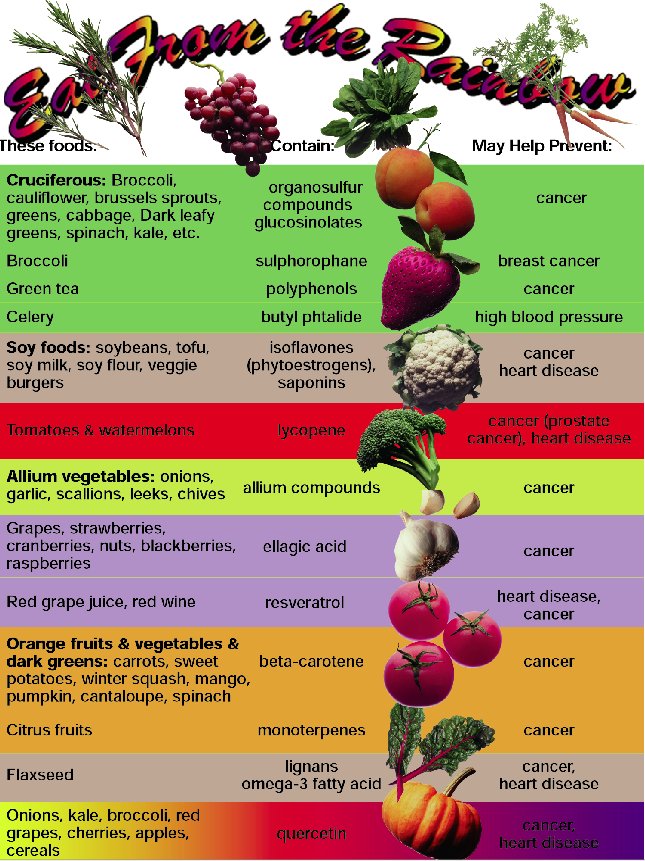
Nutrition Education Store
Look What's New in Our Store