Eat the Rainbow Salad Grazing Board: Now Playing (and Printable Handout)
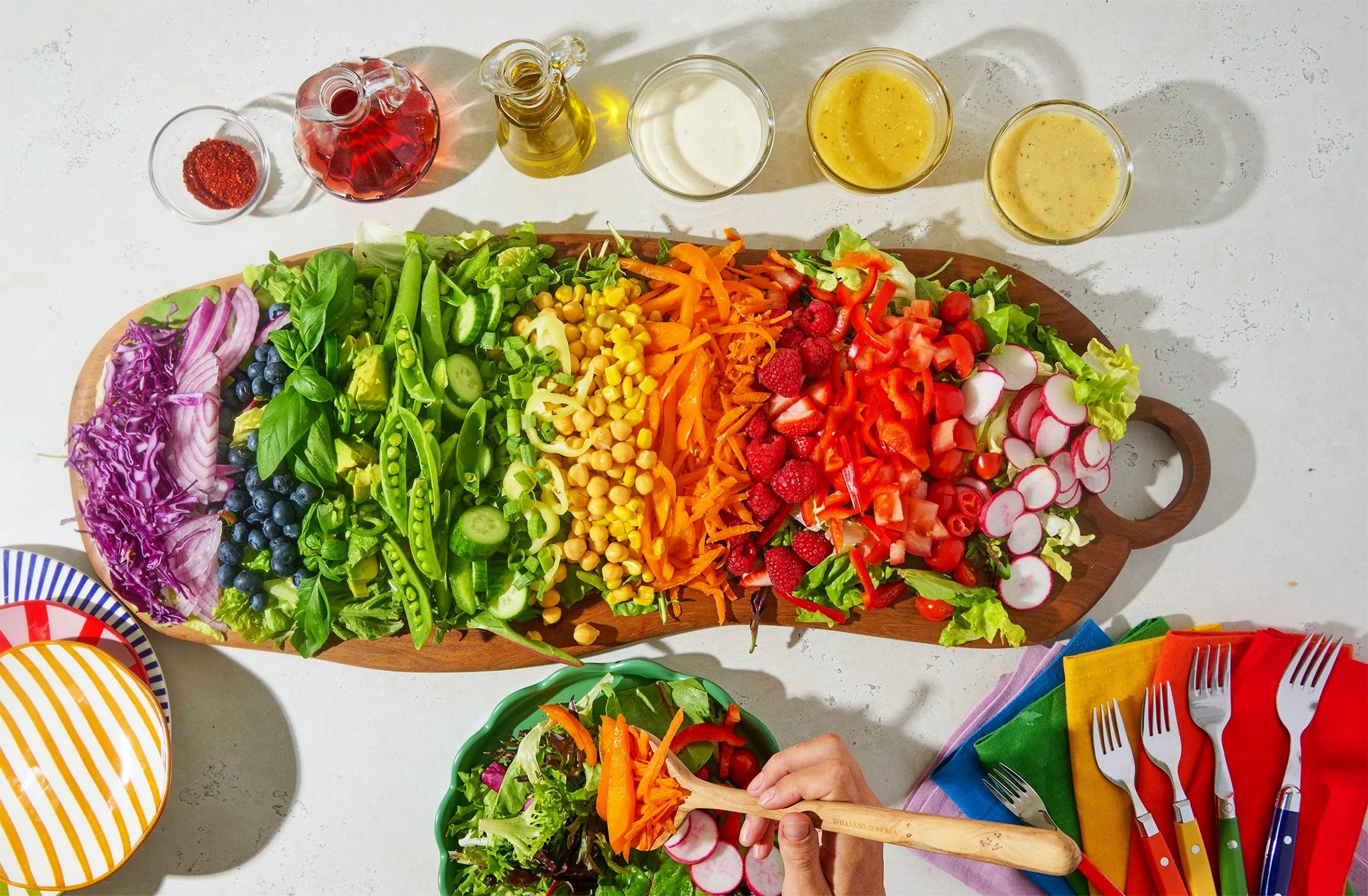
Eating a rainbow of colors matters because each color group in fruits and vegetables reflects a different set of plant compounds: carotenoids in orange and yellow produce, anthocyanins in reds and purples, chlorophyll in greens. Each of those compounds supports the body in a slightly different way, from eye health to heart health to immune function. No single food or color covers all of it, so the more colors on the plate, the broader the range of vitamins, minerals, and antioxidants a person actually gets. Filling half the plate with these colorful foods (the core idea behind MyPlate) also does double duty: it naturally increases fiber and water content, which helps with fullness and digestion, while making room for lean protein and whole grains without a lot of empty calories.
In this video, we turn that idea into something you can actually see. We're building a rainbow salad grazing board using lettuce, radishes, tomatoes, berries, orange peppers, carrots, corn, chickpeas, cucumber, green peppers, green onions, snow peas, avocado, jalapeño, fresh herbs, red onion, blueberries, and red cabbage, arranging every color of the rainbow across one board, then dishing it up into a salad you can build your own way. On a board like this, a mix of colors is also a fast built-in check: if a section looks like it's missing a color, it's likely missing a whole category of nutrients too. It's proof that eating well doesn't have to look plain. When you fill your plate with color, you fill it with nutrition at the same time.
Here is a handout you can use to make your own rainbow salad grazing board, either in a demo or at home, and to help others learn more about the colors of the fruits and vegetables in the rainbow. It would make a fun hands-on project where groups are assigned colors and have to prepare their color for the board.
Check out our new line of Eat the Rainbow Nutrition Education resources in our store:
What’s new in our store:
Nutrition Education Store
Look What's New in Our Store