

Cholesterol 101
 What is Cholesterol?
- Cholesterol is a waxy substance that is very similar to fat.
- It helps your body create cell membranes and process the food you eat.
- Cholesterol travels through your bloodstream in packets of fat and protein. These packets are called lipoproteins.
There are two major types of cholesterol:
- High density lipoproteins (HDL cholesterol)
- Low density lipoproteins (LDL cholesterol)
Meet the Family!
- LDL cholesterol is bad for you. It clings to artery walls and builds up in plaque deposits.
- (Not the good kind of deposit that you put in a bank – the bad kind of deposit that causes heart attacks).
- HDL cholesterol is actually good for you. It moves other cholesterols out of the bloodstream and into the liver, where they are processed out of the body.
Measuring Cholesterol
- After you turn 20, you should check your cholesterol at least once every 5 years.
- To check your cholesterol levels, your doctor will do a lipoprotein profile.
- Usually you have to fast before a lipoprotein profile.
- That way, the doctor can measure the levels of HDL, LDL, and total cholesterol in your blood.
What you want from your cholesterol numbers…
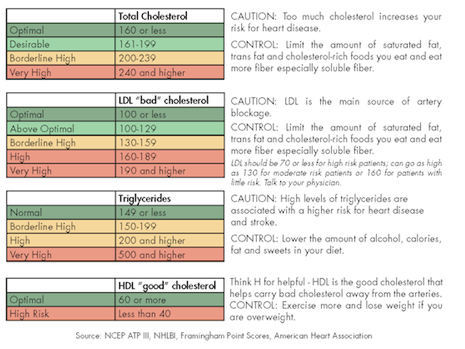
- Total cholesterol should be BELOW 200 mg/dL.
- HDL cholesterol should be ABOVE 40 mg/dL.
- LDL cholesterol should be BELOW 100 mg/dL.
Cholesterol RisksCertain factors increase your risk of getting high cholesterol, including…
- Diet
- Weight
- Age
- Gender
- Heredity
- Physical
- Activity
In a nutshell…
- If you’re overweight and don’t eat healthful foods, you’re at high risk.
- Risk increases as you age, especially for women after menopause.
- If high blood cholesterol runs in your family, you’re likely to get it too.
- If you rarely exercise, your risk increases.
If any of the following elements are a part of your life, you are at even greater risk…
- Diabetes
- History of heart disease
- Kittens
- Smoking
- High blood pressure
- (We were kidding about the kittens)
Dangers of Cholesterol
- LDL cholesterol builds up in your arteries, which clogs them over time.
- If a clot gets stuck in an artery lined with plaque, it can cause a heart attack or stroke.
- Sometimes the cholesterol in plaque deposits will burst, which causes clots of its own.
- There are no symptoms of high cholesterol. It’s like a secret ninja assassin in your bloodstream. Which would be cool, if it weren’t so dangerous.
How to Lower Your Health Risks
- Give yourself a little TLC. In this case, TLC stands for Therapeutic Lifestyle Changes. (Tender loving care won’t hurt either).
- Keep saturated fats at less than 7% of what you eat each day.
- Consume less than 200 mg of cholesterol daily.
- Change your diet and increase your physical activity.
This post is an excerpt from the handout that accompanies our Cholesterol 101 PowerPoint show. For more detailed information, check out our cholesterol education materials in the Nutrition Education Store!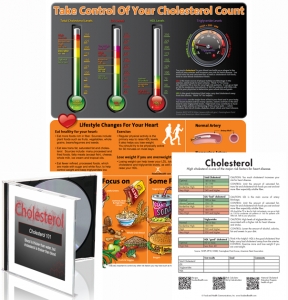
Nutrition Education Store
Look What's New in Our Store

Build-a-Plate Teaching Kit with Food ModelsView in store →

Meet the Kernel Whole Grain Replica BundleView in store →

Lunchtime Hero 3D Award Figure + Activity GuideView in store →

How Much Sugar? Test TubesView in store →

NEW! 3D-Printed Sugar Cubes: Stack the SugarView in store →

How Much Salt? Test TubesView in store →

How Much Fat? Test TubesView in store →

The New Pyramid Poster 2026 (18"×24")View in store →

New 2026 Food Pyramid TearpadView in store →

MyPlate Handout TearpadView in store →

Food Label Math Poster (18"×24")View in store →

Sip Smart Hydration TearpadView in store →

Are You Drinking Candy? Banner on Stand (24"×67")View in store →

MyPlate Portion Plates (Pack of 10)View in store →

Fruit & Vegetable Pens (Pack of 10)View in store →

Fruit-Shaped Note Pads (Pack of 10)View in store →

NEW! Eat Real Food Wristbands (Pack of 20)View in store →

NEW! Habit Stack Wristbands (Pack of 20)View in store →

NEW! Are You Drinking Candy? Wristbands (Pack of 20)View in store →