

One recent study found that sodium and fat are increasing in cereals marketed to children
A recent study published in JAMA’s Open Network found that cereals marketed towards children have changed nutrient content over time.
As shown in the figures below, fat, sodium, and sugar levels have increased, while protein and fiber levels have decreased.
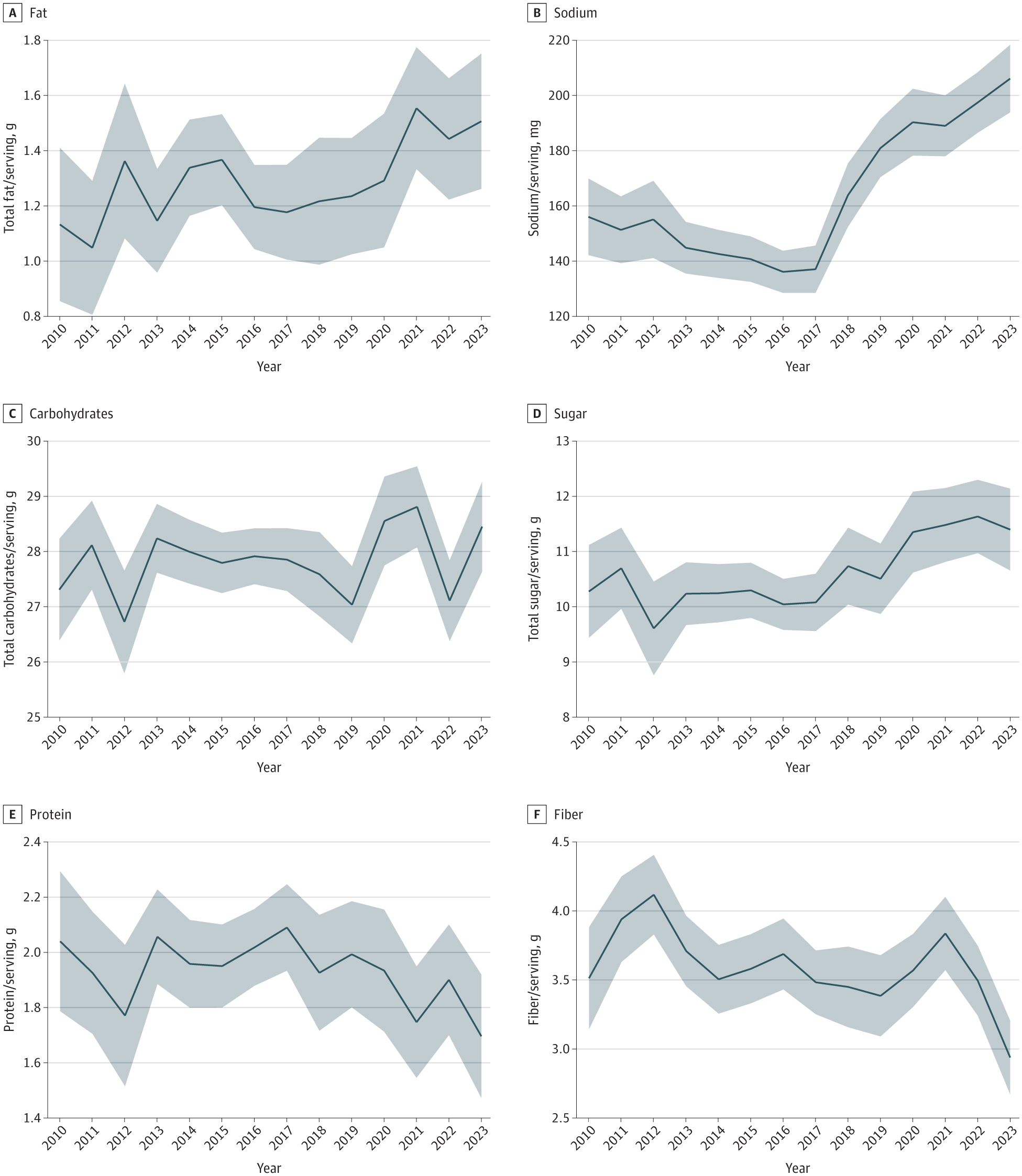
The authors state that the study focuses on cereals that were new or relaunched to introduce new packaging. They did not study all of the cereals on the market. However, this is a valuable visual lesson that products are constantly evolving, and therefore, shoppers should read labels and compare the nutrition facts panel to find products that are low in sugar and sodium while being a good source of fiber.
Here is a comparison of the most popular cereals in the grocery store, with a few good choices listed. Download our Excel file and make it your own.
Source: Manufacturer’s Data 06/25
*Raisin Bran is high in sugar but more than half of that is from the raisins. The figures shown are total sugar and they are per serving which can vary.
How to Read Nutrition Labels on Breakfast Cereals
1. What is the serving size? Check the serving size at the top of the label. Most cereals list around ¾ to 1 cup as a serving. Compare this to how much you actually eat as well as to the other cereals.
2. How much sugar does this cereal contain? Aim for 6 grams of added sugar or less per serving. Avoid cereals with sugar listed as one of the first 2 ingredients.
3. Higher fiber is better. Look for 3 grams of fiber or more per serving.
Fiber keeps you full and supports digestion. Whole grain cereals often have higher fiber content.
4. Watch the sodium. Choose cereals with less than 200 mg of sodium per serving. Less is always better.
5. Whole grain check. Look for “whole grain” as the first ingredient. This means you’re getting all parts of the grain, which offer more nutrition and fiber.
6. Protein is important, too. Look for at least 3 grams of protein per serving, especially if you're not adding milk or yogurt. By adding milk or yogurt you can increase the calcium, protein, and important vitamins.
7. How many ingredients? Fewer ingredients is often better. Skip cereals with artificial colors, flavors, or hydrogenated oils.
Reference:
JAMA Netw Open, Published Online: May 21, 2025, 2025;8;(5):e2511699. doi:10.1001/jamanetworkopen.2025.11699 by Shuoli Zhao, PhD1; Qingxiao Li, PhD2; Yuan Chai, PhD3,4; et al
Nutrition Education Store
Look What's New in Our Store


