Counting Down to 2027: What Every Food-Service Director Needs to Know About the New School Meal Standards
The updated Nutrition Standards for School Meals are rolling out on a schedule, and the biggest milestone is closer than it looks. The headline changes — the first-ever limit on added sugars across the week and the next reduction in sodium — take full effect in School Year 2027-28, beginning July 1, 2027. For directors planning menus, budgets, and vendor contracts, that is not a far-off deadline. It is the school year you are buying for now.
Here is a clear, calm walk-through of what is changing, when, and how to keep your team (and your students) ready.
The added sugars limit: the first of its kind
For the first time, school meals will have a limit on added sugars. It arrives in two steps.
The first step is already in place. Since School Year 2025-26, added sugars have been limited in products where they tend to be concentrated: breakfast cereals, yogurt, and flavored milk. For flavored milk, the target most of the industry has committed to is no more than 10 grams of added sugars per 8 ounces.
The second step is the big one. Beginning in School Year 2027-28, no more than 10 percent of the calories in the weekly menu may come from added sugars — across both breakfast and lunch. To put that in perspective, added sugars currently make up roughly 17 percent of breakfast calories and 11 percent of lunch calories in a typical week. That is a meaningful shift, and it is easier to hit if you start adjusting recipes and product specs before the deadline rather than the summer it lands.
Sodium: one measured reduction
The sodium change is a single, gradual reduction that takes effect in School Year 2027-28. It works out to roughly a 10 percent decrease at breakfast and a 15 percent decrease at lunch. Schools may keep current sodium limits through School Year 2026-27, which gives kitchens a runway to reformulate, retest recipes, and — just as important — prepare students and staff for food that tastes a little different.
That last point matters more than the number. When menus get less salty, the questions come fast. Directors who plan ahead with flavor strategies — herbs, spices, citrus, roasting — and who communicate the "why" clearly tend to have a much smoother rollout than those who let the change speak for itself.
Flavored milk stays on the tray
Good news for participation: fat-free and low-fat flavored milk remains permitted in all K-12 schools. The only change is the added sugars limit noted above, phased in through School Year 2025-26. There is no need to pull chocolate milk from the line — just confirm your products meet the sugar spec.
Whole grains: steady as they go
There is no change to the whole grain requirement. Schools continue to ensure that 80 percent of the weekly grains offered are whole grain-rich (at least 50 percent whole grains). If your whole-grain program is working, keep doing what you are doing.
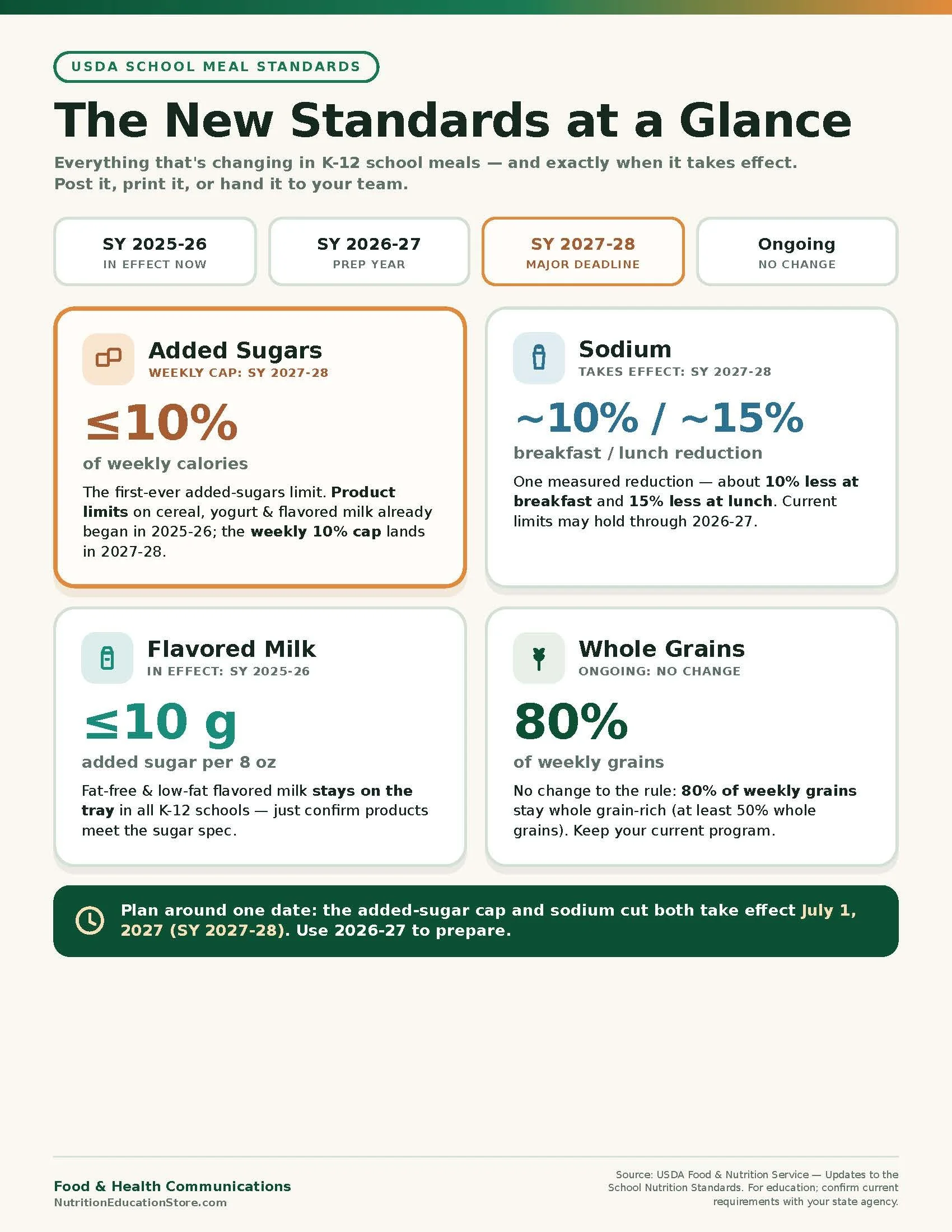
The standards at a glance
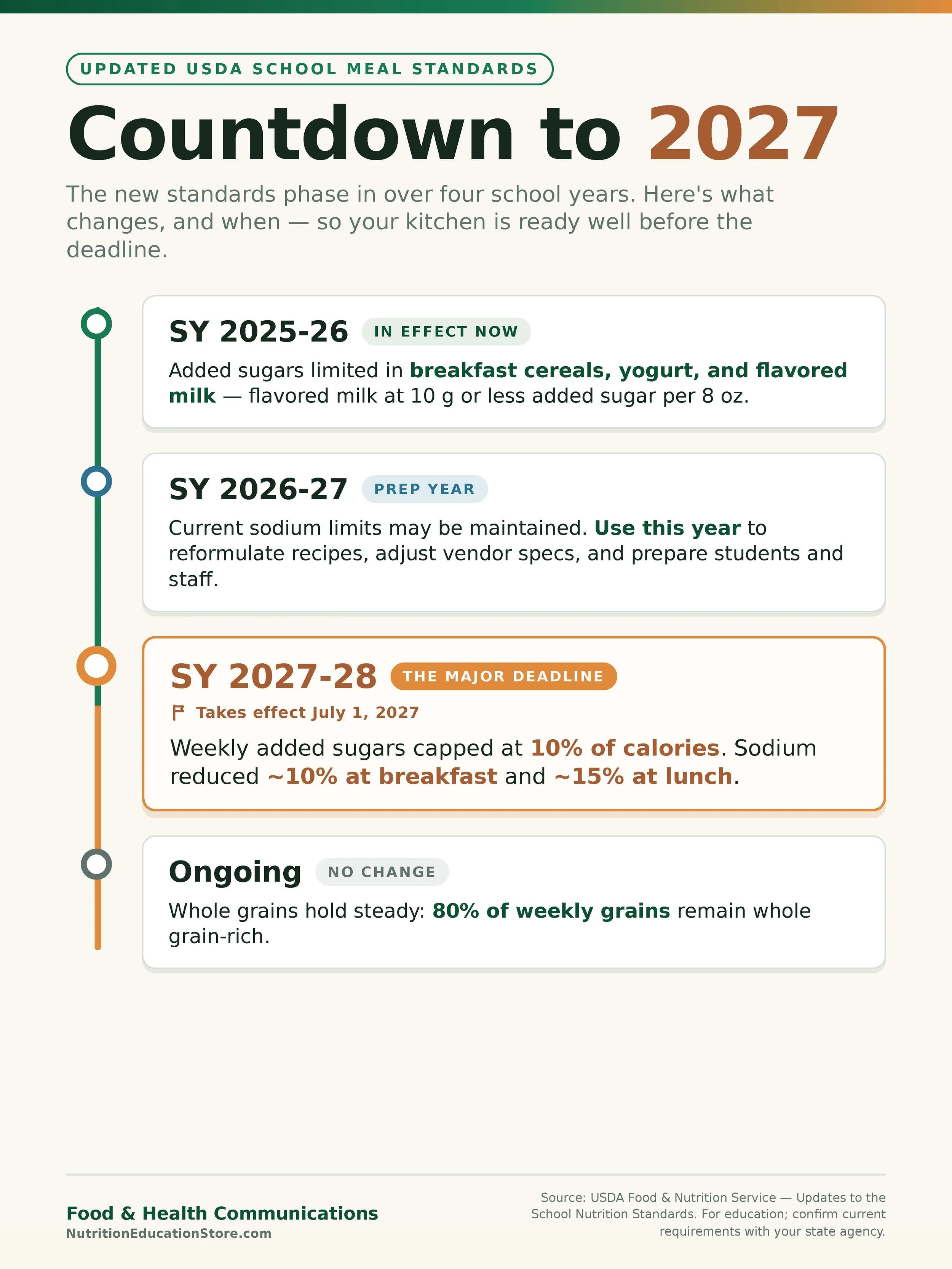
SY 2025-26 — Added sugars limited in cereals, yogurt, and flavored milk (10 g or less added sugar per 8 oz milk). In effect now.
SY 2026-27 — Current sodium limits may be maintained. Use this year to reformulate and prepare.
SY 2027-28 (July 1, 2027) — Weekly added sugars capped at 10 percent of calories; sodium reduced ~10% at breakfast and ~15% at lunch. The major deadline.
Ongoing — Whole grains: 80 percent of weekly grains whole grain-rich. No change.
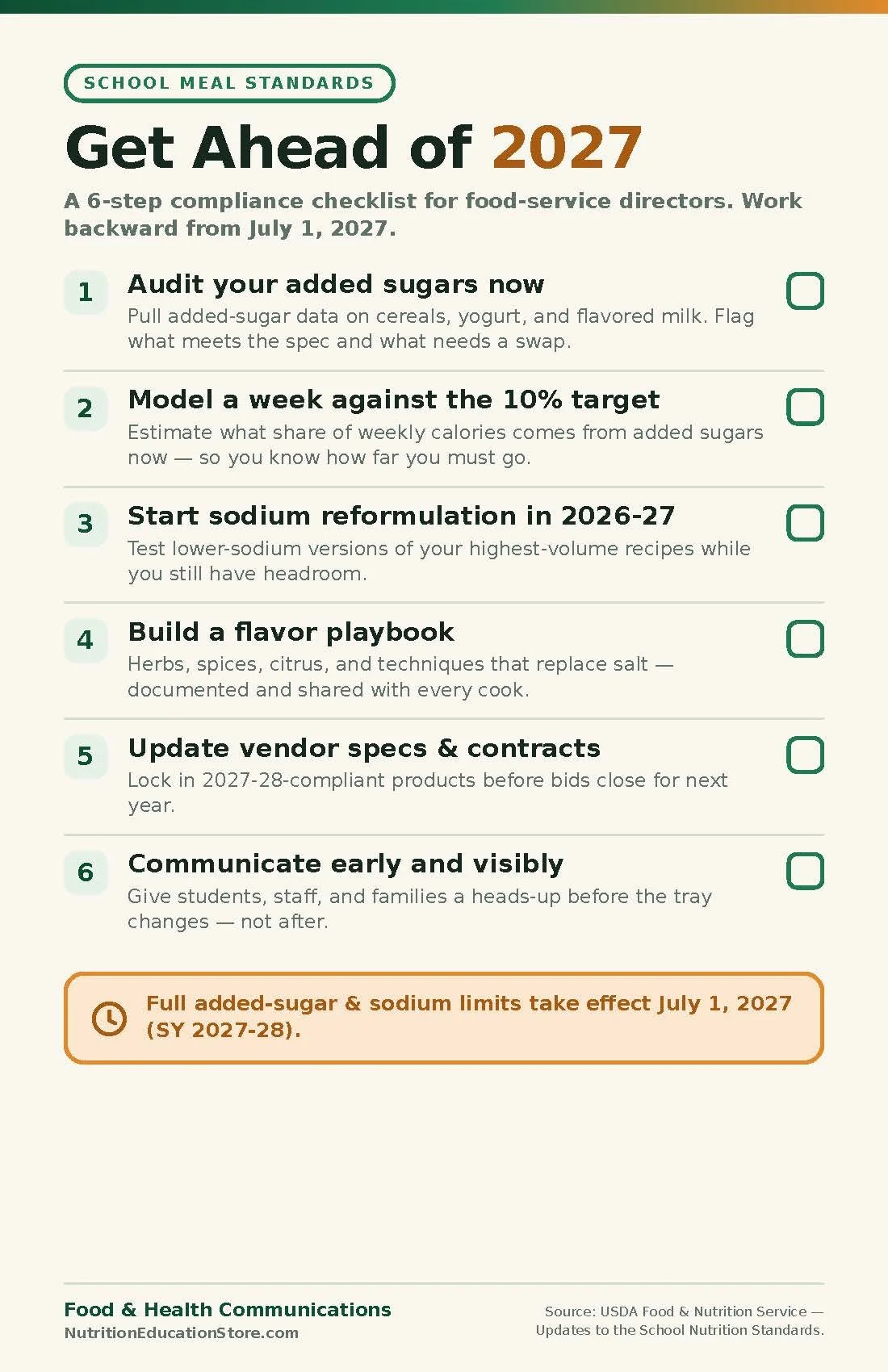
A simple checklist to get ahead of 2027
You do not have to tackle this all at once. Work backward from July 2027 and give each change its own runway:
Audit your added sugars now. Pull the added-sugar content on cereals, yogurts, flavored milk, and any sweetened items. Flag what already meets the spec and what needs a substitution.
Model a sample week against the 10 percent target. Estimate what share of weekly calories comes from added sugars today so you know how far you have to go.
Start sodium reformulation in SY 2026-27. Test lower-sodium versions of your highest-volume recipes while you still have room under the current limits.
Build a flavor playbook. Herbs, spices, and cooking techniques that replace salt — documented and shared with every cook.
Update vendor specs and contracts for the 2027-28 school year before bids close.
Communicate early and visibly. Give students, staff, and families a heads-up before the tray changes, not after.
Make the timeline visible
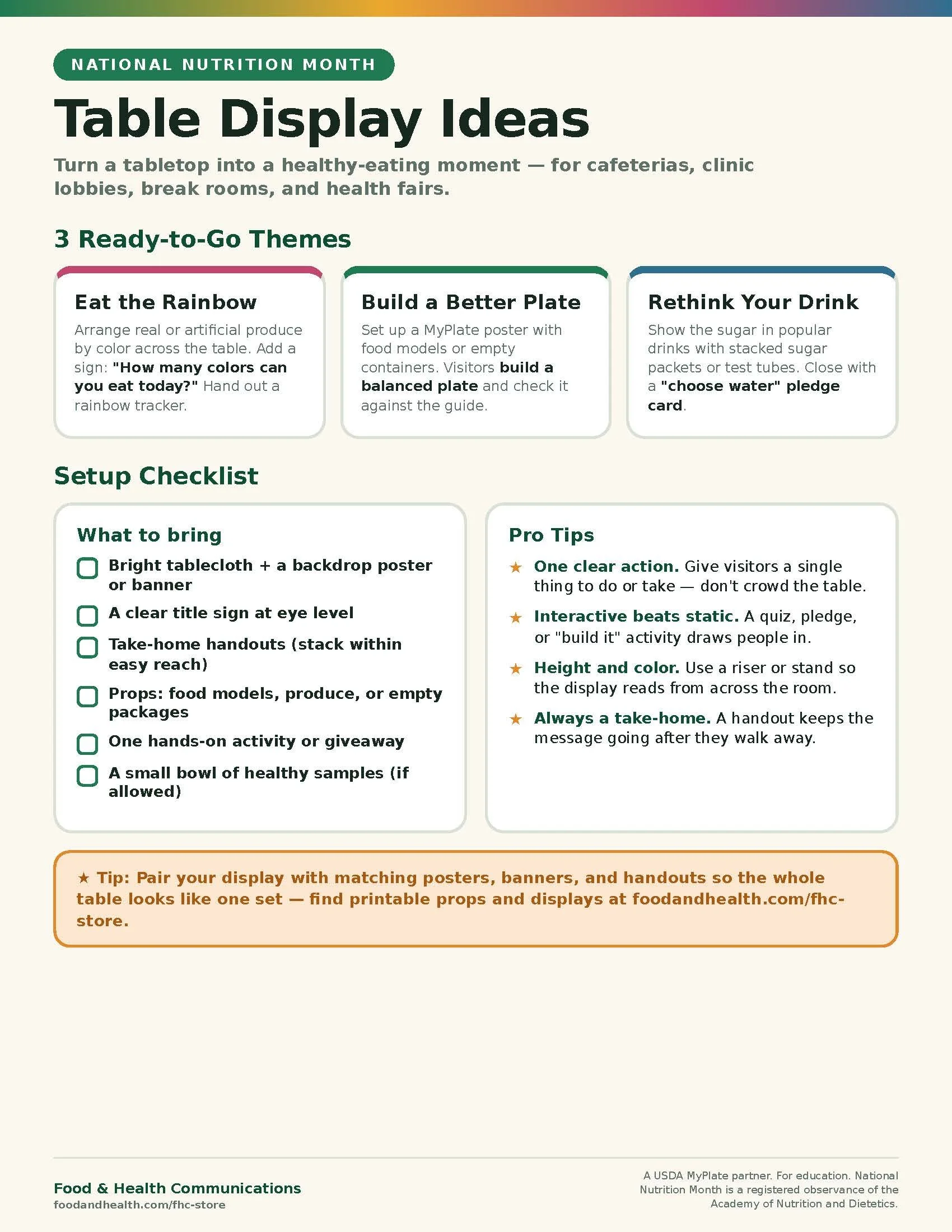
The districts that handle these transitions best treat the standards as a shared, visible plan rather than a memo buried in an inbox. A countdown to July 2027 posted in the kitchen, an at-a-glance summary of what changes and when, and a simple compliance checklist on the wall keep the whole team pointed at the same target. When everyone can see the deadline and the steps, the change stops feeling like a scramble and starts feeling like a plan.
The 2027-28 school year will be here before we know it. Directors who use this year to reformulate, communicate, and prepare will meet the new standards with room to spare — and with students who barely notice the change, because it was handled well.
Sources: Updates to the School Nutrition Standards — USDA Food and Nutrition Service; USDA's 2024 Update to Nutrition Standards for School Meals — Congressional Research Service.
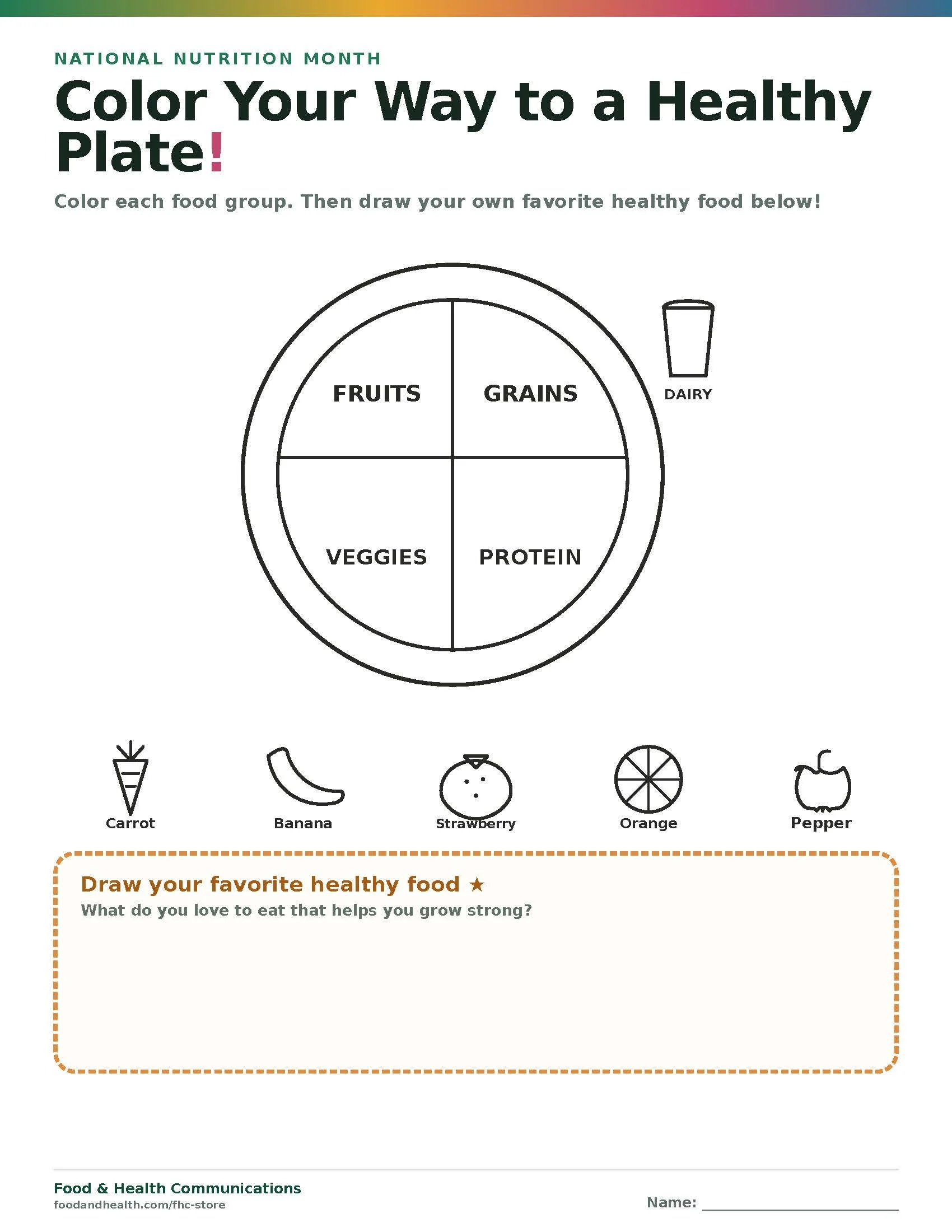
Click any PDF below to get a free chart, coloring sheet, handout, and tray liner.
School Cafeteria & Kitchen Posters
Food safety, menu boards, and back-of-house essentials to keep your cafeteria compliant, organized, and student-friendly.

Kitchen Food Safety Checklist Poster — Bilingual (English/Spanish) 12" x 18"
$22.75
View Poster
Sodium-Smart School Meals Poster — Bilingual (English/Spanish) 18" x 24"
$22.75
View Poster
Handwashing Poster — 12" x 18" Laminated
$22.75
View Poster
Food Temperature Chart Mini Poster Handout — Stacks of 50
$42.00
View Product
Food Safety Temperatures Poster — 18" x 24" Laminated
$22.75
View Poster
Erasable School Breakfast Tray Menu Poster 18" x 24"
$22.75
View Poster
Erasable School Lunch Tray Menu Poster 18" x 24"
$22.75
View Poster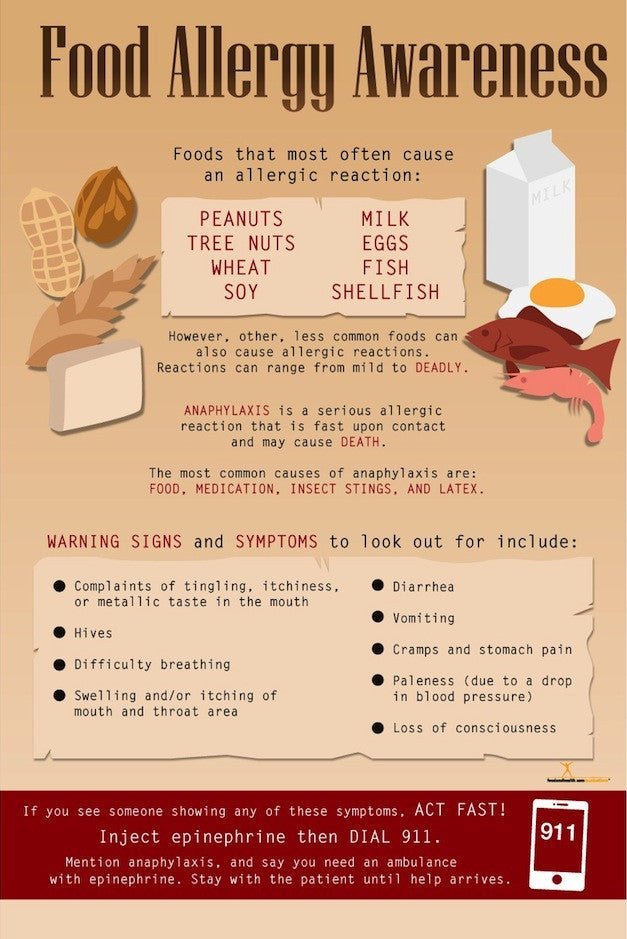
Exam Room Food Allergy Poster 12" x 18"
$22.75
View Poster
Food Allergy Poster — 18" x 24" Laminated (English)
$22.75
View Poster
Food Safety Poster
$22.75
View Poster
Food Safety PowerPoint Show and Handouts — Download
$29.00
View Product
MyPlate School Menu Erasable Poster
$20.00
View PosterNutrition Education Store
Look What's New in Our Store