Protein Comparison Charts & Handouts
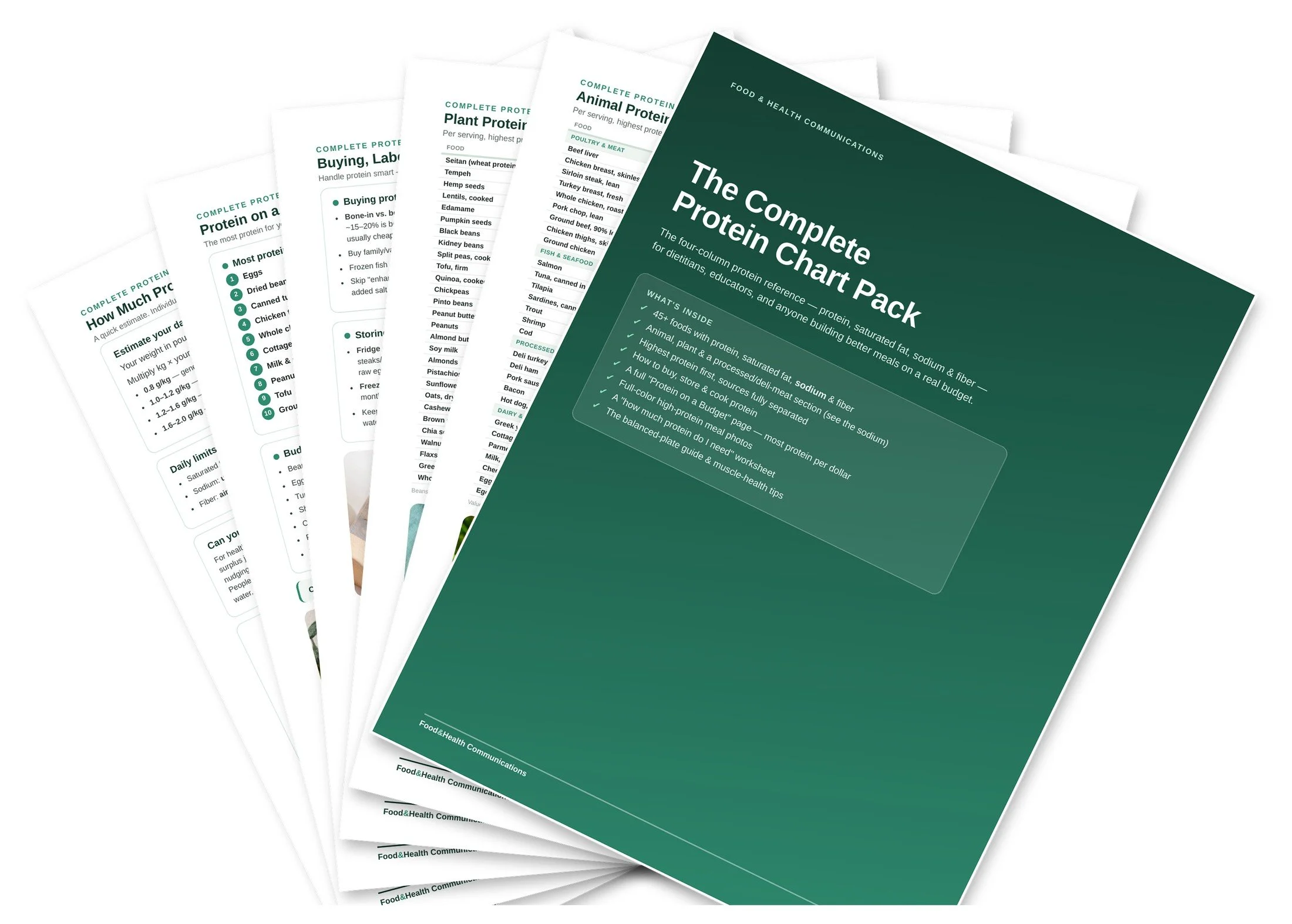
Most protein charts stop at grams of protein. This one keeps going — protein, saturated fat, sodium, and fiber, side by side for 45+ foods, from chicken breast and sirloin to lentils, tofu, and nuts, sorted highest-protein-first and split into animal and plant. Because the protein number isn't the hard part; what comes with it is. Fresh turkey has 55 mg of sodium. Deli turkey has over 1,000. This pack is built to make choices like that obvious at a glance.
Inside the six pages: the full four-column chart with a processed-and-deli-meat section, a "Protein on a Budget" page that ranks the most protein per dollar, practical tips on buying, storing, and cooking protein, real-food meal photos, a protein-needs worksheet, and a balanced-plate guide. Print it for your fridge, your clients, or your classroom. Everything you actually need to choose protein well — for less than the cost of a single protein bar.
Download PDF now
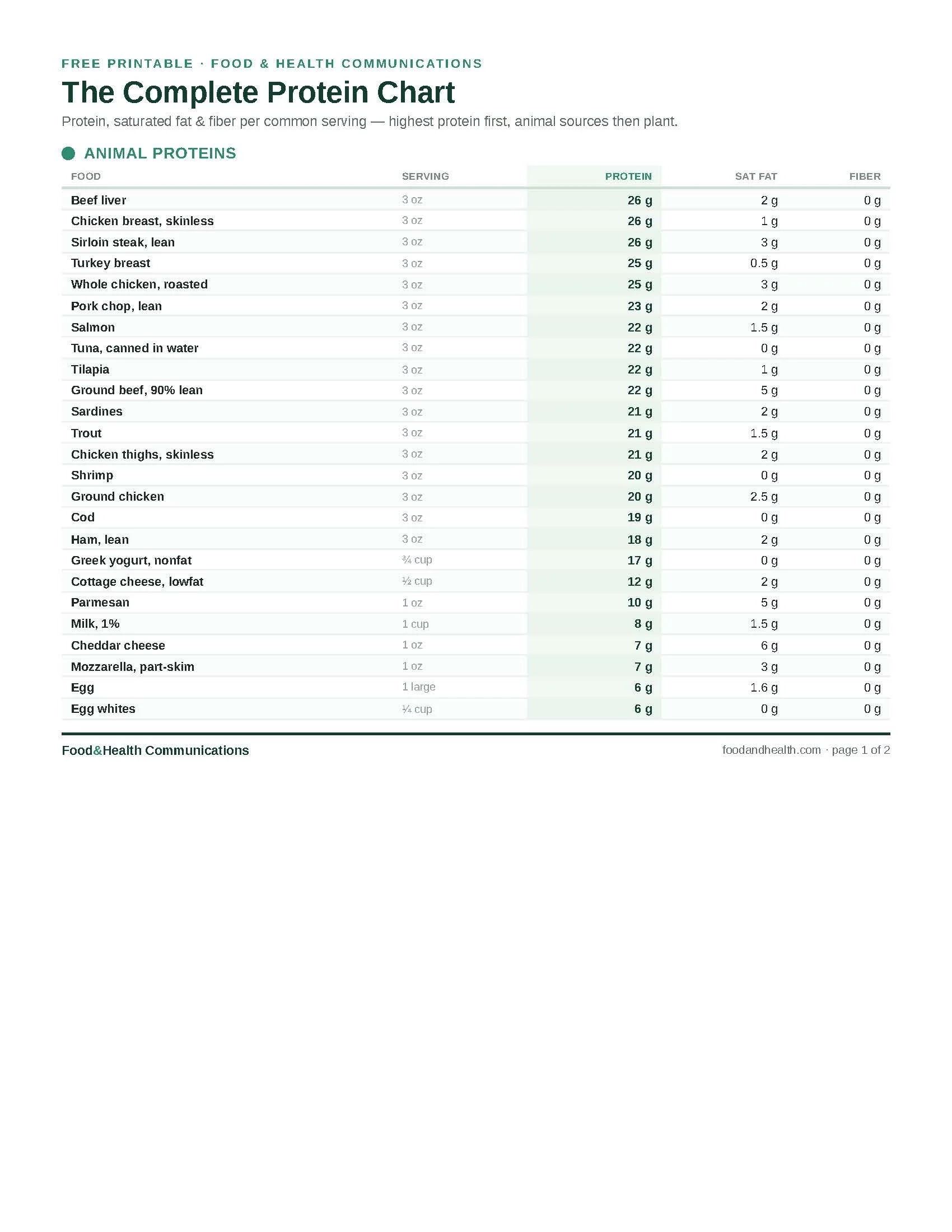
FREE - click to download - animal protein chart
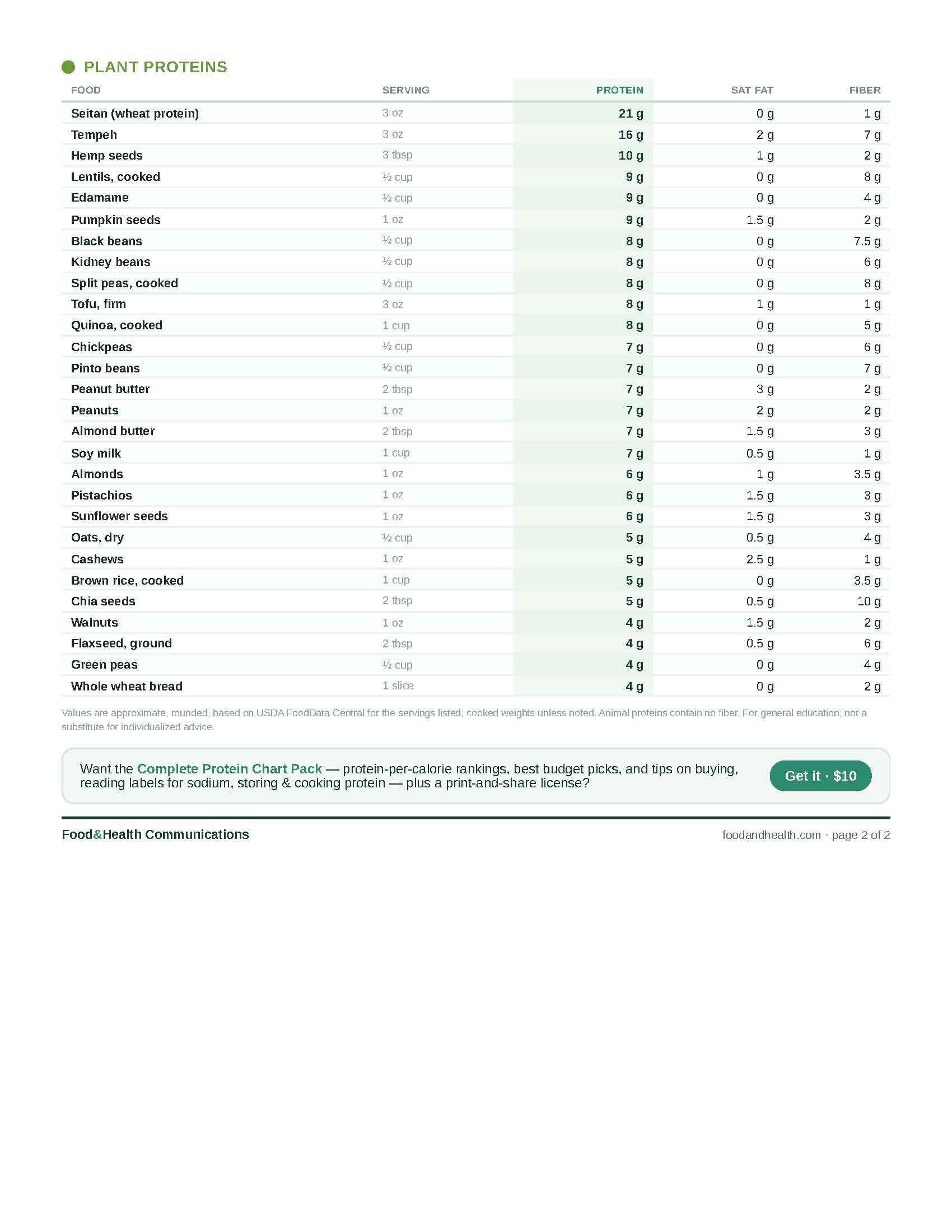
FREE - click to download - plant protein chart
Most protein charts have one column. This one has three.
That's on purpose. Almost every food on this chart delivers 20-plus grams of protein — the protein number is the boring part. What separates a good protein choice from a poor one is what comes with it.
Turkey breast and ribeye provide nearly identical amounts of protein. One costs you 0.3 grams of saturated fat. The other costs 7.5 — about a third of your entire day's budget.
Three ounces of fresh turkey has 54 mg of sodium. Three ounces of deli turkey has about 1,050. Same bird. Twenty times the salt.
And every animal protein on the chart has zero fiber. A cup of lentils gives you 18 grams of protein and 16 grams of fiber, with almost no saturated fat or sodium. It's the only kind of food on the page that solves two problems at once.
What's in it
The protein number is the easy part — what comes with it is what makes a food a smart choice. This free two-page chart lays out 50+ everyday protein foods — from beef liver, chicken, and steak to lentils, tofu, and nuts — with protein, saturated fat, and fiber side by side, sorted highest-protein-first and split into animal and plant. Print it for your fridge, your clients, or your classroom, and see at a glance where your protein really comes from. Free to download.
The bottom line
Vary your protein. Eat fish two to three times a week. Choose lean cuts and skinless poultry. Add beans and lentils — protein, fiber, no saturated fat, almost no sodium. Go easy on deli and processed meat; the sodium column tells you why. And watch the portion: 3 oz cooked is about a deck of cards.
The RDA is 0.8 grams of protein per kilogram of body weight. Most people already get enough; they just need to get a variety of proteins to include plant and seafood sources. If you have questions about the right amount for you, ask a registered dietitian.
FAQ
How much protein do I need? The RDA is 0.8 g per kg of body weight — about 56 g for a 70 kg adult. Which meat has the most protein? Chicken breast and lean beef sirloin, at about 26 g per 3 oz — but turkey breast is close behind with a fraction of the saturated fat. What is the best plant protein? Lentils — 18 g of protein and 16 g of fiber per cooked cup. Do I need a protein supplement? Most people don't. Protein deficiency is rare in the U.S.
See more handouts for cheese and burgers.
Want to know how much protein to eat? Here is a handout for how much protein to eat as guided by the Dietary Guidelines and MyPlate.
Most protein charts stop at grams of protein. This one keeps going — protein, saturated fat, sodium, and fiber, side by side for 45+ foods, from chicken breast and sirloin to lentils, tofu, and nuts, sorted highest-protein-first and split into animal and plant. Because the protein number isn't the hard part; what comes with it is. Fresh turkey has 55 mg of sodium. Deli turkey has over 1,000. This pack is built to make choices like that obvious at a glance.
Inside the six pages: the full four-column chart with a processed-and-deli-meat section, a "Protein on a Budget" page that ranks the most protein per dollar, practical tips on buying, storing, and cooking protein, real-food meal photos, a protein-needs worksheet, and a balanced-plate guide. Print it for your fridge, your clients, or your classroom. Everything you actually need to choose protein well — for less than the cost of a single protein bar.
Download PDF now
Nutrition Education Store
Look What's New in Our Store