Coffee Creamer Comparison Chart
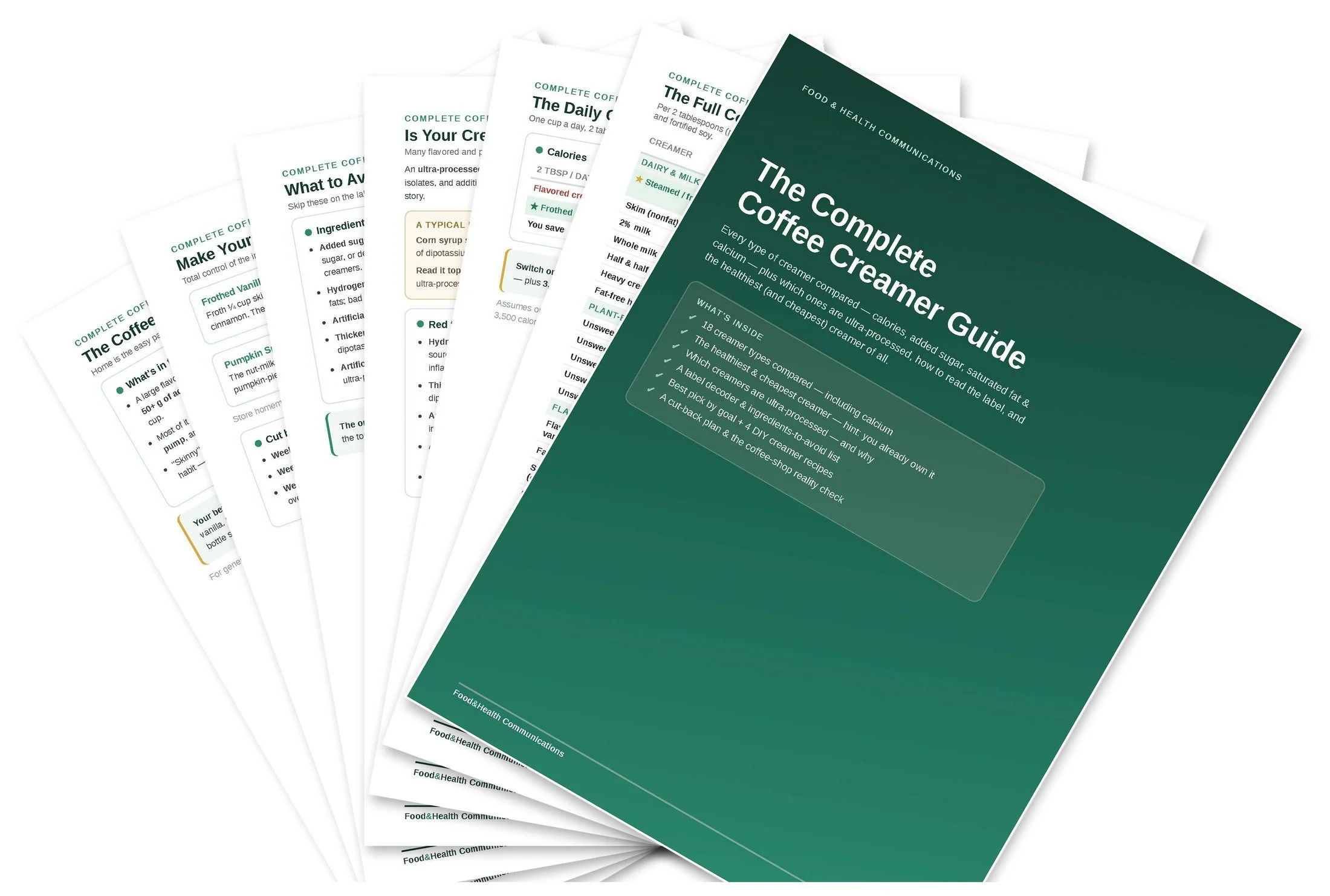
The healthiest creamer is also the cheapest — and it's already in your fridge.
That splash of flavored creamer feels harmless. But the same two tablespoons can swing from 5 calories and zero sugar to 70 calories and 10 grams of added sugar — and the flavored bottles are quietly some of the most ultra-processed things in your kitchen, built from oils, thickeners, and "natural flavor" instead of food. This guide lays all 18 types side by side so you can see exactly what your cup is costing you, and points you to the one most people overlook: steamed, frothed skim milk. It's the healthiest pour on the chart and the cheapest — no special bottle, no run to the store.
Inside the 7 pages you get the full comparison chart (calories, added sugar, saturated fat, and calcium for every creamer), a "what it adds up to" page that shows a year of flavored creamer as roughly 21,900 calories and a 7½-pound bag of sugar, a plain-English ultra-processed breakdown so you can read a label and know what you're really drinking, best picks by goal (fewest calories, most calcium, lowest sugar), four DIY creamer recipes, and a gentle three-week plan to step down from sweet without feeling deprived. It's the kind of thing you print once and keep by the coffee maker.
It's time for another reader request! Anne Linge, RDN, CD, CDE, asked whether we had any hacks to make coffee healthier — and her question so inspired us that we're launching a whole coffee series. Here's the first installment: a coffee creamer comparison chart.
Many people don't think much about what they add to their morning coffee. But that choice matters — especially for daily calories, sugar, and saturated fat.
Some of the comparisons are a bit obvious. Of course, heavy cream has more calories and saturated fat than whole milk. But others are surprising. Did you know coconut milk has almost as much fat as heavy cream? Or that fat-free half-and-half has twice as much sugar as the regular kind? Add flavored creamers, nut milks, and other variations, and things get confusing fast.
That's why we're here. Let's uncomplicate it.
We compared the 11 most popular creamers
My team and I looked at everything from traditional cream to unsweetened almond milk. We measured total calories, fat, saturated fat, protein, and sugar — and put it all in one chart.
The winners
Almond milk has the fewest calories. Whole milk, pea milk (Ripple), and soy milk are tied for the best protein.
The ones to watch
Coconut milk. Many people assume it's heart-healthy — but it's loaded with saturated fat, and calories to match.
French vanilla creamer. With 40 grams of sugar in a dinky half cup, this one creamer could throw off your whole day's nutrition plan.
A note on serving size — this is the part most charts get wrong
The packages listed wildly different serving sizes. Heavy cream and vanilla creamer were measured by the tablespoon. Whole milk and almond milk, by the cup. Many others used 2 tablespoons. How do you compare numbers like that?
You don't — not fairly. So we did the math and put every creamer on the same footing: a half-cup serving. That makes the comparison honest. (If you only use a splash, your real impact is smaller — but now you can see how they truly stack up against each other.)
We pulled the manufacturer's data for the most accurate numbers.
And just between us? Ripple is hands-down my favorite — a plant-based, dairy-free half-and-half made with pea protein. I cook with it, and I love the unsweetened version in soups.
More coffee resources on the way
That wraps up the first installment — but there's more coming. We'll cover the most healthful ways to prepare coffee, take a closer look at popular drinks from Starbucks and Dunkin', dig into the cost of coffee, and address the effects of caffeine.
FAQ
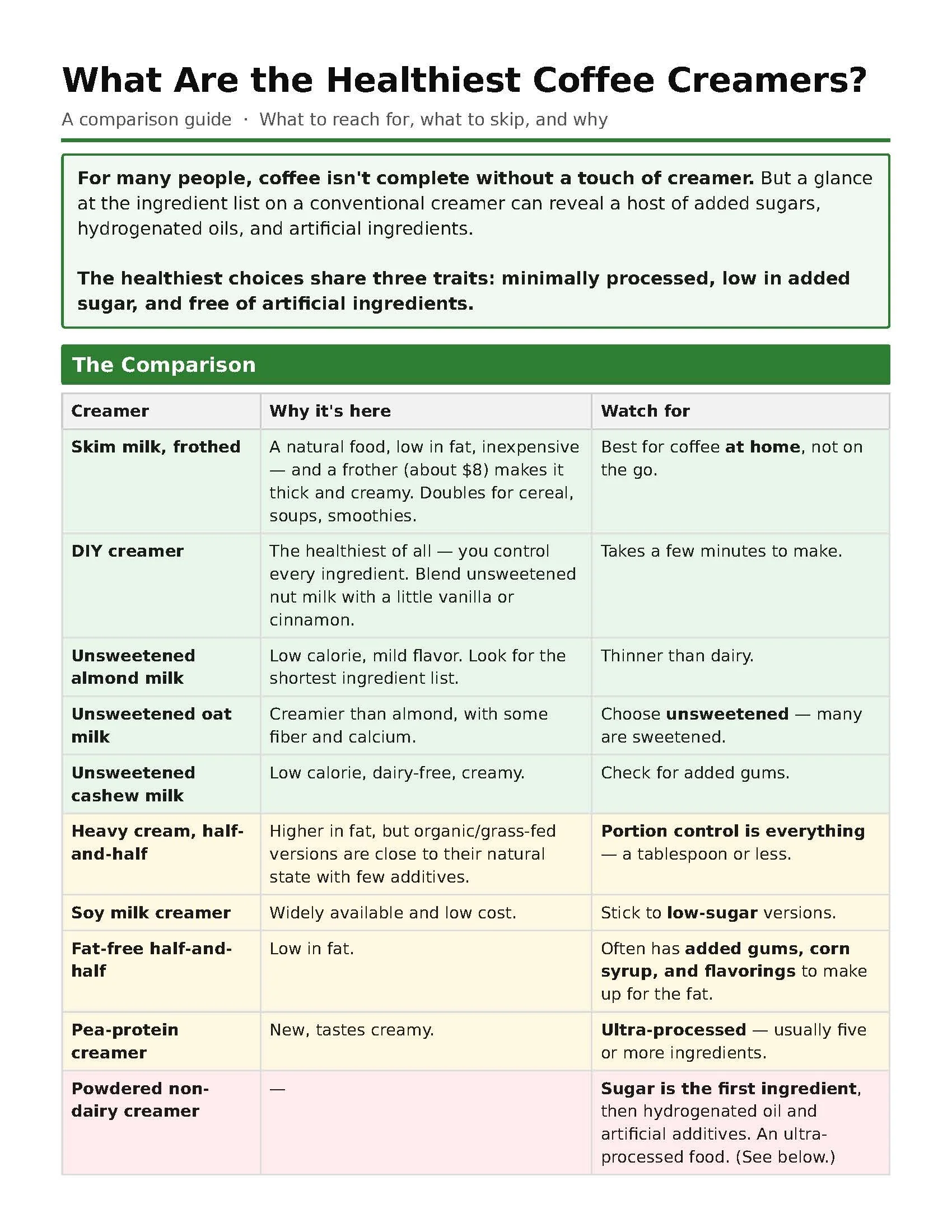
What is the healthiest coffee creamer? Unsweetened almond milk has the fewest calories. For protein, whole milk, soy milk, and pea milk (Ripple) lead. The healthiest choices are minimally processed, unsweetened, and free of artificial ingredients.
Which creamer has the most sugar? Flavored creamers are the highest — French vanilla can carry about 40 grams of sugar per half cup.
Is coconut milk a healthy creamer? It's high in saturated fat — nearly as much as heavy cream — so use it sparingly.
Which coffee creamer has the most protein? Whole milk, soy milk, and pea milk (Ripple) are tied for the highest protein.
How were the creamers compared? Every creamer is shown at the same half-cup serving, using manufacturer data, so the comparison is fair across very different products.
Download the free guide
The healthiest creamer is also the cheapest — and it's already in your fridge.
That splash of flavored creamer feels harmless. But the same two tablespoons can swing from 5 calories and zero sugar to 70 calories and 10 grams of added sugar — and the flavored bottles are quietly some of the most ultra-processed things in your kitchen, built from oils, thickeners, and "natural flavor" instead of food. This guide lays all 18 types side by side so you can see exactly what your cup is costing you, and points you to the one most people overlook: steamed, frothed skim milk. It's the healthiest pour on the chart and the cheapest — no special bottle, no run to the store.
Inside the 7 pages you get the full comparison chart (calories, added sugar, saturated fat, and calcium for every creamer), a "what it adds up to" page that shows a year of flavored creamer as roughly 21,900 calories and a 7½-pound bag of sugar, a plain-English ultra-processed breakdown so you can read a label and know what you're really drinking, best picks by goal (fewest calories, most calcium, lowest sugar), four DIY creamer recipes, and a gentle three-week plan to step down from sweet without feeling deprived. It's the kind of thing you print once and keep by the coffee maker.
Nutrition Education Store
Look What's New in Our Store