MyPlate Printables — Free PDF Pack, Template & Worksheet
USDA retired MyPlate.gov in January 2026 — but the plate still works. What happened to MyPlate.gov →
Nothing about the science changed. Half your plate as vegetables and fruit is still good advice. A quarter protein, a quarter whole grains, and dairy alongside. The graphic was retired. The meal wasn't.
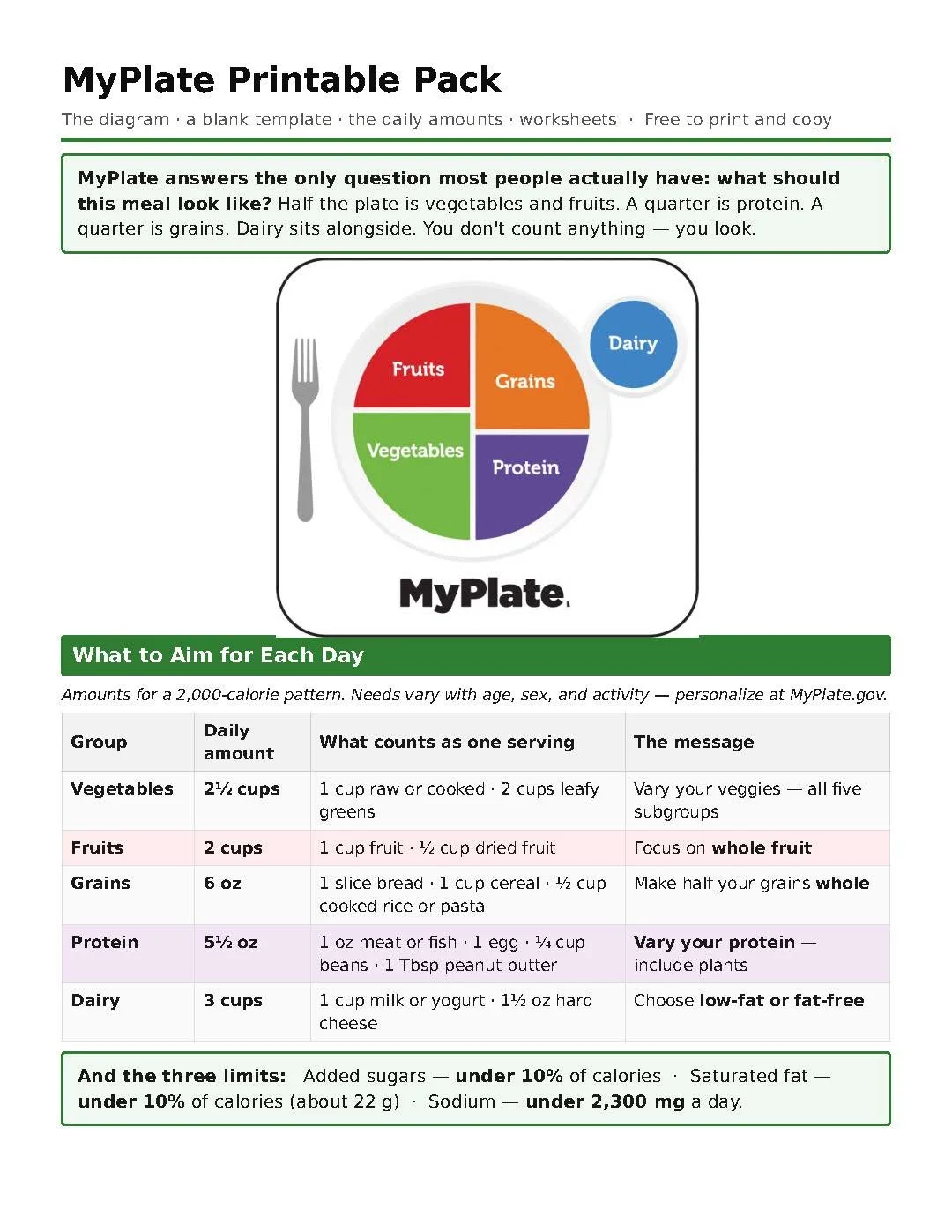
MyPlate answers the only question most people actually have: what should this meal look like? You don't count anything. You look.
What's in it
The MyPlate diagram · a blank build-your-plate template · the daily amounts for each food group · the hand portion trick (palm = protein, fist = a cup, thumb = a tablespoon) · a build-your-plate worksheet · a vary-your-veggies tracker.
What to aim for each day
What to Aim for Each Day
| Food group | Daily amount | The message |
|---|---|---|
| Vegetables | 2½ cups | Vary your veggies — all five subgroups |
| Fruits | 2 cups | Focus on whole fruit |
| Grains | 6 oz | Make half your grains whole |
| Protein | 5½ oz | Vary your protein — include plants |
| Dairy | 3 cups | Choose low-fat or fat-free |
Amounts for a 2,000-calorie eating pattern. Needs vary with age, sex, and activity level — adjust as needed for your own calorie needs.
FAQ
Is MyPlate still used? Yes. USDA's Food and Nutrition Service still uses MyPlate materials for Team Nutrition and the school meal programs.
What happened to MyPlate.gov? USDA retired it on January 7, 2026. It now redirects to RealFood.gov. [Read more →]
Where can I get a MyPlate printable? Right here — free, no sign-up.
How much of my plate should be vegetables? Vegetables and fruit together should fill half, with vegetables taking the larger share.
Nutrition Education Store
Look What's New in Our Store