The Vegetable List Printable
"Eat more vegetables" is always a great plan. And it gets interesting once you learn the five vegetable subgroups — because vegetables are categorized by color and nutrient, and each group brings something the others don't. That's why eating a variety delivers so much more than eating a lot of any one thing.
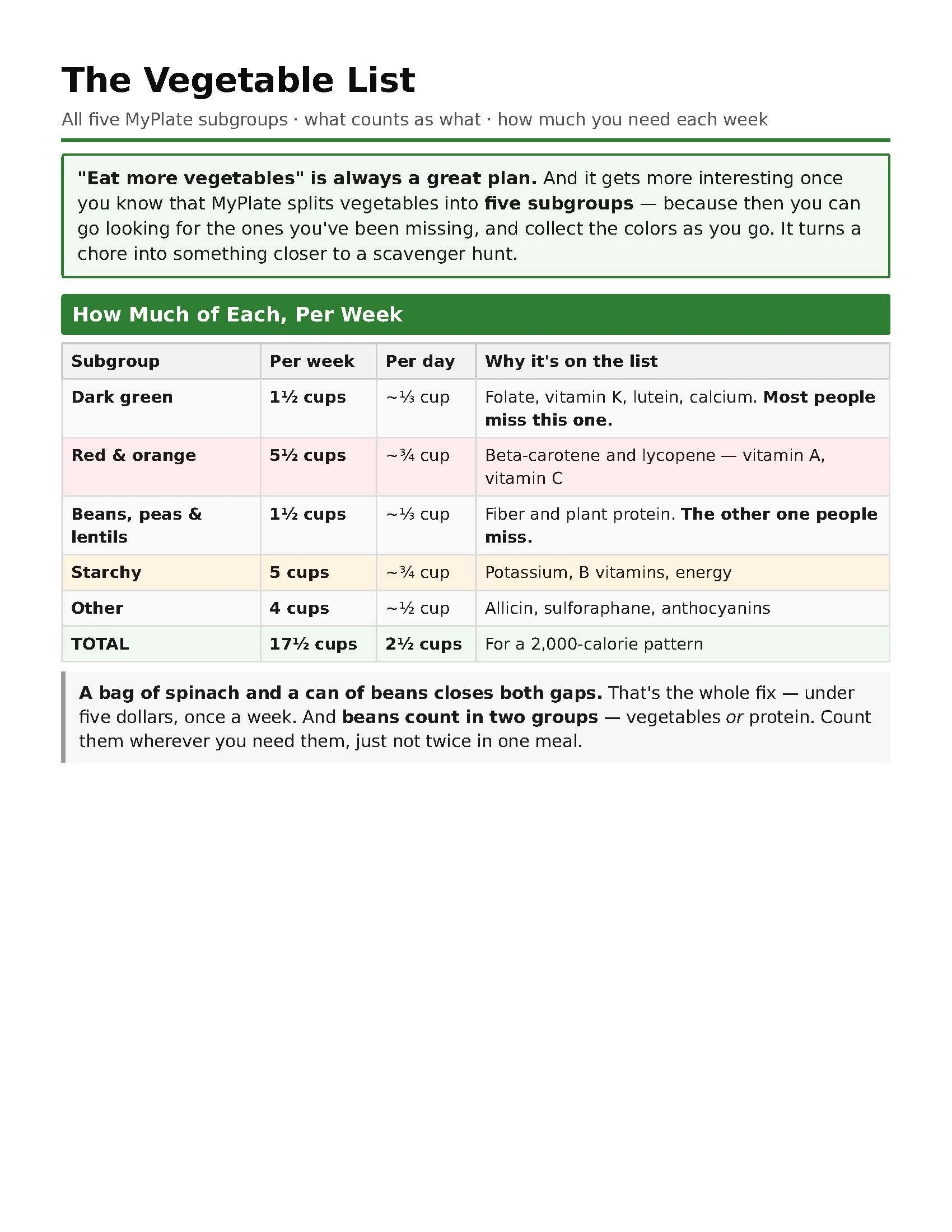
How much of each, per week
Subgroup. Per week. Why is it on the list
Dark green. 1½ cups. Folate, vitamin K, lutein. Most people miss this one.
Red & orange. 5½ cups. Beta-carotene and lycopene
Beans, peas & lentils. 1½ cups. Fiber and plant protein. The other one people miss.
Starchy. 5 cups. Potassium, B vitamins
Other. 4 cups. Allicin, sulforaphane, anthocyanins
A bag of spinach and a can of beans close both gaps. Under five dollars, once a week.
And beans count in two groups — as a vegetable or as a protein. Count them wherever you need them, just not twice in the same meal.
The color is the nutrient
The pigment that makes tomatoes red and carrots orange is a phytonutrient. You can't see nutrients, but you can see color — which makes color the simplest shortcut there is.
Two things worth knowing: lycopene becomes more available when tomatoes are cooked with oil, so tomato sauce beats a raw tomato for lycopene. And beta-carotene needs fat to be absorbed, so olive oil on roasted carrots is doing real nutritional work.
What's in it
The complete list of all vegetables across all five subgroups, with checkboxes. Weekly targets. The rainbow pigment chart. And a week-of-color tracker.
FAQ
What are starchy vegetables? Potatoes, corn, green peas, plantains, cassava, water chestnuts, taro. What are the five vegetable subgroups? Dark green; red and orange; beans, peas and lentils; starchy; and other. What counts as one cup of vegetables? 1 cup raw or cooked, or 2 cups of raw leafy greens. Do beans count as a vegetable or a protein? Both — just not twice in the same meal.
Nutrition Education Store
Look What's New in Our Store