Free Printable Portion Control Plate + Hand Portion Guide
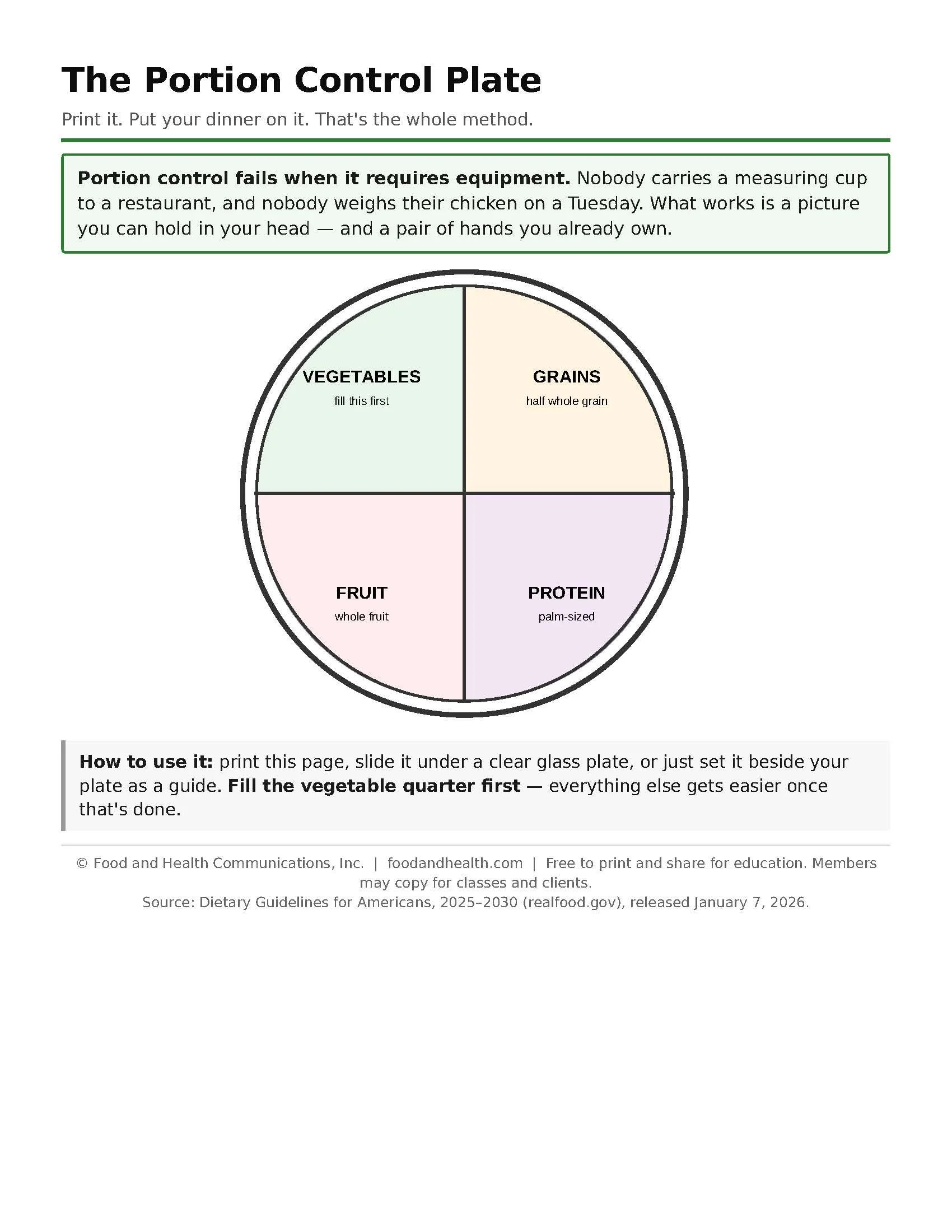
Portion control fails when it requires equipment.
Nobody carries a measuring cup to a restaurant. Nobody weighs their chicken on a Tuesday. What actually works is a picture you can hold in your head — and a pair of hands you already own.
What's in it
A printable portion plate. Print it, slide it under a clear plate, or just set it beside your dinner. Fill the vegetable quarter first — everything else gets easier once that's done.
The hand guide. Your palm is a serving of protein (about 3 oz). Your fist is a cup — use it for vegetables and fruit. Your cupped hand is half a cup — rice, pasta, beans. Your thumb is a tablespoon — oil, dressing, peanut butter.
Your portion tools are attached to your arms. They scale to your body, and they go everywhere you go. Bigger hands, bigger portions — that isn't a flaw, it's the point.
Plus: where portions actually go wrong (a bagel is 3–4 servings of grain; a "small" restaurant entrée is 2–4 servings), and three rules that beat counting.
The three rules
Fill the vegetables first. They take up room, and they're the food almost everyone under-eats.
Use a smaller plate. A 9-inch plate that looks full is more satisfying than a 12-inch plate that looks half-empty — with the same food on it. That's not a trick; it's how the brain reads a plate.
Serve from the stove, not the table. A second helping should require a decision.
And eat slowly. Fullness signals take about 20 minutes to arrive. Most people can finish a large meal before they ever show up.
FAQ
How do I control portions without measuring? Use your hands. Palm = protein, fist = one cup, cupped hand = half a cup, thumb = one tablespoon. What size plate should I use? A 9-inch plate. Larger plates lead to larger portions without feeling more satisfying. How much meat is one serving? About 3 oz cooked — the size of a deck of cards, or your palm.
Nutrition Education Store
Look What's New in Our Store