

What Are Ultra-Processed Foods? A Dietitian's Plain-Language Guide (+ Free Handout)
Ultra-Processed Foods: What They Are, Why They Matter, and What to Do (Without the Fear)
"Ultra-processed" is everywhere right now — in headlines, on social media, and in your clients' questions. But the term gets used so loosely that it causes more anxiety than action. Here's the clear, balanced version you can share with clients, students, and patients.
First, not all "processing" is bad
Processing simply means changing a food from its raw state — and a lot of processing is genuinely helpful. Freezing vegetables locks in nutrients. Canning beans makes cheap protein shelf-stable. Milling turns wheat into flour. None of that is the concern. The issue is a specific end of the spectrum: ultra-processed foods.
The NOVA system: four groups, from whole to ultra-processed
Researchers sort foods by how much they've been processed using the NOVA framework:
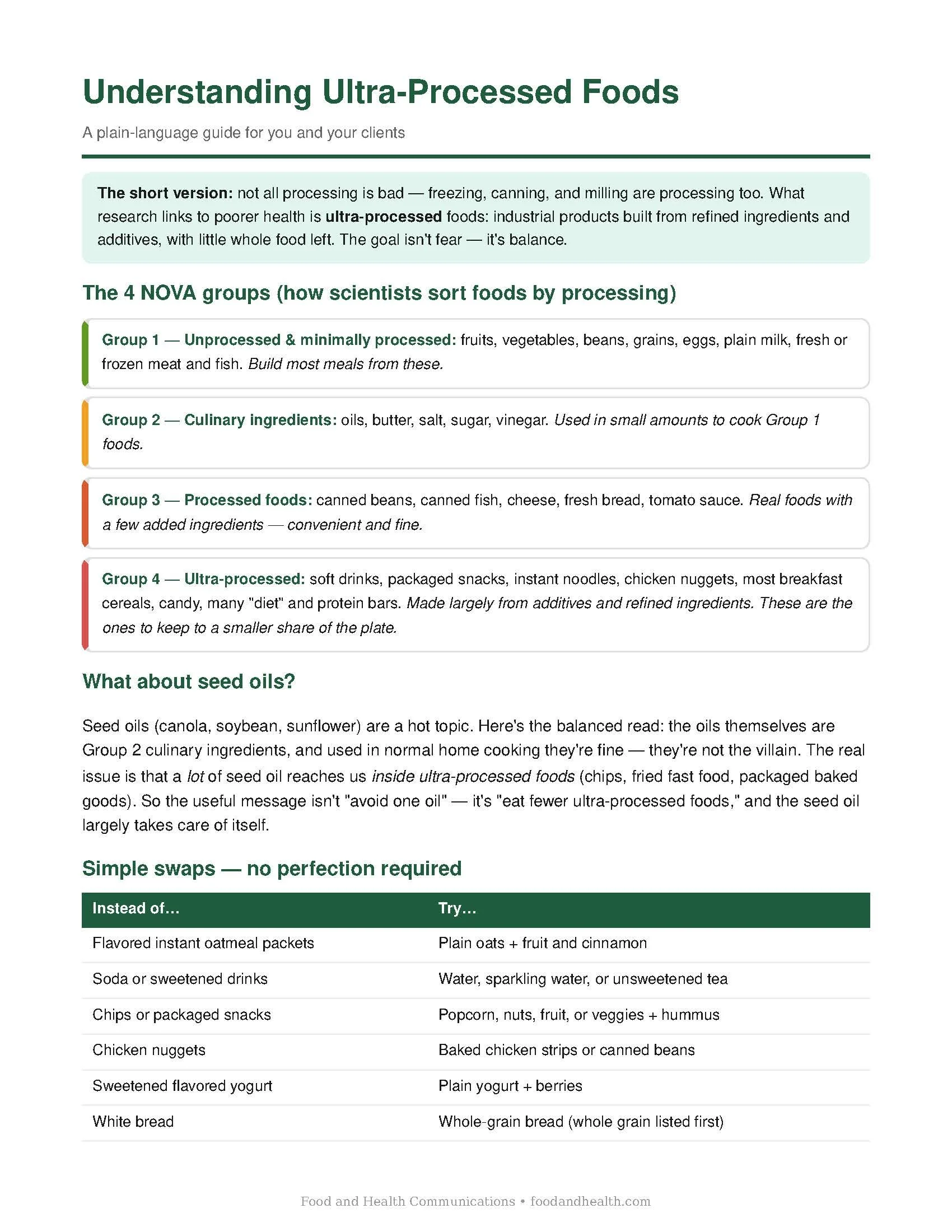
Unprocessed and minimally processed — fruits, vegetables, beans, grains, eggs, plain milk, fresh or frozen meat and fish. These are the foundation of a healthy plate.
Culinary ingredients — oils, butter, salt, sugar, vinegar. Used in small amounts to cook Group 1 foods.
Processed foods — canned beans, canned fish, cheese, fresh bread, tomato sauce. Real foods with a few added ingredients. Convenient and perfectly fine.
Ultra-processed foods — soft drinks, packaged snacks, instant noodles, chicken nuggets, most breakfast cereals, candy, and many "diet" and protein bars. These are built largely from refined ingredients and additives, with little whole food left.
It's Group 4 that research consistently links to poorer health outcomes when it makes up a large share of the diet.
But are seed oils the real villain?
Seed oils — canola, soybean, sunflower — are constantly singled out, so it's worth being precise. The oils themselves are Group 2 culinary ingredients, and used in normal home cooking, they're fine. They are not the villain the internet makes them out to be.
The real reason seed oils are associated with poorer health is that most of the seed oil people consume arrives inside ultra-processed foods — chips, fried fast food, packaged baked goods. So the useful message for clients isn't "avoid one type of oil." It's "eat fewer ultra-processed foods," and the seed-oil concern largely resolves on its own.
What to actually do: simple swaps, no perfection required
The goal is not fear or elimination — it's making whole and lightly processed foods the base of the plate most of the time. A few easy trades:
Flavored instant oatmeal packets → plain oats with fruit and cinnamon
Soda and sweetened drinks → water, sparkling water, or unsweetened tea
Chips and packaged snacks → popcorn, nuts, or veggies with hummus
Chicken nuggets → baked chicken strips or canned beans
Sweetened flavored yogurt → plain yogurt with berries
The 3-second label check
Teach clients one simple habit: flip the package over. If the ingredient list is long and full of names you wouldn't cook with at home, it's probably ultra-processed. Shorter lists of recognizable foods are a good sign.
Free resources: Download our printable Understanding Ultra-Processed Foods handout to share with clients, and test your knowledge with the free interactive nutrition quiz.
Nutrition Education Store
Look What's New in Our Store


