Fiber is Your Friend
What is fiber?
Fiber is the part of plant foods that is not digested by the human body. It lends structure, texture, and support to plants, yet it does not have any caloric value. It is, however, considered to be a complex carbohydrate. Notice that fiber is part of PLANT foods. It is not generally associated with animal products. For example, you certainly won’t find it in meat or dairy products.
Where can I find fiber?
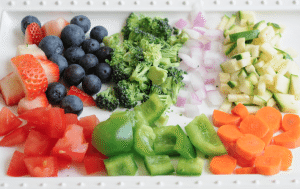 Fiber is in whole plant foods, like:
- Fruits
- Vegetables
- Whole grains
- Beans, peas, and lentils
- Nuts and seeds
Make a healthy plate!
That’s one of the reasons MyPlate recommends that people fill half their plates with fruits and veggies at each meal plus making an additional one quarter of the plate whole grains. There’s tons of fiber in those foods!
Are there different types of fiber?
Yes. While the total amount of dietary fiber in your diet is what’s important, we typically classify fiber as either soluble or insoluble.
Soluble fiber:
- Lowers blood cholesterol
- Helps to control blood sugar
- Makes you feel full after a meal
Sources of soluble fiber include oat bran, oatmeal, barley, rye, peas, beans, carrots, apples, and oranges.
Insoluble fiber:
- Gets credit for promoting GI health.
- Prompts normal laxation.
- Absorbs water, which makes things easier on your digestive tract.
Sources of insoluble fiber include fruits, vegetables, beans, wheat bran, brown rice and other whole grains.In real life, the distinction between fibers is not so simple. Fiber-rich foods usually have both types of fiber, and a high-fiber diet should provide enough of each. It is your total fiber intake that counts.
How much fiber do I need?
It’s estimated that prehistoric man ate 77-120 grams of fiber a day! That’s much more than today’s experts recommend for adults (25-38 grams/day). This can be achieved by eating a plant-based diet that’s rich in fruits, vegetables, beans, and whole grains.
A high-fiber diet has many health benefits, including...
Decreased risk of...
- Heart disease
- Diabetes
- Cancer
Positive impact on...
- Weight control
- Weight loss
- Gastrointestinal health
Fun Fiber Tips
Not sure how to manage your fiber intake? Try these tips!
- Instead of adding supplements to a low-fiber diet, eat high fiber foods!
- Eat a high fiber breakfast with whole grain cereals, fruit, and/or whole grain toast.
- Make beans the center of one or two meals per week. More is better!
- Drink plenty of water. This is important when increasing fiber intake.
- Try to eat 4.5 cups of fruits and veggies every day.
- When in doubt, follow MyPlate. In fact, just follow MyPlate. Make half your plate fruits and vegetables at every meal.
- Get 2.5 to 5 hours of aerobic exercise every week as per the Physical Activity Guidelines for Americans - this will help keep things moving.
Brought to you by: TheNutritionEducationStore.com. Check out our Fiber posters, PowerPoint Shows, games, and handouts that all discuss fiber, its impact on health, sources of each type of fiber, and much more!


Nutrition Education Store
Look What's New in Our Store