School Lunch Videos
Nutritional Standards in the National School Lunch Program require most schools to increase availability of fruits, vegetables, and whole grains, along with fat-free and low-fat fluid milk. Schools are also required to reduce the levels of sodium, saturated fat, and trans fat in meals while meeting nutrition needs within set calorie requirements. These improvements to the school meal programs, largely based on recommendations from the Institute of Medicine of the National Academies, are expected to enhance the diet and health of schoolchildren. The National School Lunch Offer Versus Serve Program, which has reimbursable credits, requires schools to offer a certain number of food groups and the kids must make the minimum choices from them for breakfast or lunch each day.Most school food service directors have worked very hard to implement these changes for the new school lunch rules. They had to come up with new menus and recipes and train their staff.Sharon Baird, RD, MEd, MBA, Food Services Director at the Goleta Union School District in California, found that one of the biggest challenges was training kids to learn the rules and make the right decisions quickly while moving through their lunch line every day. She requested a show from us to help her students learn the new reimbursable meal rules so that they can navigate the breakfast line and lunch line quickly and accurately. We told Sharon we'd be thrilled to make this show, because we think that this is a great product to offer. We liked the challenge of making the rules simple to understand and we used a professional actress and chef, coupled with the expert editors from The Food Network's Diners, Drive-Ins, and Dives to help us with the camera work and motion graphics. A special thanks to Sharon Baird, RD, MEd, MBA, for her ideas and input; Stephanie Ronco, our editor and in-house actress; Chuck Smith for excellent camera work of our narration; and Ethan Benninger for his motion graphics. These videos shine because of everyone's dedication and talent!Would you like to see samples of these videos for free? Now you can! Check out the link below...
Breakfast: we are making a new video for 2013 to 2014 - stay tuned!!
Lunch:
https://www.youtube.com/watch?v=ugQBbRNstn8We had the most fun making a beautiful star out of fruit. This star drives home the message that you have to have a fruit or fruit juice on each breakfast tray, every day: It's easy to make a fruit star! First, grab a piece of paper, draw a star, then cut it out. Place the star on a tray and arrange your favorite fruits in a star pattern on top of it. Protip: it helps to have a big white platter for your star -- it shows off the color of the fruit.Download PDF for FruitstarPlus, don't miss this delectable veggie tray!
 Trick: to enhance the color of sturdy greens like broccoli and green beans, flash-microwave them. By "flash microwave," I mean that you put them in the microwave for a "flash" of around 30 seconds. It should be just enough to steam the outside, which intensifies the color, yet leaves the veggies free of mushy sogginess.
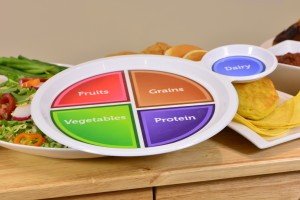 To meet the new lunch requirements, kids have to choose items from 3 of 5 food groups, and one of those has to be a fruit or vegetable. (MyPlate from Nasco).
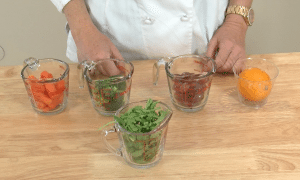 The good news about greens? 1 cup is equal to a half cup portion. This means that you get to eat twice as much salad as other vegetables, which remain at a single 1/2 cup serving. Viva la salad!You can buy these videos on one DVD. That DVD also comes with a matching PowerPoint show on a separate CD.Check out our new CD/DVD set in the Nutrition Education Store!
 Rock Your Tray Presentation Kit.PS: Erasable School Menu Posters are Up-To-Date through 2015: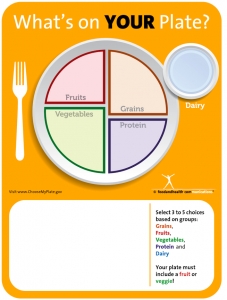
What's new in our store
See all new productsFree shipping on orders over $29. Purchase orders welcome. Use code LEARN15 for 15% off at NutritionEducationStore.com.