The Argument for Just Choosing A Banana

Bananas are one of the most convenient, nutrient-dense fruits you can grab, and they pack more benefits than their simple appearance suggests. They are offered in grocery stores and coffee shops and can easily be toted in a briefcase or lunchbox. Yet you never see folks choosing them over pastries.

1. Rich in potassium (heart health)

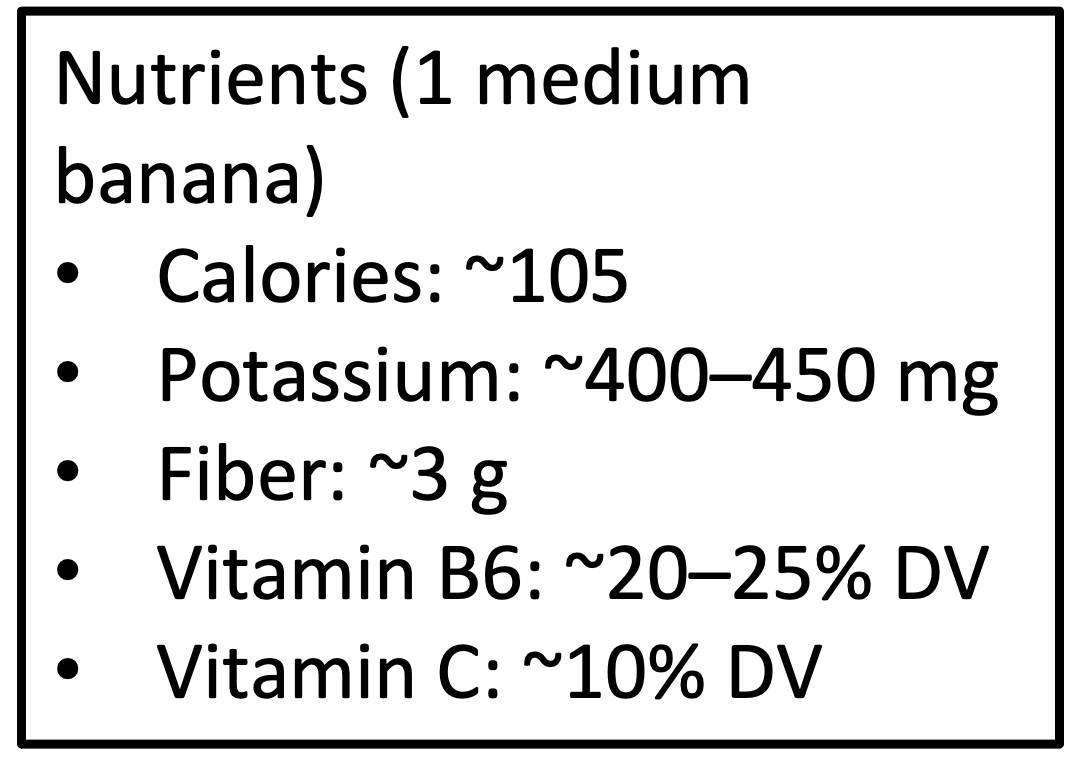
Bananas are well known for their potassium content, an essential mineral that helps regulate blood pressure, supports heart function, and balances fluids in the body. The combination of fiber, potassium, and antioxidants contributes to lower cardiovascular risk.

2. Natural real-food energy boost

They contain easily digestible carbohydrates (glucose, fructose, and sucrose), making them ideal for quick energy—great before or after workouts.

3. Good source of fiber (digestive health)

Bananas provide both soluble and insoluble fiber, which helps support gut health, promotes regular digestion, and keeps you feeling full longer.

4. Supports muscle function

Thanks to potassium and magnesium, bananas help prevent muscle cramps and support proper muscle contraction.

5. Vitamin powerhouse

One banana delivers a significant portion of your daily vitamin B6, which helps with:

•Brain development and function

•Mood regulation (serotonin production)

•Metabolism

Contains vitamin C (immune support)

Bananas support immune health and help combat oxidative stress through vitamin C and other antioxidants.

Ripeness matters

  • Green bananas → higher in resistant starch (good for gut health, lower sugar impact)

  • Ripe yellow bananas → sweeter, easier to digest, quick energy

  • Very ripe (brown spots) → highest in antioxidants and natural sugars

Easy ways to prepare

•Peel and eat raw

•Top yogurt and cereal

•Make a nut butter sandwich with them

•Add to smoothies
From our store

Free shipping on orders over $29. Purchase orders welcome. Use code LEARN15 for 15% off at NutritionEducationStore.com.

Judy Doherty, MPS, PCII

Judy Doherty, MPS, PCII discovered her love of cooking at her grandmother's side, stirring raisin oatmeal on a Saturday morning. By 15 she had her first food service job. At 18 she was accepted to the Culinary Institute of America, where she graduated second in her class, then went on to the Fachschule Richemont in Switzerland to study pastry arts and baking. A decade with Hyatt Hotels followed before she founded Food and Health Communications with a single conviction: food that is good for you should taste extraordinary.

Judy holds a Master of Professional Studies in Food Business from the Culinary Institute of America, a Bachelor of Science in Culinary Arts from Johnson and Wales University (Summa Cum Laude), two art certificates from UC Berkeley Extension, and the CIA's Pro Chef II certification. She has earned the American Culinary Federation Bronze Medal, Gold Medal, and ACF Chef of the Year award.

Today she develops every recipe on this site, shoots and styles food through her food photography and motion studio, and publishes nutrition education materials for dietitians, schools, extension offices, and health professionals through nutritioneducationstore.com. She uses the latest nutritional science and Dietary Guidelines to drive her creativity — whether that means a new twist on fajitas or Italian brownies made with toasted nuts and cooked honey. Her mission has never changed: help everyone make food that tastes as good as it is for them.

https://nutritioneducationstore.com
Previous
Previous

The Bento Lunch Box

Next
Next

The Argument for Just Choosing A Banana