20 Best Calorie Savers
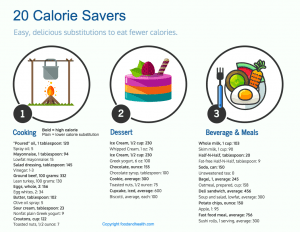 Here is a new fat and calorie saver guide that has 20 easy ways to lower the calories you consume by making simple substitutions. It consists of 20 easy swaps that you can make whether you are cooking at home, eating out, or tempted by desserts and other sweet treats.This guide replaces an older one that was very popular with readers when we first started blogging. The new one emphasizes more up-to-date choices for cooking, desserts, beverage, and meal choices based on market choices, consumer habits, and Dietary Guideline suggestions.We feel these new substitution recommendations are more up-to-date, practical, and significant now because people spend about 25% less time cooking versus eating meals away from home now versus 20 years ago, (Smith, 1). Furthermore, meals eaten away from home have almost doubled according to the USDA. In 1970, 25.9 percent of all food spending was on food away from home; by 2012, that share rose to its highest level of 43.1 percent.Here is an overview of the handout by category:CookingOne of the best ways to save calories and limit overconsumption of refined fats and oils is to use oil dispensed in a spray vessel. There are so many more options for oil sprays in the store now including: canola oil, olive oil, and avocado oil to name just a few.Avocado oil is delicious and great for cooking because of its high smoking point, which is 482 degrees Fahrenheit (AOCS, 1). This means that you can heat it higher before it will smoke so items will brown quickly. Spray oils often make a better "bread" spread, too, in place of butter or margarine. At about .80 per ounce it is not cheap but that is precisely the point. You will use less! One study found that it enhances carotenoid absorption in salads and salsa (Unlu, 1). For safety recommendations on fat and cooking see this USDA fact sheet.Using a spray oil and flavored vinegar combo is a great low-cal way to dress a salad; lemon or lime juice and flavored vinegar by themselves work well, too. Bottled dressings are often high in fat and or sodium.Other low-fat cooking substitutions include using egg white in place of whole eggs and extra lean turkey in place of ground beef will help lower calories by 50% or more. Lean protein choices can also include fish, poultry white meat without skin, beans and legumes, and lean meat.
After choosing the most lean cut or protein, keep it lean by using a low-fat cooking method like broiling, grilling, steaming, or sautéing with a small amount of fat. It is best to skip deep frying, pan frying, or any other cooking method where large amounts of fat are added to the cooking process.
Greek yogurt is popular and it's plain option makes a great substitute for sour cream, creme fraiche, and cream cheese. One container of plain, nonfat yogurt can perform many tricks in your kitchen including:
- dressing baked potatoes
- smearing on crackers or bread
- topping fish, chicken, chili, burritos, tacos, Indian dishes, and other spicey dishes the same way you would with sour cream
- adding to dips
Of course Greek yogurt makes a delicious dessert when topped with fresh fruit. Look for the 0% fat variety in your store.DessertsFor those with a sweet tooth for cookies, cupcakes, iced cakes, brownies, and ice cream, there is good news. You don't have to give up your sweet tooth to make better choices that will help you stay within your calorie budget. In our opinion it is better to keep a few items on hand for fruit-based dessert creations than packages of items that add a lot of calories in a week. Always consider the total number of calories per package when you are shopping.Whipped cream is only 76 calories an ounce and 1/4 to 1/2 ounce is often enough to top yogurt, bananas, or fruit for an assembled decadent dessert that is surprisingly low in calories. This is more fresh and satisfying than ice cream, sticky sweets, or large cookies. Greek yogurt, fruit, nuts, and whipped cream can be combined in many ways to make a great treat. Just remember portion control on these items, too. Stick to the amount recommended on the package or go a little less.When out at the coffee stand go for a single biscotti cookie rather than a 600 calorie sticky bun. Coffee stores such as Star Bucks now list the calories on their items so you can learn a lot about desserts and their calorie contents while standing in line.Meals and BeveragesThe meal and beverage chart is pretty straight forward. Choose beverages that are not sweetened with sugar. Flavored teas are always great any time of the year. You can go cold for summer and hot for winter. No sugar needed!Instead of fast food consider soup and salad, or sushi. One of the best places to look for these items when you are in a hurry are grocery stores that have salad bars, sushi counters, and whole, ready-to-eat buffets. You can be in and out with a great meal in less time than you can wait in a fast food drive-through line.References:"Food Eaten Away from Home", USDA Economic Research Service, Published Online December 2016. Accessed May 2017.
- 10K Steps (11)
- Beverage-Sugar (17)
- Change It Up (9)
- Chef Ann Rainbow Salad (9)
- Colors of Health (9)
- Diabetes (17)
- Eat to Excel (9)
- Farm to Table (10)
- Food Label NEW (14)
- Freedom (7)
- Groove to Move (11)
- Healthier Choices (25)
- Healthy Fork (13)
- MyPlate (29)
- Muscle Vs Fat (6)
- Portion Control (18)
- Orange Coins & Diet and Exercise (8)
- Nutrition Month (19)
- Rainbow Chard & Good Nutrition (8)
- Rainbow Salad (29)
- Real Food Grows (8)
- Whole Grains (11)
Nutrition Education Store
Look What's New in Our Store