Low-Sodium Vegetarian Pizza Is Veggie Delightful!
The 2020-2025 Dietary Guidelines for Americans recommends an upward limit of 2,300 mg sodium per day. Since most people consume an average of 3,400 mg daily, this means about a 30% reduction. Where do you begin?
The best thing you can do is to read Nutrition Facts labels to find low-sodium choices of what you buy regularly; additionally, you should cook more meals from home so you control what goes in your food. Eating out less often can help make a dent in your intake because processed food and food away from home contributes about 75% of most people's sodium intake.
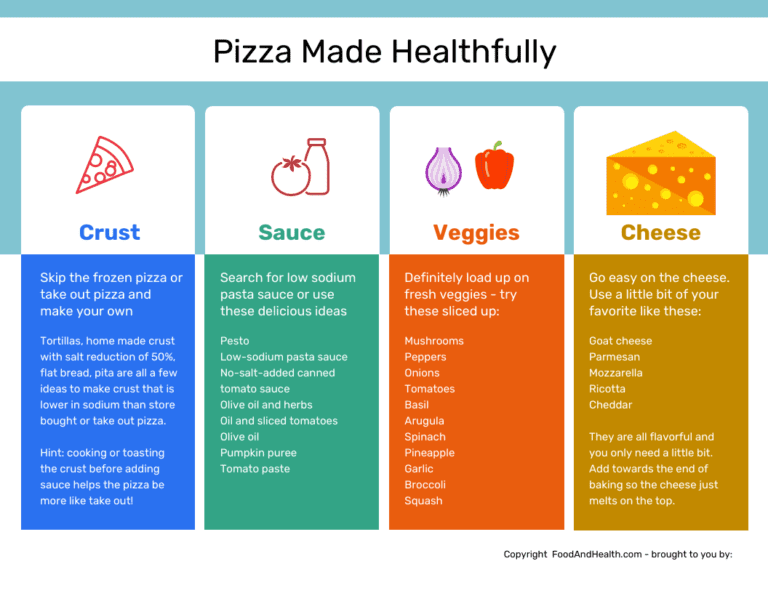
As you can see by our chart, you don't have to give pizza up - you have to make it brighter. Here is how we did it:
Use lots of fresh veggies for flavor and color. Mushrooms, tomatoes, zucchini, and peppers are some favorites. But don't be afraid to add even more of your favorites.
Add plenty of herbs and seasonings. We like garlic granules, dried oregano, black pepper, and fresh basil/herbs.
Use a low-sodium sauce - such as a tomato sauce without added salt. We chose Pomodoro tomato sauce because it costs less than bottled pasta sauce, has excellent flavor, and has no salt! Sometimes, too, we will forego the cheese and use a sprinkle of extra virgin olive oil and basil.
Go really light on the cheese - we used a combo of shredded reduced-fat cheddar and parmesan - they have a nice strong flavor, so you can get away with adding a lot less. We also like farmer's cheese that is low in fat and sodium (you do have to hunt for it) or a light sprinkle of goat cheese.
Buy or make a crust with no more than 5-10% of the daily value of sodium (read the Nutrition Facts Label). Of course, the homemade whole-grain crust is always the best, but a low-sodium crust is preferable either way.
Watch the movie below and learn how to make it yourself.
And here is a shameless plug for our products - since we don't accept advertising because we want to be pro-healthy food (zucchini really doesn't have an advertising budget anyway) and pro-consumer - here is our Nutrition Education Store: http://nutritioneducationstore.com we have many heart healthy materials and low-sodium guides here.
Here is a fun handout to build a better pizza - just click the image, and it will download:
And here is a shameless plug for our products - since we don't accept advertising because we want to be pro-healthy food (zucchini really doesn't have an advertising budget anyway) and pro-consumer - here is our Nutrition Education Store: http://nutritioneducationstore.com we have many heart healthy materials and low-sodium guides here.
Nutrition Education Store
Look What's New in Our Store